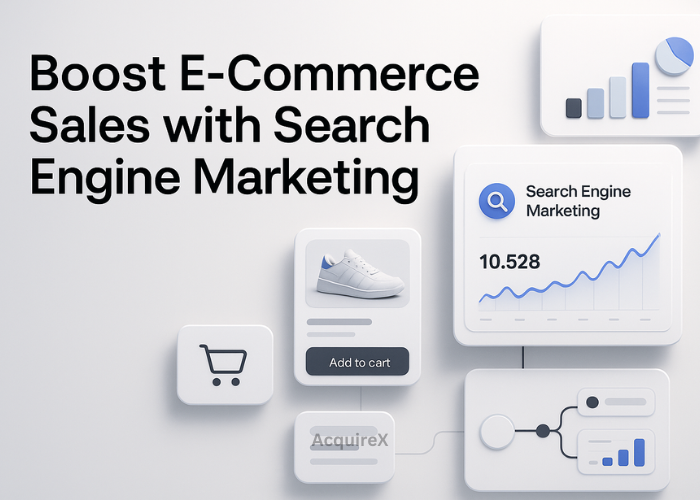
In today’s highly competitive e-commerce landscape, standing out online is critical. Search Engine Marketing (SEM) has become one of the most effective strategies for online retailers seeking to increase visibility, attract targeted traffic, and boost Sales.
Search Engine Marketing allows businesses to not only appear at the top of search results but also reach potential customers at the exact moment they are looking for a product or service, making it a powerful tool for conversion-driven marketing.
What Is Search Engine Marketing (SEM)?
Search Engine Marketing involves using both paid advertising (like Pay-Per-Click or PPC) and organic strategies to improve a website’s ranking on search engine results pages (SERPs). For e-commerce businesses, SEM is a dual approach that combines immediate visibility from paid ads with long-term benefits from search engine optimization.
This combination ensures that businesses can capture both immediate sales through targeted ads and long-term brand authority through organic search, which is critical in a crowded online marketplace.
Why Search Engine Marketing Matters for E-Commerce
With global e-commerce sales expected to exceed $6 trillion in 2025, the online marketplace has never been more crowded. Search Engine Marketing provides e-commerce businesses a competitive edge by:
- Enhancing Visibility: Paid ads appear at the top of search results for relevant queries, giving your products maximum exposure.
- Driving Targeted Traffic: Keyword targeting ensures you reach users actively searching for your products, increasing the likelihood of conversion.
- Increasing Conversions: Optimized landing pages, relevant offers, and compelling ad copy turn clicks into sales.
- Supporting Seasonal Campaigns: During peak seasons like Black Friday, Search Engine Marketing ensures your products are prominently displayed when shoppers are actively searching.
For e-commerce businesses, SEM is no longer optional, it’s an essential investment for growth.
SEM vs. SEO: Key Differences
| Feature | SEM | SEO |
| Approach | Paid advertising + organic optimization | Organic strategies only |
| Timeframe | Immediate visibility | Long-term results |
| Cost | Pay-per-click or campaign budget required | Primarily time and effort; minimal direct costs |
| Focus | Short-term traffic and conversions | Long-term rankings and authority |
| Flexibility | Can quickly adjust ads, keywords, and targeting | Changes take longer to impact rankings |
| Measurability | Easy to track ROI, CTR, and conversions | Tracking requires analytics over time |
Integrating both SEM and SEO strategies allows e-commerce businesses to maximize visibility and maintain consistent growth. Paid campaigns drive immediate results, while SEO ensures sustainable traffic and authority over time.
Best Practices for E-Commerce Search Engine Marketing
Implementing SEM effectively requires strategy and continuous optimization. Here are the key practices for e-commerce businesses:
1. Conduct Comprehensive Keyword Research
Identifying the right keywords is the foundation of any Search Engine Marketing campaign. Use tools like Google Keyword Planner or SEMrush to identify high-volume, low-competition keywords. Include both short-tail (e.g., “running shoes”) and long-tail keywords (e.g., “best waterproof running shoes for men”) to capture a broad spectrum of user search intents.
2. Craft Compelling Ad Copy
The ad copy should be clear, persuasive, and highlight your unique selling points. Include urgency where appropriate, such as limited-time offers, free shipping, or exclusive discounts. For example: “Shop Now – Limited Stock of Premium Wireless Headphones!”
3. Optimize Landing Pages
Landing pages must be highly relevant to the ad copy, load quickly, and provide a seamless user experience. Ensure product descriptions are clear, images are high-quality, and checkout processes are simple. A well-optimized landing page can dramatically improve Quality Score and conversion rates.
4. Implement Conversion Tracking
Use analytics tools like Google Analytics, Google Ads conversion tracking, or other third-party solutions to monitor user behavior. Track metrics such as click-through rates, add-to-cart actions, and completed purchases to determine the effectiveness of your campaigns.
5. Regular Campaign Optimization
Search Engine Marketing is not a “set-and-forget” strategy. Regularly review campaign performance, test different ad variations, adjust bidding strategies, and refine targeting. Use A/B testing to determine which headlines, images, or offers generate the best results.
6. Use Negative Keywords
To avoid wasting ad spend on irrelevant searches, include negative keywords in your campaigns. For example, if selling premium leather bags, you might add “cheap” as a negative keyword to prevent clicks from bargain hunters who are unlikely to convert.
7. Leverage Remarketing
Remarketing allows you to target users who visited your site but did not complete a purchase. Displaying tailored ads to these users can significantly increase conversion rates and bring back potential customers.
Outsourcing Your Marketing Team
Outsourcing Search Engine Marketing can save time and costs while giving e-commerce businesses access to expert skills. Benefits include:
- Expertise: Professionals handle keywords, ads, and analytics efficiently.
- Cost-Effective: Pay for services as needed, avoiding full-time salaries.
- Scalable: Quickly adjust campaigns for sales, seasons, or product launches.
- Focus on Core Tasks: Let your team focus on products and customer service.
Choose a partner with e-commerce experience, transparent reporting, and alignment with your business goals to maximize Search Engine Marketing success.
Measuring SEM Success
Track these key metrics to ensure your SEM strategy drives results:
- Click-Through Rate (CTR): Measures the effectiveness of your ad copy in attracting clicks.
- Conversion Rate: Tracks the percentage of visitors completing a desired action, such as a purchase or signup.
- Cost Per Acquisition (CPA): Calculates how much it costs to acquire a customer via SEM campaigns.
- Return on Ad Spend (ROAS): Assesses revenue generated for every dollar spent on advertising.
- Impression Share: Shows how often your ads are appearing compared to competitors.
Monitoring these KPIs allows businesses to make data-driven decisions that improve ROI and campaign efficiency.
SEM Challenges in E-Commerce
Despite its benefits, Search Engine Marketing comes with challenges:
- High Competition: Popular keywords can be expensive, requiring strategic bidding to remain profitable.
- Ad Fatigue: Over time, audiences may become less responsive to repeated ad creatives, requiring fresh content.
- Platform Changes: Search engines often update algorithms and ad platforms, impacting campaign performance.
- Click Fraud: Competitors or bots may click ads maliciously, inflating costs.
Staying proactive and adjusting campaigns regularly helps mitigate these challenges and ensures long-term success.
Industry Insights
According to HubSpot, SEM campaigns are most successful when continuously optimized. By analyzing search terms, ad copy, and landing pages, businesses can increase relevancy, reduce wasted spend, and scale successful campaigns.
Additionally, e-commerce giants like Amazon and Shopify stores use Search Engine Marketing not just for direct sales but also to boost brand awareness, suggesting that SEM can serve multiple strategic purposes beyond immediate ROI.
Conclusion
Search Engine Marketing is no longer optional for e-commerce businesses aiming to compete online. By implementing best practices, leveraging advanced techniques such as remarketing and negative keywords, and continuously optimizing campaigns, online retailers can drive highly targeted traffic, increase conversions, and achieve sustainable growth.
FAQ’s
1. What Is Search Engine Marketing (SEM)?
SEM is a strategy to increase website visibility on search engines using paid ads (PPC) and sometimes SEO. It drives targeted traffic and boosts conversions.
2. How Is SEM Different from SEO?
– SEM: Paid ads, immediate results, high control, temporary.
– SEO: Organic, gradual results, limited control, long-term growth.
3. Why Is SEM Important for E-Commerce?
SEM increases visibility, drives targeted traffic, provides measurable ROI, and gives a competitive advantage in crowded online marketing