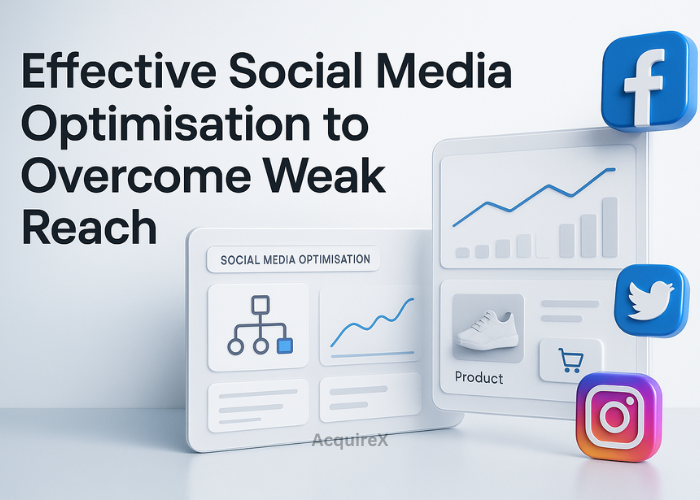
Social Media Optimisation has become a core engine of growth in the e-commerce world, where online visibility determines brand survival. As consumer purchase journeys shift across Instagram, Facebook, YouTube, X, TikTok, and Pinterest, a powerful SMO strategy is essential to overcome weak reach and elevate brand presence.
Today’s e-commerce consumers don’t just shop, they scroll, discover, compare, and trust social-first recommendations. This makes Social Media Optimisation one of the most effective ways to strengthen awareness, drive traffic, and boost conversions.
This comprehensive guide breaks down how SMO works, why it matters deeply for e-commerce brands, and how to implement strategies that produce long-term, measurable impact.
What Is Social Media Optimisation?
Social Media Optimisation (SMO) is the structured process of improving your brand’s performance on social media by optimising content, profiles, engagement patterns, hashtags, posting schedules, visuals, and platform-specific algorithms.
For e-commerce businesses, SMO acts as a strategic framework to:
- Increase brand visibility
- Improve organic reach
- Boost engagement
- Strengthen conversion pathways
- Enhance customer trust
In a competitive digital environment where thousands of brands fight for attention, Social Media Optimisation gives your business the advantage to stand out consistently.
Why Social Media Optimisation Matters for E-commerce
In 2025, e-commerce success is anchored in one core truth:
If your brand is not optimised for social media, you are invisible to your buyers.
Here’s why SMO is essential:
Higher Discovery Rate via Social Search
Platforms like Instagram and TikTok have evolved into search engines. Customers search for:
- Product reviews
- “Top 10” recommendations
- Unboxing videos
- Price comparisons
SMO ensures your brand appears at the right moment.
Boosts Trust and Authenticity
In e-commerce, trust drives conversions. Social media, especially UGC, helps customers feel confident in purchasing.
Improves Conversions with Social Proof
Reviews, influencer endorsements, customer experiences, and testimonials amplify purchase intent.
Strengthens Brand Recall
Consistent visuals, captions, and storytelling make your brand memorable.
Cost-Effective Traffic and Retargeting
SMO complements paid campaigns by lowering ad costs and increasing retargeting accuracy.
Founders, Ownership and Establishment Timeline
Modern Social Media Optimisation stems from the rise of major social platforms founded by early innovators in the 2000s. Their technological breakthroughs led to the engagement-driven ecosystem we optimise today.
Founding Influence Behind SMO Evolution
- Facebook (2004)
Founded by Mark Zuckerberg and his early team, this platform introduced likes, comments, shares, and groups — SMO fundamentals. - YouTube (2005)
Created by Jawed Karim, Steve Chen, and Chad Hurley, YouTube revolutionised video content and shaped optimisation strategies. - Instagram (2010)
Founded by Kevin Systrom and Mike Krieger, Instagram created the visual-first culture that dominates e-commerce marketing today.
These platforms collectively laid the foundation for what we now call Social Media Optimisation, influencing everything from hashtags to algorithm-based content ranking.
Know All About: Performance Marketing & Growth
Core Elements of Effective Social Media Optimisation
1. Optimised Profiles for Brand Credibility
Your social profile is your digital storefront.
An optimised profile must include:
- Clear brand logo
- Consistent colour palette
- Keyword-rich bio
- Category tags
- Link to store or landing page
- Highlights or pinned posts for offers
2. High-Quality Content Tailored to E-commerce Buyers
E-commerce audiences respond best to visual and interactive formats such as:
- Product demos
- Tutorials
- Styling ideas
- Before and after visuals
- Behind-the-scenes content
- Influencer collaborations
- Customer success stories
Consistency signals value to algorithms and improves reach.
3. Strategic Hashtag and Keyword Integration
To maximise discoverability, use:
- Niche hashtags
- High-volume category hashtags
- Branded hashtags
- Long-tail product-focused terms
This directly enhances Social Media Optimisation and social search visibility.
4. User-Generated Content for Trust
UGC is significantly more persuasive than brand-created content.
Encourage customers to post:
- Reviews
- Try-on sessions
- Unboxing videos
- Tutorials
- Testimonial reels
Showcasing real buyers builds credibility and boosts conversions.
5. Platform-Specific Content Strategy
Each platform requires distinct optimisation:
- Instagram: reels, stories, carousels
- YouTube: tutorials, product explainers
- Pinterest: long-lasting product pins
- TikTok: trends and short storytelling
- LinkedIn: B2B e-commerce insights
A customised strategy maximises engagement and discoverability.
6. Visual Branding Consistency
Strong branding improves memorability. Optimise:
- Colours
- Typography
- Product angles
- Layouts
- Template designs
A consistent visual identity builds strong recall and increases click-through rates.
7. Influencer and Micro-Influencer Partnerships
Micro-influencers often generate better engagement and conversions due to niche audience trust.
They help brands:
- Overcome weak reach
- Create authentic exposure
- Reach highly targeted demographics
8. Cross-Channel Promotion
Extend your reach by promoting social content through:
- Email newsletters
- WhatsApp broadcasts
- Website banners
- Product pages
Know All About: Marketplace Management
Advanced Social Media Optimisation Techniques for 2025
AI-powered Scheduling and Personalisation
AI tools like HubSpot AI analyse posting times, audience behaviour, and content performance.
Social Commerce Integration
Optimise product tags, catalogues, alt text, and descriptions within Instagram Shops, TikTok Shop, and Pinterest.
SEO-Driven Captions
Search-based captions help content rank on social search engines.
Community Building
WhatsApp groups, Discord servers, and Instagram broadcast channels create high-intent communities that convert faster.
Measuring SMO Success
Track:
- Reach
- Follower growth
- Engagement
- Click-through rate
- Conversions from social
- UGC volume
- Social share of voice
These metrics determine whether your Social Media Optimisation efforts are truly overcoming weak reach.
Common SMO Mistakes to Avoid
- Using unrelated or banned hashtags
- Posting low-quality visuals
- Ignoring insights
- Overly promotional content
- Inconsistent brand voice
- Not leveraging reels or shorts
Final Thoughts
Social Media Optimisation is the backbone of e-commerce growth in 2025. It enables brands to overcome weak reach, strengthen engagement, build trust, and scale conversions across all major digital platforms.
By combining content consistency, keyword strategies, UGC, influencer partnerships, and cross-platform optimisation, e-commerce businesses gain a long-term competitive advantage.
FAQ’s
1. How often should e-commerce brands post?
Posting 4 to 6 times weekly with daily stories or reels drives strong engagement.
2. Does SMO help with Google SEO?
Indirectly yes. Social signals improve credibility and assist search discoverability.
3. Which social platforms work best for e-commerce?
Instagram, Facebook, YouTube and Pinterest generate the strongest e-commerce performance.