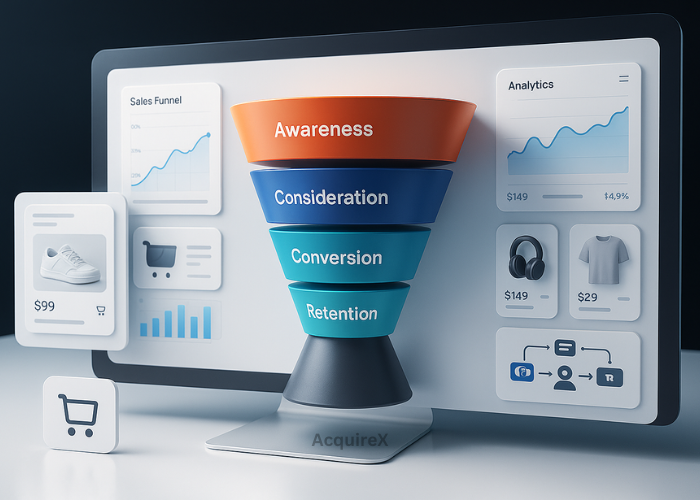
A high-performing Sales Funnel is the backbone of every successful ecommerce store, helping brands convert visitors into loyal customers systematically and predictably. It creates clarity, structure, and measurable steps that move buyers from discovery to purchase and beyond.
In this blog, you’ll learn how ecommerce brands use a Sales Funnel to increase conversions, average order value, and long-term retention. You’ll also discover essential stages, advanced strategies, and real-world ecommerce best practices to help you scale your store effectively.
What Is a Sales Funnel in Ecommerce?
A Sales Funnel is a structured journey that guides potential buyers from the first interaction to the final transaction. In e-commerce, this journey includes every touchpoint, ads, product pages, email flows, retargeting, checkout, and post-purchase engagement.
A strong Sales Funnel delivers:
- Higher conversion rates
- Improved customer experience
- Reduced acquisition cost
- Increased lifetime value
- Predictable revenue
As competition grows, the Sales Funnel becomes the driving force that allows online stores to scale sustainably.
Origin and Founding Team Behind the Sales Funnel Concept
The concept of the Sales Funnel has evolved over more than a century.
Foundational Contributors:
- Elias St. Elmo Lewis introduced the AIDA Model in 1898, which laid the foundation for funnel-based marketing.
- Claude Hopkins, in the early 1900s, contributed scientific advertising and measurable marketing practices.
- From 2010 onwards, with ecommerce platforms like Shopify and WooCommerce scaling globally, the modern Funnel became a standard framework for online retail growth.
These early thinkers created concepts that continue to shape today’s ecommerce funnels.
Why Ecommerce Stores Need a Strong Sales Funnel
A strong Sales Funnel aligns your Marketing, product experience, and customer journey. It ensures that every stage, from the first click to the second or third purchase, supports customer intent and encourages progression.
Ecommerce brands today face rapid competition, rising ad costs, and changing consumer behavior. A robust Sales Funnel helps overcome these challenges by offering structure and targeting at every level. Without it, most stores lose the majority of shoppers before checkout due to lack of nurturing, unclear messaging, or friction in the buying experience.
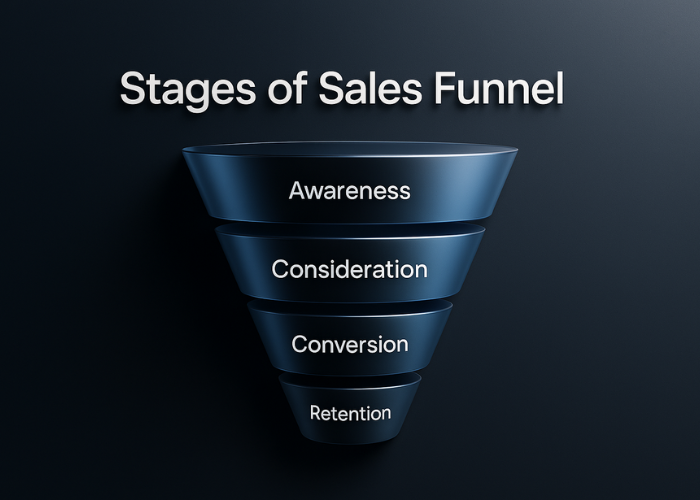
4 Ecommerce Sales Funnel Essentials for Scaling Your Store
1. Awareness: Attracting High-Quality Traffic
The first stage of the Sales Funnel focuses on introducing your brand to the right audience.
Strategies include:
- SEO-driven blogs and category pages
- Social media advertising
- Influencer partnerships
- Short-form video marketing
- Educational content
The purpose here is not to sell immediately but to build recognition and trust. This stage sets the foundation for your funnel, influencing how prospects respond in the later stages.
Read all About: Brand Awareness Strategies
2. Consideration: Turning Visitors Into Warm Leads
At this stage, potential customers begin comparing your offerings with alternatives. Your Sales Funnel should guide them with clarity, information, and incentives.
Effective tools include:
- Buying guides
- Comparison pages
- Retargeting ads
- Email newsletters
- Lead magnets like discounts or style quizzes
- Customer reviews and UGC
A well-designed consideration stage builds confidence. Many ecommerce brands lose prospects here simply because the information is incomplete or not persuasive enough.
3. Conversion: Turning Warm Leads Into Paying Customers
This is the most critical part of the Sales Funnel, where a visitor becomes a customer.
Conversion boosters include:
- High-quality product visuals
- Detailed product descriptions
- Fast site loading
- Trust badges
- Clear pricing and guarantees
- Exit-intent offers
- One-click upsells or cross-sells
Your product pages act as your online sales representatives. They must focus on benefits, clarity, and motivation. A well-optimized conversion stage can lift sales dramatically, often by 20%–40%.
To support conversions further, ecommerce brands should invest in abandoned cart recovery, streamlined checkout processes, and multi-payment options. These small improvements can significantly improve your funnel’s performance.
4. Retention: Increasing Customer Lifetime Value
Retention is the final stage of the Funnel, but also the most profitable. It focuses on converting one-time buyers into repeat customers.
Retention strategies include:
- Post-purchase email sequences
- SMS and WhatsApp updates
- Loyalty programs
- Personalized product recommendations
- Subscription models
- Exclusive offers for returning buyers
Acquiring new customers is expensive. A well-built retention system can double profitability by improving repeat purchase rates, encouraging higher basket sizes, and strengthening brand loyalty.
In ecommerce, retention is often overlooked, but it’s one of the strongest areas for long-term growth. Successful brands dedicate significant resources to nurturing customers after their first purchase.
Read All About: Customer Service Management System for Better Retention
How to Build a High-Converting Ecommerce Sales Funnel in 2025
Analyse Customer Journey
- Identify where customers drop off, what questions they ask, and which channels bring the highest-intent traffic.
Map Content for Each Stage
- Every stage of the Funnel requires content that addresses specific intent levels. This ensures potential buyers never feel lost or confused.
Leverage Automation Tools
- Use platforms like Klaviyo, Mailchimp, and Omnisend for email and SMS automation. Consistent nurturing drives higher conversions and long-term trust.
Track, Test, and Optimize
- Monitor performance metrics and run split tests on landing pages, offers, and creatives. Optimization is an ongoing process and should be integrated into your marketing operations.
Common Mistakes Ecommerce Stores Make with Sales Funnels
- One-size-fits-all messaging
- Poor mobile optimization
- Ignoring retargeting
- Complicated funnel structures
- Weak email and SMS strategies
- Lack of clear product value
- Slow checkout experiences
Correcting these issues strengthens every stage of your Funnel and significantly boosts conversions.
Final Thoughts
A well-structured Sales Funnel is essential for e-commerce success. It aligns marketing, customer behavior, and business goals into one cohesive journey. Whether you’re running a new Shopify store or scaling a large D2C brand, optimizing your Funnel helps you increase conversions, strengthen customer loyalty, and achieve predictable long-term growth.
By understanding each stage, awareness, consideration, conversion, and retention, you’ll be able to create a funnel that delivers consistent results and positions your ecommerce business for sustained success.
FAQ’s
1. What is a Sales Funnel in ecommerce?
A Sales Funnel is a structured journey that guides online shoppers from discovering your brand to making a purchase and becoming repeat customers.
2. Why is a Sales Funnel important for ecommerce stores?
It helps increase conversions, reduce acquisition costs, and maximize customer lifetime value by optimizing every stage of the buying journey.
3. How can I improve my e-commerce Sales Funnel?
Enhance product pages, use retargeting ads, optimize checkout steps, nurture leads through email/SMS, and personalize offers based on customer behavior.