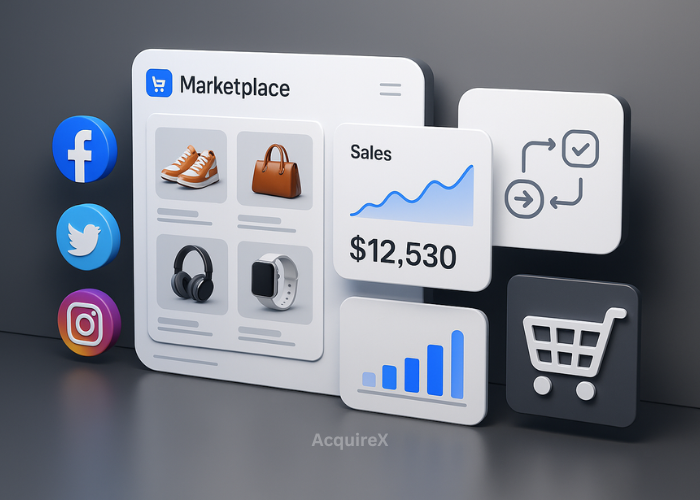
Growing Marketplace Sales today requires strategic listing optimization, strong operational performance, competitive pricing, and a customer-first approach. Whether you sell on Amazon, Flipkart, Meesho, Ajio, or other niche platforms, the fundamentals remain consistent: visibility attracts buyers, relevance drives conversions, and service quality determines repeat purchases.
Marketplace Sales continue to evolve, and sellers who understand platform algorithms, category competitiveness, and buyer intent gain a significant advantage. This guide breaks down the essential do’s and don’ts every seller must follow for sustainable growth.
Understanding Marketplace Sales in Modern E-commerce
Marketplace Sales refer to the revenue generated by selling products on online marketplaces. These platforms offer built-in traffic and credibility, reducing the need for heavy upfront marketing. However, with millions of sellers competing within categories, success depends on how effectively you optimize and maintain your product listings.
Marketplaces evaluate product visibility based on:
- Listing content quality
- Keyword relevance
- Click-through rate
- Order defect rate
- Fulfillment speed
- Ratings & customer satisfaction
- Category competitiveness
Improving performance on these touchpoints increases organic Sales over time.
Check Out what’s Included in Marketplace Management
Founding Team, Ownership & Establishment Year of Major Marketplaces
Amazon
- Founder: Jeff Bezos
- Launch Year: 1994
- Focus: Global multi-category commerce, advanced advertising ecosystem, FBA fulfillment
Flipkart
- Founders: Sachin Bansal & Binny Bansal
- Launch Year: 2007
- Focus: Indian market dominance, strong in electronics, lifestyle, and affordability-led categories
Understanding marketplace origins and ecosystem strengths helps sellers decide where to focus for maximum Sales impact.
Top 5 Do’s for Increasing Marketplace Sales
1. Do Optimize Product Listings With Marketplace SEO
Product listing optimization remains the most powerful driver of organic Marketplace Sales.
A well-optimized listing includes:
- Strong titles with primary keywords
- Clear bullet points covering features, materials, and benefits
- High-quality images and lifestyle photos
- Mobile-friendly descriptions
- Category-specific attributes (size, color, material, pattern)
Well-crafted listings improve discoverability and click-through rates, directly increasing Marketplace Sales.
2. Do Focus on Pricing Strategy and Competitor Benchmarking
Marketplace algorithms monitor pricing in real-time and rank competitive listings higher.
Effective pricing includes:
- Monitoring competitor price changes
- Using festival pricing strategies
- Creating value bundles
- Avoiding unnecessary discount wars
- Maintaining margins despite ad spends and fees
When pricing stays competitive without harming profitability, Marketplace Sales grow sustainably.
Read All About: Pricing Strategy
3. Do Maintain Operational Excellence
Operational strength is a major ranking factor.
Focus on:
- Fast dispatch and fulfillment speed
- Maintaining low cancellation and return rates
- Updating inventory proactively
- Improving packaging quality
- Using SKU-level forecasting for peak seasons
Stronger operational metrics improve account health, seller rankings, and overall Marketplace Sales.
4. Do Use Marketplace Advertising Strategically
Paid ads accelerate visibility and help new listings gain traction.
Best practices include:
- Running automated campaigns initially
- Using keyword-level manual campaigns for scaling
- Targeting high-intent keywords
- Boosting ads during high-sale periods
- Tracking ACOS and return on ad spend
With consistent ad optimization, Marketplace Sales increase across both new and existing listings.
5. Do Build Trust Through Reviews & Ratings
Reviews influence buying decisions more than descriptions or pricing.
Focus on:
- Providing excellent customer experience
- Responding to issues instantly
- Ensuring packaging quality
- Encouraging reviews through value-driven post-purchase inserts
High ratings increase conversion rates, which boosts Marketplace Sales automatically.
Top 5 Don’ts for Increasing Marketplace Sales
1. Don’t Use Keyword Stuffing in Listings
Stuffing keywords reduces readability and harms listing performance.
Use keywords naturally to maintain ranking and credibility.
2. Don’t Rely on a Single Marketplace
If you rely solely on one platform, your Marketplace Sales become vulnerable to:
- Algorithm changes
- Suspension risks
- Category competitiveness
- Seasonal fluctuations
Diversification ensures stable revenue and brand presence.
3. Don’t Ignore Product Quality or Packaging
Poor quality leads to high return rates, which reduce listing visibility.
Strong packaging also reduces transit damage, improving customer satisfaction and Marketplace Sales.
4. Don’t Neglect Inventory Planning
Running out of stock breaks ranking momentum.
Maintain safety stock, predict demand, and restock before peak events.
5. Don’t Compete Only on Price
Competing only on price reduces long-term profitability.
Focus instead on value, uniqueness, and product differentiation to maintain healthy Marketplace Sales.
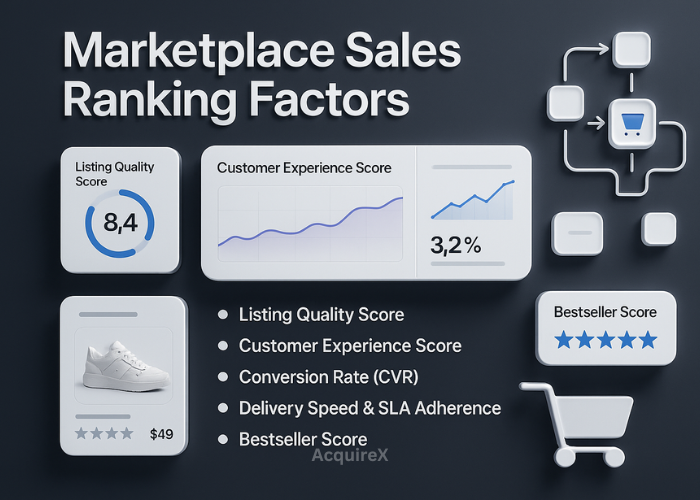
Marketplace Sales Ranking Factors You Must Master
To truly scale Sales, understanding ranking factors is essential. Every marketplace uses a proprietary algorithm, but their core evaluation principles remain similar. Below are the most important ranking factors and how to optimize them:
1. Listing Quality Score
Platforms analyze how complete your listing is.
Listings with detailed descriptions, optimized attributes, and HD images outperform others.
2. Customer Experience Score
Includes return rate, negative feedback, and defect rate.
A lower defect rate improves your visibility significantly.
3. Conversion Rate (CVR)
If buyers click on your product but do not purchase, your listing may drop in ranking.
Boost CVR by improving:
- Titles
- Images
- Pricing
- Offers
- Reviews
- FAQ clarity
4. Delivery Speed & SLA Adherence
Fast delivery improves customer satisfaction.
Platforms prioritize sellers who fulfill faster than competitors.
5. Bestseller Score
Products with consistent Sales and high engagement often receive:
- Better visibility
- Buy Box priority
- Promotions eligibility
Understanding and optimizing these ranking factors accelerates long-term Marketplace Growth.
Conclusion
Winning in Marketplace Sales is not about shortcuts, it’s about consistency, optimization, customer trust, and operational excellence. By focusing on strategic do’s and avoiding costly don’ts, sellers can build a profitable and scalable presence across marketplaces.
With strong listings, competitive pricing, great reviews, and consistent fulfilment, any seller, beginner or expert, can dominate marketplace ecosystems and grow revenue sustainably.
FAQ’s
1. How can I increase Marketplace Sales effectively?
You can increase Marketplace Sales by optimizing product listings, improving pricing strategy, maintaining high-quality reviews, running targeted ads, and ensuring fast, reliable fulfillment.
2. What factors affect Marketplace Sales the most?
Listing SEO, ratings, pricing competitiveness, delivery speed, return rate, and category competition are the major factors that influence Marketplace Sales on any platform.
3. Do reviews and ratings impact Marketplace Sales?
Yes. Strong ratings and positive reviews significantly boost buyer trust, improve listing visibility, and increase conversion rates, resulting in higher Sales.