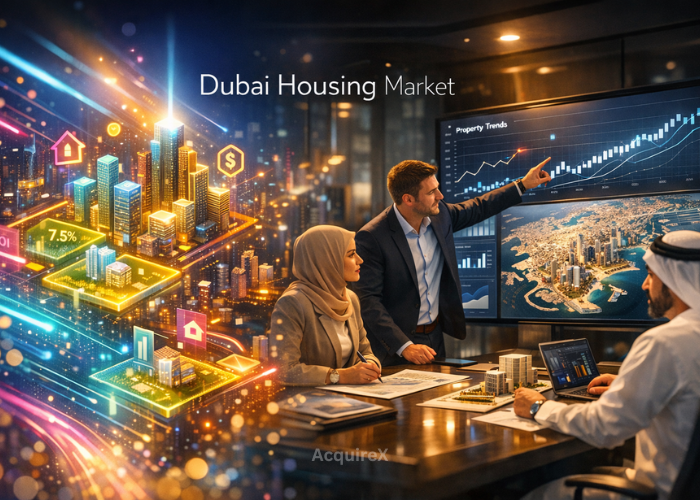
The Dubai Housing Market has emerged as one of the most resilient and opportunity-driven real estate ecosystems globally. Supported by strong governance, investor-friendly regulations, and sustained population growth, Dubai continues to attract buyers, tenants, and institutional capital from across the world. For investors, brokers, developers, and market researchers, understanding current consumer trends and demand drivers within the Dubai Housing Market is essential for informed decision-making.
This guide delivers a data-driven, market-focused analysis designed to help stakeholders decode buyer behavior, pricing dynamics, and long-term growth potential.
Overview of the Dubai Housing Market
The Dubai Housing Market spans residential apartments, villas, townhouses, and luxury waterfront developments. It caters to a diverse audience, end users, expatriates, high-net-worth individuals, and yield-focused investors.
Key characteristics include:
- Freehold ownership zones for foreign buyers
- High rental yields compared to global cities
- Transparent property registration systems
- Stable regulatory oversight
Unlike speculative cycles of the past, today’s Dubai Housing Market is driven by real demand, structured financing, and end-user confidence.
Founding Authority & Market Establishment
Dubai Land Department (DLD)
The Dubai Housing Market operates under the regulatory framework of the Dubai Land Department (DLD), established in 1960. DLD is the principal government authority responsible for:
- Property registration and title deeds
- Real estate governance and compliance
- Market transparency and data reporting
- Investor protection frameworks
Alongside DLD, entities such as the Real Estate Regulatory Agency (RERA) play a critical role in maintaining trust, professionalism, and sustainability across the Dubai Housing Market.
Key Consumer Trends Shaping Demand
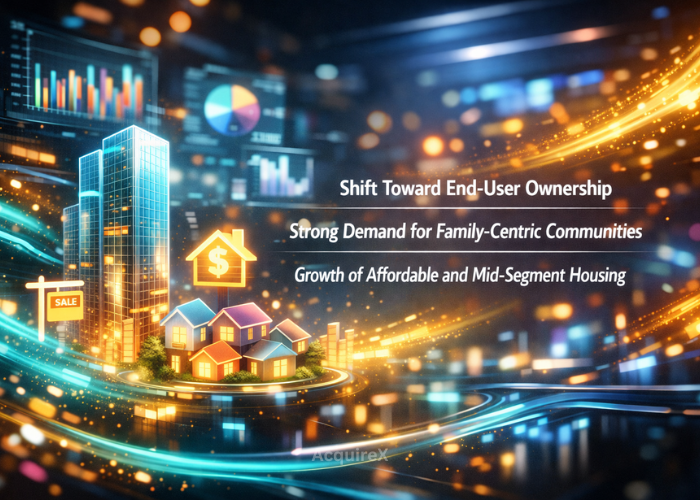
1. Shift Toward End-User Ownership
One of the most notable shifts in the Dubai Housing Market is the rise of end-user buyers. Long-term visas, Golden Visa programs, and improved mortgage accessibility have encouraged residents to purchase rather than rent.
This trend has stabilized pricing and reduced speculative volatility.
2. Strong Demand for Family-Centric Communities
Consumers increasingly prefer integrated communities offering:
- Schools and healthcare access
- Green spaces and walkability
- Retail and lifestyle amenities
Townhouses and villas in master-planned developments are seeing sustained demand across the Dubai Housing Market.
3. Growth of Affordable and Mid-Segment Housing
While luxury real estate often dominates headlines, the strongest transaction volumes in the housing market come from mid-income and affordable housing segments. Developers focusing on value-driven pricing and flexible payment plans are capturing consistent buyer interest.
Investor Demand and Yield Performance
From an investment perspective, the Dubai Housing Market continues to outperform many global peers.
Key investor drivers include:
- Rental yields averaging 6%–8%
- No annual property tax
- Strong tenant demand from expatriates
- Stable currency pegged to the US dollar
According to data published by the Dubai Land Department , residential transaction volumes have shown year-on-year growth, reinforcing investor confidence in the Dubai Housing Market.
Pricing Trends Across Property Types

Apartments
Apartments remain the most traded asset class in the housing market, particularly in business districts and transit-oriented locations.
Villas and Townhouses
Villa prices have demonstrated stronger appreciation due to limited supply and rising family migration.
Luxury Housing
Ultra-luxury properties continue to attract international buyers seeking asset security and lifestyle value rather than short-term returns.
Read All About: Metropolitan Properties In Dubai
Marketing Influence on Buyer Behavior
Marketing strategies have become a critical demand catalyst in the Dubai Housing Market. Buyers are influenced by:
- Data-backed price transparency
- Virtual tours and digital listings
- Developer credibility and delivery track record
- Location storytelling and community branding
Real estate brands that communicate trust, regulatory compliance, and long-term value perform best in competitive segments of the Dubai Housing Market.
Role of Government Policies in Market Stability
Government-led initiatives play a direct role in shaping consumer confidence in the Dubai Housing Market, including:
- 10-year Golden Visas for property investors
- Retirement and remote work visas
- Enhanced escrow regulations
- Digitized land registration systems
These policies reduce risk perception and attract long-term capital inflows.
Opportunities for Brokers and Developers
For industry professionals, the housing market presents multiple growth avenues:
- Targeting end-users with educational content
- Designing mid-income housing projects
- Leveraging off-plan flexibility responsibly
- Focusing on long-term community value
Brokers and developers aligned with consumer demand trends are better positioned to sustain profitability across market cycles.
Read All About: Business Models Used By Real Estate Firm In Dubai
Challenges to Monitor
Despite its strengths, stakeholders in the housing market should remain mindful of:
- Supply pipeline timing
- Interest rate sensitivity
- Global economic volatility
- Market segmentation risks
Strategic planning and market research remain essential for mitigating these factors.
Future Outlook of the Dubai Housing Market
The long-term outlook for the Dubai Housing Market remains positive. Population growth, economic diversification, and infrastructure expansion continue to support housing demand.
As Dubai strengthens its position as a global business and lifestyle hub, residential real estate will remain a core economic pillar.
Why the Dubai Housing Market Remains a Global Benchmark
The Dubai Housing Market stands out due to its regulatory clarity, investor protection, and adaptability to global demand shifts. Whether you are an investor evaluating yields, a broker tracking buyer behavior, or a developer planning future projects, Dubai offers a transparent and scalable real estate environment.
By aligning Marketing strategies, development planning, and investment decisions with verified consumer trends, stakeholders can unlock sustainable growth within the housing market.
Conclusion
The Dubai Housing Market continues to demonstrate long-term resilience, transparency, and global investor appeal. Driven by strong end-user demand, supportive government policies, and a well-regulated real estate framework, the market has evolved into a stable and opportunity-rich environment for buyers, investors, developers, and brokers alike. Shifting consumer preferences toward community living, mid-segment affordability, and long-term ownership have reduced speculative risk and strengthened market fundamentals.
For stakeholders who base decisions on data, regulatory clarity, and consumer demand patterns, the housing market offers sustainable growth potential rather than short-term volatility. As Dubai advances its vision as a global lifestyle and business hub, residential real estate will remain a cornerstone of economic development, making informed market insight a critical advantage for long-term success.
FAQ’s
Is the Dubai Housing Market good for long-term investment?
Yes, the Dubai Housing Market is considered strong for long-term investment due to high rental yields, zero property tax, and stable government regulations that protect investors.
What type of properties are in highest demand in the Dubai Housing Market?
Mid-range apartments, townhouses, and family-friendly villas in master-planned communities currently see the highest demand within the Dubai housing.
How do government policies impact the Dubai Housing Market?
Policies such as Golden Visas, investor-friendly ownership laws, and strict regulatory oversight increase buyer confidence and support steady growth in the housing market.
Are foreign investors allowed to buy property in the Dubai Housing Market?
Yes, foreign investors can purchase freehold properties in designated areas, making the Dubai Housing Market highly attractive to international buyers.
What factors influence pricing trends in the Dubai Housing Market?
Pricing is influenced by location, property type, supply levels, interest rates, and overall demand from both end-users and investors in the housing market.