
7 Ethical Issues in Ecommerce That Brands Cannot Ignore have moved from “nice-to-have” discussions to core business priorities as digital commerce reshapes global buying behavior. From data privacy to fair Pricing, modern e-commerce brands are under constant scrutiny, from regulators, consumers, investors, and search engines alike.
As online shopping scales across borders and devices, ethical decision-making directly impacts customer trust, brand equity, and long-term profitability. This guide explores the most critical Ethical Issues in Ecommerce, why they matter, and how brands can address them responsibly while staying competitive and compliant.
What Are Ethical Issues in Ecommerce?
Ethical Issues in Ecommerce refer to moral challenges and responsibilities that arise when businesses sell products or services online. These issues span customer data protection, transparency, labor practices, environmental impact, and honest marketing.
Unlike traditional retail, e-commerce operates in a data-rich, algorithm-driven environment. This increases both opportunity and risk. Brands that ignore Ethical Issues in Ecommerce may see short-term gains, but often face long-term damage through legal penalties, customer churn, and loss of search visibility.
Why Ethical Practices Matter in the E-commerce Industry
Ethics are no longer separate from performance. Search engines reward trustworthy brands, consumers prefer value-aligned companies, and governments are tightening regulations worldwide.
Key reasons ethics matter:
- Builds long-term customer trust and loyalty
- Reduces regulatory and legal risks
- Improves brand reputation and reviews
- Supports sustainable and scalable growth
In short, addressing Ethical Issues in Ecommerce is not just about compliance, it’s about competitiveness.
7 Major Ethical Issues in Ecommerce Brands Must Address
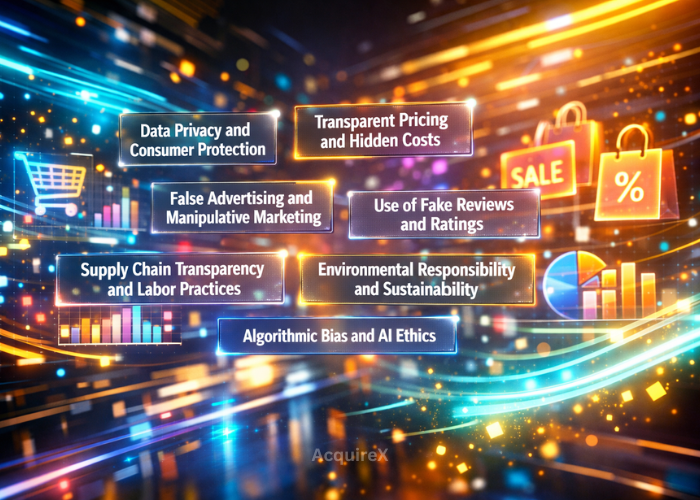
1. Data Privacy and Consumer Protection
One of the most critical Ethical Issues in Ecommerce is how brands collect, store, and use customer data. Personal information, payment details, and browsing behavior are extremely sensitive.
Unethical practices include:
- Collecting data without consent
- Selling user data to third parties
- Weak cybersecurity protections
Global regulations like GDPR and consumer protection laws demand transparency. Ethical e-commerce brands clearly communicate privacy policies and protect user data proactively.
2. Transparent Pricing and Hidden Costs
Misleading discounts, dynamic pricing manipulation, and hidden fees are growing concerns. Customers expect honesty at every step of the checkout journey.
Examples of unethical pricing:
- Inflated “original” prices to show fake discounts
- Surprise shipping or handling fees
- Region-based price discrimination without disclosure
Transparency in pricing directly reduces cart abandonment and reinforces ethical credibility.
3. False Advertising and Manipulative Marketing
Marketing ethics are central to Ethical Issues in Ecommerce. Exaggerated claims, fake scarcity tactics, and misleading product images erode consumer trust.
Common problems include:
- Overstated product benefits
- Fake reviews or testimonials
- Countdown timers that reset artificially
Search engines and regulators increasingly penalize deceptive practices, making ethical marketing essential for visibility and growth.
4. Use of Fake Reviews and Ratings
Social proof drives e-commerce conversions, which is why fake reviews remain a serious ethical concern. Manipulating ratings misleads customers and undermines fair competition.
Ethical alternatives include:
- Encouraging verified buyer reviews
- Displaying both positive and negative feedback
- Actively moderating, not manipulating, reviews
Addressing this Ethical Issue in Ecommerce improves credibility and conversion quality.
5. Supply Chain Transparency and Labor Practices
Many Ethical Issues in Ecommerce originate far beyond the website, in warehouses, factories, and logistics networks.
Key concerns:
- Poor labor conditions
- Child or forced labor in supply chains
- Lack of transparency about sourcing
Ethical e-commerce brands audit suppliers, publish sourcing standards, and communicate openly about production practices.
6. Environmental Responsibility and Sustainability
Fast shipping and fast fashion have environmental costs. Packaging waste, carbon emissions, and overproduction are now central Ethical Issues in Ecommerce.
Responsible practices include:
- Sustainable packaging
- Carbon-neutral shipping options
- Ethical sourcing of raw materials
Consumers increasingly choose brands that balance convenience with environmental responsibility.
7. Algorithmic Bias and AI Ethics
Personalization engines and AI-driven recommendations power modern e-commerce, but they can also introduce bias.
Unethical risks include:
- Discriminatory pricing algorithms
- Biased product visibility
- Excluding certain demographics
Ethical use of AI ensures fairness, explainability, and accountability in automated decision-making.
Ethical Issues in Ecommerce and Consumer Trust
Trust is the currency of digital commerce. Once lost, it is difficult and expensive to rebuild. Ethical Issues in Ecommerce directly influence trust signals such as reviews, repeat purchases, and brand advocacy.
Transparent communication, ethical policies, and consistent actions help brands convert first-time buyers into long-term customers.
How Brands Can Address Ethical Issues in Ecommerce
Establish Clear Ethical Guidelines
Document and enforce policies around data use, marketing claims, pricing, and sourcing. Ethics should be part of onboarding, not an afterthought.
Invest in Compliance and Security
Strong cybersecurity, regular audits, and compliance checks reduce ethical and legal risks.
Be Transparent and Accountable
Publish clear privacy policies, sustainability reports, and sourcing information. Transparency reduces skepticism.
Educate Teams and Partners
Ethics apply across departments, from marketing to logistics. Training ensures alignment across the ecosystem.
Origins of the E-commerce Industry: Founding and Establishment
Owner / Founding Team and Launch Year
The modern e-commerce industry traces its origins to Michael Aldrich, who invented online shopping in 1979 by connecting a television to a transaction-processing computer via a telephone line. This innovation laid the foundation for today’s global digital marketplaces.
Later pioneers such as Jeff Bezos (Amazon, founded 1994) and Pierre Omidyar (eBay, founded 1995) scaled e-commerce into a mainstream economic force, making Ethical Issues in Ecommerce increasingly complex and impactful as the industry grew.
Regulatory Perspective on Ethical Issues in Ecommerce
Governments and regulators worldwide are actively addressing Ethical Issues in Ecommerce. Organisations like the U.S. Federal Trade Commission (FTC) publish guidelines on fair advertising, data protection, and consumer rights, setting global benchmarks for ethical conduct.
For More In-depth Details Explore: Federal Trade Commission – Consumer Protection Guidelines
The Future of Ethical Issues in Ecommerce
As technology evolves, Ethical Issues in Ecommerce will expand into areas like biometric data, immersive commerce, and AI-driven personalization. Brands that proactively adopt ethical frameworks will outperform those that react only under pressure.
Ethics is no longer a compliance checkbox, it is a strategic advantage.
Final Thoughts
Ethical Issues in Ecommerce That Brands Cannot Ignore are shaping the future of digital trade. From data privacy and honest marketing to sustainability and fair labor, ethical choices influence trust, rankings, and revenue.
Brands that embed ethics into their operations don’t just avoid risks, they build resilient, respected, and future-ready e-commerce businesses.
FAQ’s
What are the most common ethical issues in ecommerce?
Common Ethical Issues in Ecommerce include data privacy violations, misleading pricing, fake reviews, false advertising, unethical labor practices, and environmental sustainability concerns.
Why are ethical issues important for ecommerce brands?
Ethical Issues in Ecommerce matter because they affect customer trust, brand reputation, legal compliance, and long-term business growth. Ethical brands retain customers and reduce risk.
How does data privacy relate to ethical issues in ecommerce?
Data privacy is a key Ethical Issue in Ecommerce because online stores collect sensitive customer information. Ethical handling requires transparency, consent, and secure data protection.
Can unethical ecommerce practices affect SEO and rankings?
Yes. Unethical practices like misleading content and fake reviews can violate search engine guidelines, leading to penalties, lower rankings, and traffic loss.
How can ecommerce businesses address ethical issues effectively?
Businesses can address Ethical Issues in Ecommerce by using transparent pricing, protecting customer data, auditing supply chains, adopting sustainable practices, and training teams on ethics.