
The Best Artificial Intelligence tools for ecommerce growth are transforming how businesses operate, engage customers, and scale revenue. From automation to personalization, AI is no longer optional, it’s essential for staying competitive in today’s digital-first marketplace.
Ecommerce brands are increasingly adopting the Best Artificial Intelligence solutions to streamline operations, improve customer experience, and drive data-backed decisions. Whether you’re a startup or an enterprise, leveraging AI can significantly impact your growth trajectory.
Why Artificial Intelligence is Important for Ecommerce
Artificial intelligence enables ecommerce businesses to analyze massive datasets, predict customer behavior, and automate repetitive tasks. The Best Artificial Intelligence tools help reduce manual effort while increasing efficiency and accuracy.
From personalized recommendations to fraud detection, AI enhances every stage of the customer journey. Businesses using the Best Artificial Intelligence technologies often see higher conversion rates, improved retention, and better ROI.
Best Artificial Intelligence Tools for Ecommerce Growth
Choosing the Best AI tools is essential for building a scalable and high-performing ecommerce business. Below is a detailed breakdown of the most impactful AI tools:
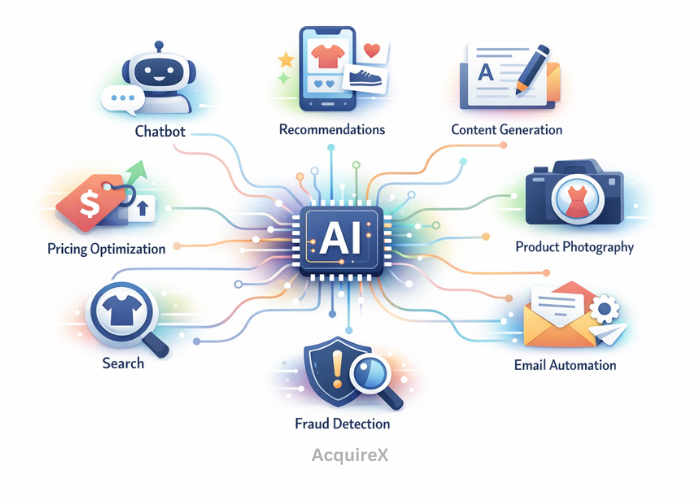
1. AI Chatbots and Customer Engagement
Tools like Tidio, Drift, and Intercom automate conversations using advanced AI and natural language processing.
These tools provide 24/7 support, resolve customer queries instantly, and guide users throughout the buying journey. They also help recover abandoned carts through proactive engagement and personalized responses.
Impact:
The Best Artificial Intelligence chatbot tools improve customer satisfaction, reduce response time, and increase conversions.
Read All About: 10 Best AI Chatbot Softwares For Ecommerce in 2026
2. AI Product Recommendation Engines
Platforms like Dynamic Yield deliver real-time personalized recommendations based on user behavior, browsing patterns, and purchase history.
They enable dynamic product suggestions across homepage, product pages, and checkout, helping businesses upsell and cross-sell effectively.
Impact:
Using the Best Artificial Intelligence recommendation tools increases average order value and customer loyalty.
3. AI Content and Copy Generation
AI tools such as OpenAI and Jasper generate high-quality product descriptions, blogs, ad copy, and email campaigns.
These tools ensure consistent branding while saving time and resources, making them ideal for scaling content production.
Impact:
The Best Artificial Intelligence content tools enhance SEO performance and marketing efficiency.
4. AI Image and Product Photography Tools
Tools like Canva and Adobe (Firefly) use AI to create and enhance product visuals.
Features include background removal, AI-generated scenes, and automatic enhancements, eliminating the need for expensive photoshoots.
Impact:
The Best Artificial Intelligence visual tools improve product appeal and increase conversion rates.
Read All About: 7 AI Product Photography Ideas For Boosting Ecommerce Sales
5. AI Pricing Optimization Tools
Platforms like Prisync use AI to monitor competitors and adjust pricing dynamically.
They help ecommerce businesses stay competitive while maximizing profit margins through data-driven pricing strategies.
Impact:
The Best Artificial Intelligence pricing tools enable smarter, faster pricing decisions.
Read All About: Top 5 Effective Pricing Strategies for E-commerce Growth
6. AI Search and Discovery Tools
Tools like Algolia and Klevu improve on-site search using AI-driven algorithms.
They offer semantic search, typo tolerance, and personalized results, making it easier for users to find products quickly.
Impact:
The Best Artificial Intelligence search tools enhance user experience and reduce bounce rates.
7. AI Fraud Detection and Security Tools
Platforms like Riskified and Signifyd detect fraudulent transactions using machine learning.
They analyze behavior patterns in real time to prevent chargebacks and protect revenue.
Impact:
The Best Artificial Intelligence security tools reduce risk and improve trust.
8. AI Email Marketing and Automation Tools
Tools like Klaviyo and Mailchimp use AI to optimize email campaigns.
They enable advanced segmentation, predictive analytics, and automated workflows to increase engagement.
Impact:
The Best Artificial Intelligence email tools improve open rates, conversions, and customer retention.
Key Benefits of Using Artificial Intelligence in Ecommerce
Implementing the Best Artificial Intelligence tools offers several advantages:
- Enhanced personalization and customer experience
- Improved operational efficiency
- Data-driven decision-making
- Increased sales and conversion rates
- Reduced fraud and operational risks
These benefits make the Best Artificial Intelligence solutions a must-have for modern ecommerce businesses.
Emerging Trends in Artificial Intelligence for Ecommerce
The evolution of the Best AI tools is shaping the future of ecommerce in powerful ways. One major trend is hyper-personalization, where AI delivers highly customized shopping experiences based on real-time behavior and predictive analytics.
Another growing trend is voice commerce, where AI-powered assistants enable users to search and purchase products using voice commands. Visual search is also gaining traction, allowing customers to upload images and find similar products instantly.
Additionally, AI-driven supply chain optimization is helping businesses forecast demand, manage inventory, and reduce logistics costs. Predictive analytics is becoming more advanced, enabling brands to anticipate customer needs even before they arise.
The Best AI technologies are also focusing on ethical AI and data privacy, ensuring transparency and compliance with global regulations.
Staying updated with these trends allows ecommerce businesses to remain competitive and future-ready.
Are These Best Artificial Intelligence Tools Free or Paid?
| Tool Name | Free/Paid |
|---|---|
| Tidio | Free / Paid |
| Drift | Paid |
| Intercom | Paid |
| Dynamic Yield | Paid |
| OpenAI | Free / Paid |
| Jasper | Paid |
| Canva | Free / Paid |
| Adobe | Paid |
| Prisync | Paid |
| Algolia | Paid |
| Klevu | Paid |
| Riskified | Paid |
| Signifyd | Paid |
| Klaviyo | Free / Paid |
| Mailchimp | Free / Paid |
How to Choose the Best Artificial Intelligence Tools
Selecting the Best AI tools depends on your business goals, budget, and scale.
Consider these factors:
- Business size and requirements
- Integration with existing platforms
- Ease of use and scalability
- Pricing and ROI
- Customer support and features
Choosing the right Best Artificial Intelligence solution ensures long-term growth and efficiency.
Conclusion
The Best Artificial Intelligence tools are revolutionizing the ecommerce landscape by enabling smarter operations, personalized experiences, and data-driven growth.
Businesses that invest in the Best AI technologies today will be better positioned to compete, innovate, and scale in the future. Whether it’s chatbots, personalization engines, or fraud detection systems, AI is the backbone of modern ecommerce success.
FAQ’s
1. What are the Best Artificial Intelligence tools for ecommerce?
The Best Artificial Intelligence tools include Tidio, Dynamic Yield, and Klaviyo for support, personalization, and marketing.
2. How does Artificial Intelligence help ecommerce growth?
The Best Artificial Intelligence tools automate tasks, personalize experiences, and improve decision-making, leading to higher conversions and retention.
3. Are Artificial Intelligence tools expensive for startups?
No, many Best Artificial Intelligence tools like Canva and Mailchimp offer free plans for beginners.
4. Which Artificial Intelligence tool is best for marketing?
Top Best Artificial Intelligence tools include Jasper for content and Klaviyo for email automation.
5. How to choose the Best Artificial Intelligence tool?
Choose Best Artificial Intelligence tools based on goals, budget, and needs. Algolia and Intercom are popular options.