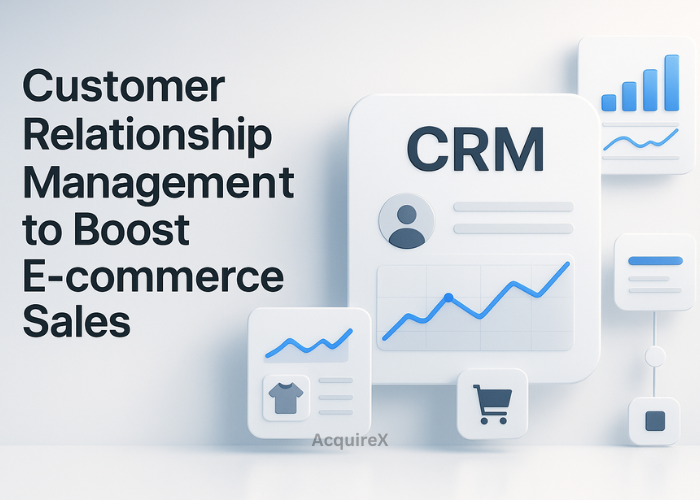
In today’s competitive online landscape, Customer Relationship Management (CRM) has become the backbone of successful E-commerce businesses. Whether you’re a startup or a well-established online brand, implementing the right CRM strategy can elevate customer satisfaction, drive repeat purchases, and significantly boost sales performance.
CRM is no longer optional; it is a strategic necessity for businesses that want to thrive in a fast-paced digital marketplace. From small online stores to large global brands, every E-commerce business benefits from insights that improve customer engagement, streamline processes, and increase revenue.
What is Customer Relationship Management?
Customer Relationship Management refers to the strategies, technologies, and processes that businesses use to manage and analyze customer interactions throughout the customer lifecycle. In E-commerce, it’s not just about collecting data but about using that data to personalize experiences, increase loyalty, and streamline marketing and sales efforts.
A well-integrated CRM system empowers E-commerce brands to:
- Understand customer preferences and buying behavior
- Improve engagement with personalized communication
- Optimize after-sales support and retention strategies
- Enhance decision-making through analytics and reporting
CRM ensures that every interaction with your customers adds value, building stronger relationships and long-term trust.
Know All About: Customer Service Management
Why Customer Relationship Management is Crucial for E-commerce Success
In E-commerce, your relationship with customers doesn’t end with a purchase; it begins there. With the right CRM strategy, you can transform one-time buyers into loyal brand advocates.
1. Personalized Shopping Experience
CRM systems store detailed customer profiles, including browsing habits, order history, and preferences. This data helps businesses deliver highly personalized product recommendations and targeted campaigns that convert better than generic ads.
2. Improved Customer Retention
It costs five times more to acquire a new customer than to retain an existing one. Customer Relationship Management helps businesses track satisfaction levels, identify churn risks, and implement retention strategies like loyalty programs or re-engagement emails.
3. Data-Driven Marketing Decisions
A CRM solution gives marketers valuable insights into what works and what doesn’t. By analyzing customer journeys and sales funnels, businesses can allocate budgets efficiently and measure ROI accurately.
4. Enhanced Customer Support
By centralizing customer interactions, support teams can respond faster and more effectively. Whether through chat, email, or social media, CRM tools ensure no query goes unanswered.
5. Seamless Omnichannel Experience
Modern consumers expect consistent experiences across platforms. CRM systems synchronize data from multiple touchpoints like mobile apps, websites, and offline stores, providing a unified view of the customer journey.
Key Features of an E-commerce CRM System
When choosing or optimizing a CRM for your online store, ensure it includes the following features:
- Customer Segmentation: Categorizes customers based on demographics, interests, and behavior
- Marketing Automation: Automates emails, retargeting, and loyalty campaigns
- Sales Forecasting: Predicts future trends using historical data
- Analytics Dashboard: Tracks KPIs like conversion rates and lifetime value
- Integration with E-commerce Platforms: Seamlessly connects with Shopify, WooCommerce, or Magento
These features make it easier for E-commerce brands to scale operations, improve conversions, and maintain customer-centric growth. They also help brands respond quickly to market changes, ensuring that customer engagement remains high even during peak seasons.
E-commerce and CRM: A Perfect Synergy
For E-commerce brands, Customer Relationship Management isn’t just a tool; it’s a long-term growth strategy. It bridges marketing, sales, and customer service, creating a seamless experience that builds trust and drives repeat sales.
Example: How Amazon Uses CRM Effectively
Amazon’s CRM strategy revolves around personalization. From tailored product recommendations to real-time delivery updates, its entire ecosystem centers on customer satisfaction. This approach has helped Amazon achieve some of the highest retention rates in the E-commerce industry.
Smaller online stores can also leverage CRM to create similarly personalized experiences. Even simple automation like follow-up emails or cart abandonment reminders can dramatically increase conversion rates and repeat purchases.
How to Implement Customer Relationship Management in Your E-commerce Business
Implementing CRM requires a structured approach aligned with your business objectives.
Step 1: Define Your Objectives
Determine whether your goal is to increase retention, improve customer service, or boost conversions.
Step 2: Choose the Right CRM Platform
Popular options include HubSpot, Salesforce, and Zoho CRM, all offering E-commerce-friendly integrations.
Step 3: Integrate CRM with Existing Tools
Sync your CRM with email marketing, analytics, and payment systems to ensure seamless data flow.
Step 4: Train Your Team
Ensure your sales, marketing, and support teams understand how to use the CRM effectively.
Step 5: Monitor and Optimise
Regularly analyze CRM reports to measure performance and make data-backed improvements.
How CRM Impacts Revenue Growth
Implementing Customer Relationship Management directly influences your bottom line. Brands that invest in CRM systems report up to 30% higher sales productivity and 40% improved customer retention rates. With automation and data analytics, E-commerce companies can eliminate guesswork, identify high-value customers, and prioritize marketing efforts that deliver tangible ROI.
CRM also enhances upselling and cross-selling opportunities. By understanding purchase patterns, you can suggest complementary products and time your offers perfectly, boosting the average order value.
Additionally, CRM helps build customer trust through transparency and reliability. Automated post-purchase follow-ups, order tracking, and proactive support create a sense of security that fosters repeat purchases.
CRM adoption also allows E-commerce brands to respond faster to market changes, seasonal trends, and shifting customer preferences, ensuring sustained revenue growth even during competitive periods.
Measuring CRM Success in E-commerce
To gauge the effectiveness of your Customer Relationship Management strategy, track key performance indicators (KPIs) such as:
- Customer Lifetime Value (CLV)
- Customer Retention Rate (CRR)
- Net Promoter Score (NPS)
- Conversion Rate
- Repeat Purchase Ratio
Consistent tracking ensures that your CRM strategy evolves with changing customer behavior and market trends.
The Future of Customer Relationship Management in E-commerce
With advancements in AI, automation, and predictive analytics, CRM is becoming smarter than ever. AI-powered CRMs can predict customer intent, automate responses, and even suggest personalized offers in real time.
In the near future, integrating Customer Relationship Management with technologies like chatbots, voice commerce, and AR/VR will redefine how online brands connect with their audiences. Brands that adopt these innovations early will gain a competitive edge in retention, engagement, and revenue growth.
Conclusion
For E-commerce businesses aiming to stand out in a crowded market, investing in Customer Relationship Management isn’t optional; it’s essential. From personalized experiences to long-term loyalty, a CRM system enhances every touchpoint of the customer journey.
By focusing on meaningful interactions, leveraging data, and adopting innovative CRM tools, your brand can achieve sustainable growth, stronger customer relationships, and higher ROI.
FAQ’s
1. How does Customer Relationship Management help E-commerce businesses grow?
Customer Relationship Management helps E-commerce businesses grow by centralising customer data, improving personalisation, and streamlining marketing and sales processes. It boosts customer retention, enhances communication, and drives repeat purchases through data-driven strategies.
2. What are the best CRM tools for E-commerce?
Some of the best CRM tools for E-commerce include HubSpot CRM, Salesforce, Zoho CRM, and Klaviyo. These platforms integrate seamlessly with popular E-commerce systems like Shopify and WooCommerce, helping brands automate marketing, track customer behavior, and improve overall engagement.
3. Why is Customer Relationship Management important for online stores?
Customer Relationship Management is vital for online stores because it helps understand customer behavior, personalize the shopping experience, and strengthen brand loyalty. It enables better targeting, efficient follow-ups, and long-term relationships that increase sales and profitability.