Dropshipping Using Shopify has become one of the most reliable and scalable business models in the modern e-commerce ecosystem, especially for entrepreneurs looking to start with low investment and minimal risk.
Introduction to Dropshipping Using Shopify
Dropshipping Using Shopify allows sellers to launch an online store without holding inventory. When a customer places an order, the product is shipped directly from the supplier to the customer. Shopify acts as the backbone of this system, offering seamless store management, automation, and integrations.
In 2026, Shopify dropshipping continues to dominate the e-commerce industry due to faster store setup, global payment support, and advanced marketing tools. Whether you are a beginner or an experienced seller, this model offers flexibility, scalability, and long-term growth potential.
What Is Dropshipping Using Shopify?
Dropshipping Using Shopify is an e-commerce fulfillment method where store owners sell products through a Shopify-powered website without stocking inventory. Shopify integrates with dropshipping apps that automate product sourcing, pricing, and order fulfillment.
This model is ideal for testing new products, entering niche markets, and running lean online businesses. With the right strategy, Shopify dropshipping can generate consistent revenue while keeping operational costs low.
Why Shopify Is Ideal for Dropshipping in 2026
Shopify remains the preferred platform for dropshipping due to its reliability, security, and robust ecosystem. Here’s why Shopify dropshipping works so well:
- User-friendly interface for beginners
- Scalable infrastructure for high-volume stores
- Seamless integration with dropshipping suppliers
- Built-in SEO and marketing tools
- Global payment gateways and tax automation
These features make Dropshipping Using Shopify suitable for both startups and established e-commerce brands.
Shopify Founders and Company Background
Shopify Founding Team and Establishment Year
Shopify was founded in 2006 by Tobias Lütke, Daniel Weinand, and Scott Lake in Canada. Originally built as an online store, Shopify evolved into a full-fledged e-commerce platform trusted by millions of merchants worldwide.
Understanding the strong foundation and leadership behind Shopify builds confidence for anyone planning Dropshipping Using Shopify as a long-term business strategy.
How Dropshipping Using Shopify Works Step by Step
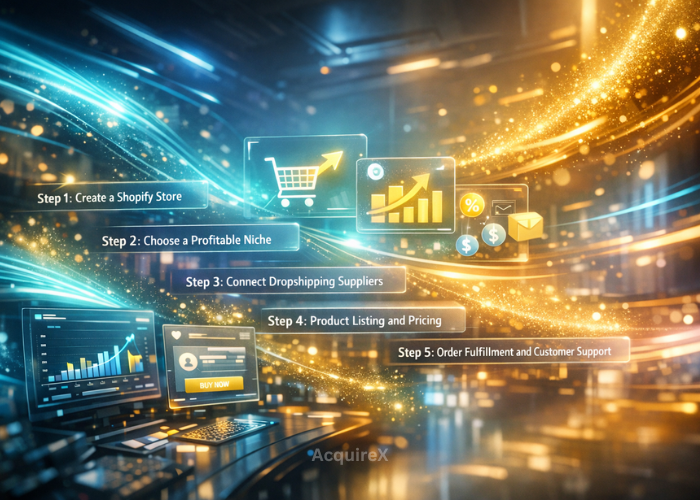
Step 1: Create a Shopify Store
Sign up on Shopify and choose a professional theme optimized for conversions. Your store design plays a major role in trust-building and sales.
Step 2: Choose a Profitable Niche
Successful Dropshipping Using Shopify starts with niche research. Focus on problem-solving products, trending items, or passion-driven categories with consistent demand.
Step 3: Connect Dropshipping Suppliers
Use apps like DSers, CJdropshipping, or similar tools to connect suppliers. These apps automate product imports and order fulfillment, making Dropshipping Using Shopify efficient and scalable.
Step 4: Product Listing and Pricing
Optimize product titles, descriptions, and images. Apply strategic pricing that covers product cost, marketing, and profit margins.
Read All About: Marketplace Listing And Pricing Strategy
Step 5: Order Fulfillment and Customer Support
Once an order is placed, it is automatically forwarded to the supplier. Providing timely updates and responsive support is crucial for success in Dropshipping Using Shopify.
Key Benefits of Dropshipping Using Shopify
Dropshipping Using Shopify offers several advantages for e-commerce entrepreneurs:
- Low startup investment
- No inventory management
- Easy product testing
- Location-independent business
- Automated operations
These benefits make Dropshipping Using Shopify one of the most accessible online business models in 2026.
SEO and Marketing Strategy for Shopify Dropshipping
SEO Optimization
Shopify supports SEO-friendly URLs, meta tags, and fast-loading pages. For Dropshipping Using Shopify, focus on keyword-optimized product pages, blog content, and internal linking.
Paid Advertising and Social Media
Facebook Ads, Instagram Reels, and Google Shopping Ads remain powerful traffic sources. Combining organic SEO with paid campaigns maximizes profitability in Dropshipping Using Shopify.
Check Out What’s Included In Performance Marketing And Growth
Email and Retargeting
Email automation and retargeting ads help recover abandoned carts and build customer lifetime value, which is essential for sustainable growth.
Challenges in Dropshipping Using Shopify
While Shopify Dropshipping has many benefits, it also comes with challenges:
- High competition
- Supplier reliability issues
- Thin profit margins without branding
- Customer trust and delivery timelines
These challenges can be overcome with strong branding, supplier vetting, and customer-first strategies.
Best Practices for Scaling Dropshipping Using Shopify
To scale Shopify dropshipping successfully:
- Focus on branded stores, not generic listings
- Improve website speed and mobile experience
- Use data-driven product testing
- Build social proof with reviews and UGC
- Automate operations with advanced apps
Scaling requires consistency, analytics, and reinvestment into marketing and customer experience.
Future Trends in Shopify-Based Dropshipping
In 2026, the dropshipping model is shifting from basic product reselling to brand-led, data-driven e-commerce. AI-powered product research, faster fulfillment networks, and localized customer experiences are becoming standard. Advanced analytics and automation now help sellers forecast demand, personalize marketing, and improve conversion rates. Businesses that prioritize sustainable sourcing, strong branding, and omnichannel selling will be better positioned to stay competitive and achieve long-term growth.
Legal and Compliance Considerations
Ensure your Shopify store includes a clear and comprehensive privacy policy, refund policy, and terms of service. Proper compliance builds trust and reduces disputes in Shopify dropshipping operations.
For official platform guidance, refer to Shopify’s documentation
Is Dropshipping Using Shopify Still Profitable in 2026?
Yes, Dropshipping is still profitable in 2026, provided you approach it as a real business. Generic stores and copied strategies no longer work. Success depends on branding, niche expertise, and customer-centric execution.
Entrepreneurs who invest in quality marketing, reliable suppliers, and long-term brand building continue to see strong returns.
Final Thoughts
Dropshipping Using Shopify remains one of the most practical entry points into the e-commerce industry. With Shopify’s powerful ecosystem and the right strategy, entrepreneurs can build scalable, sustainable online businesses in 2026 and beyond.
Whether you are launching your first store or optimizing an existing one, Dropshipping Using Shopify offers the tools, flexibility, and growth potential needed to succeed in today’s competitive e-commerce landscape.
FAQ’s
1. Is dropshipping using Shopify profitable in 2026?
Yes, Shopify dropshipping is profitable in 2026 when sellers focus on niche selection, branding, reliable suppliers, and data-driven marketing strategies rather than generic product stores.
2. How much money do I need to start dropshipping using Shopify?
You can start Shopify dropshipping with ₹3,000–₹10,000, covering Shopify subscription fees, domain purchase, basic apps, and initial marketing expenses.
3. Do I need a GST number for dropshipping using Shopify in India?
A GST number is not mandatory for all sellers, but it is required if you are selling to Indian customers or working with GST-registered suppliers while Dropshipping Using Shopify.
4. What are the best products for dropshipping using Shopify?
The best products for Shopify dropshipping are problem-solving items, trending lifestyle products, home improvement tools, fitness accessories, and niche-specific gadgets with consistent demand.