A Retail Management System is the backbone of modern eCommerce and omnichannel retail, enabling businesses to manage inventory, Sales, customers, analytics, and operations from a unified digital platform.
What Is a Retail Management System?
A Retail Management System is an integrated software solution designed to centralize and automate core retail operations. For eCommerce-first and omnichannel brands, it connects online stores, physical outlets, warehouses, Marketplaces, and logistics partners into a single operational ecosystem.
Unlike disconnected retail tools, it ensures real-time data synchronisation across inventory, orders, Pricing, promotions, and customer information. This unified approach reduces errors, improves efficiency, and delivers consistent customer experiences across all sales channels.
Why a Retail Management System Is Essential for eCommerce
The eCommerce industry operates in real time. Customers expect instant availability updates, fast fulfillment, and seamless experiences across platforms. A Retail Management System helps businesses meet these expectations by offering centralized control and operational transparency.
Key challenges it addresses include:
- Inventory mismatches across channels
- Delayed order fulfillment
- Manual operational inefficiencies
- Poor customer data visibility
- Limited scalability
For growing online retailers, implementing a Retail Management System is a strategic step toward sustainable growth.
Key Features of a Retail Management System
Inventory Management
It provides real-time inventory tracking across warehouses, stores, and online channels. Automated stock updates and low-stock alerts help prevent overstocking and stockouts.
Read All About: Shopify Inventory Management
Point of Sale (POS) Integration
Unified POS functionality ensures that both online and offline transactions are captured within one system. This is crucial for omnichannel retailers managing multiple sales touchpoints.
Order & Fulfillment Management
From order placement to delivery, the management System streamlines the entire fulfilment process. It supports flexible fulfilment models such as ship-from-warehouse, ship-from-store, and click-and-collect.
Customer Relationship Management (CRM)
Built-in CRM capabilities allow retailers to track customer behavior, purchase history, and preferences. This enables personalized marketing, loyalty programs, and improved customer retention.
Read All About: Customer Relationship Management and How To Boost Sales
Pricing & Promotions Control
Retailers can manage pricing rules, discounts, and promotional campaigns centrally, ensuring consistency across all channels and marketplaces.’
Read All About: Pricing Strategies
Reporting & Analytics
Advanced dashboards and reports provide insights into sales trends, inventory turnover, customer lifetime value, and profit margins, supporting informed business decisions.
Benefits of Using a Retail Management System
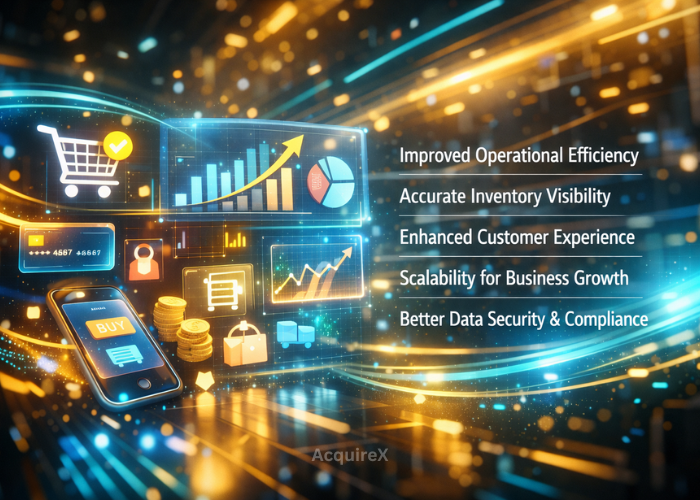
Improved Operational Efficiency
Automation reduces manual work, minimizes errors, and improves coordination across departments.
Accurate Inventory Visibility
Real-time inventory control helps optimize stock levels, reduce holding costs, and increase sales availability.
Enhanced Customer Experience
Consistent pricing, faster fulfillment, and personalized interactions lead to higher customer satisfaction and loyalty.
Scalability for Business Growth
A cloud-based Retail System allows retailers to scale operations, add new channels, and expand into new markets without system limitations.
Better Data Security & Compliance
Modern systems include role-based access controls, audit trails, and secure data management, ensuring business continuity and compliance readiness.
Retail Management System vs Traditional Retail Software
Traditional retail software often relies on separate tools for inventory, POS, accounting, and reporting. A Retail System consolidates these functions into a single platform, reducing operational complexity and improving data accuracy.
For eCommerce brands, this unified approach enables faster decision-making and better alignment between sales, operations, and customer experience teams.
Cloud-Based Retail Management Systems
Cloud deployment has become the preferred choice for e-commerce retailers. A cloud-based Retail Management System offers:
- Anywhere, anytime system access
- Reduced infrastructure costs
- Faster deployment and updates
- High availability and scalability
These advantages make cloud solutions ideal for fast-growing and digitally native retail businesses.
How to Choose the Right Retail Management System
When selecting a Retail Management System, businesses should evaluate:
- Compatibility with existing eCommerce platforms
- Integration capabilities with payment gateways and logistics partners
- Customization and scalability options
- Quality of customer support and onboarding
- Total cost of ownership
A thorough evaluation ensures long-term value and smoother implementation.
Best Practices for Implementing a Retail Management System
- Define clear business objectives before implementation
- Clean and standardize data prior to migration
- Train teams across operations, sales, and support
- Monitor KPIs during the initial rollout phase
- Continuously optimize workflows post-implementation
Future Trends in Retail Management Systems
The evolution of Retail Management is closely tied to emerging technologies. Key trends include:
- AI-driven demand forecasting
- Predictive inventory optimization
- Headless and composable commerce architectures
- Advanced personalization engines
- Deeper integration with marketplaces and social commerce platforms
These innovations will further enhance operational agility and customer-centric retail strategies.
Conclusion
A Retail Management System is the operational foundation of modern eCommerce. By unifying inventory, sales, customer data, and analytics, it enables retailers to operate efficiently, scale confidently, and deliver superior customer experiences.
For eCommerce businesses aiming to stay competitive and future-ready, investing in a robust Retail System is a critical strategic decision, not just a technology upgrade.
FAQ’s
What is a Retail Management System?
It is an integrated software solution that helps retailers manage inventory, sales, customers, orders, and analytics across online and offline channels from a single platform.
How does a Retail Management System help eCommerce businesses?
It improves operational efficiency by synchronizing inventory, automating order fulfillment, enabling real-time reporting, and delivering consistent customer experiences across all sales channels.
Is a Retail Management System suitable for small and mid-sized retailers?
Yes. Modern cloud-based platforms are highly scalable and cost-effective, making them ideal for small, mid-sized, and fast-growing eCommerce businesses.
What features should I look for in a Retail Management System?
Key features include inventory management, POS integration, order and fulfillment management, CRM, pricing and promotions control, analytics, and seamless integration with eCommerce platforms.
Can a Retail Management System support omnichannel retail?
Absolutely. It is designed to support omnichannel retail by unifying online stores, physical locations, warehouses, and marketplaces into one centralized system.