The rapid evolution of digital commerce has forced businesses to rethink how they deliver online experiences. Traditional e-commerce platforms often limit flexibility, making it difficult to adapt to changing customer expectations. This is where Headless Commerce comes into play.
Headless Commerce is transforming how brands build, manage, and scale their online stores. By separating the front-end (what users see) from the back-end (where data and logic reside), businesses gain unmatched agility, speed, and customization capabilities.
In this blog, we’ll explore what Headless Commerce is, its key advantages, and why it has become a strategic choice for modern e-commerce businesses.
What is Headless Commerce?
It is an e-commerce architecture where the front-end presentation layer is decoupled from the back-end commerce functionality.
In traditional systems, the front-end and back-end are tightly connected. Any change in design or user experience often requires backend adjustments. However, with Headless Commerce, developers use APIs to connect the front-end with the back-end, allowing both to operate independently.
Key Components:
- Front-end: User interface (websites, apps, IoT devices)
- Back-end: Product database, checkout, inventory, order management
- APIs: Bridge between front-end and back-end systems
This architecture enables businesses to deliver seamless and consistent experiences across multiple channels.
Read All About: Grow E-commerce with Component Based Software Engineering
Why Headless Commerce is Gaining Popularity
The rise of omnichannel retail, mobile commerce, and personalized shopping experiences has made traditional platforms less effective. It addresses these challenges by offering flexibility and scalability.
According to industry insights from Shopify, businesses adopting headless architecture report faster site performance and improved customer engagement.
Key Drivers:
- Growing demand for omnichannel experiences
- Need for faster website performance
- Increased focus on personalization
- Rapid innovation cycles
Advantages of Headless Commerce
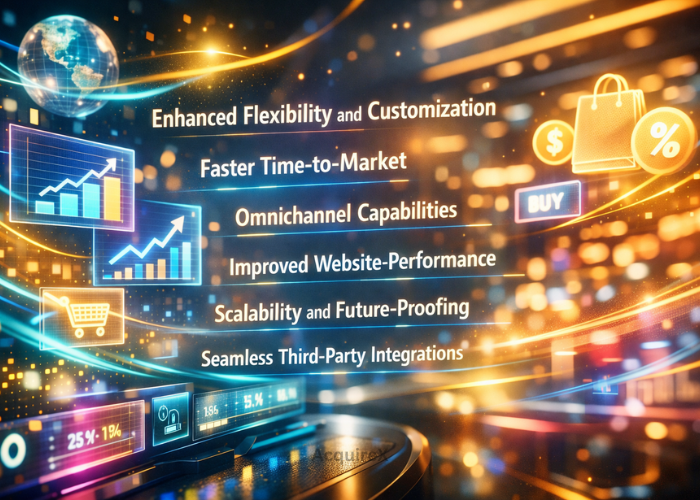
1. Enhanced Flexibility and Customization
One of the biggest benefits of Headless Commerce is the ability to customize the front-end without affecting backend operations.
Businesses can:
- Create unique user experiences
- Experiment with new designs quickly
- Integrate modern frameworks like React or Vue
This flexibility allows brands to stand out in a competitive market.
2. Faster Time-to-Market
With Headless Commerce, developers can work on the front-end and back-end simultaneously.
This parallel development:
- Reduces deployment time
- Accelerates feature launches
- Enables quicker response to market trends
For e-commerce businesses, speed often translates directly into revenue growth.
3. Omnichannel Capabilities
Modern customers interact with brands across multiple touchpoints, websites, mobile apps, social media, and even smart devices.
Headless commerce makes it easier to:
- Deliver consistent experiences across channels
- Manage multiple storefronts from one backend
- Expand into new platforms effortlessly
This is crucial for businesses aiming to scale globally.
4. Improved Website Performance
Performance is a critical ranking factor for SEO and user experience.
With Headless Commerce:
- Front-end optimization is independent
- Faster loading times are achievable
- Better Core Web Vitals scores can be maintained
This directly impacts conversion rates and search engine rankings.
5. Scalability and Future-Proofing
As businesses grow, their technology needs evolve. Traditional systems often struggle to scale efficiently.
Headless Commerce provides:
- Easy integration with new tools and technologies
- Scalability without major replatforming
- Adaptability to future trends like AR/VR commerce
This makes it a long-term investment for digital growth.
6. Seamless Third-Party Integrations
E-commerce businesses rely on multiple tools such as CRMs, payment gateways, and marketing automation platforms.
Headless Commerce enables:
- Easy API-based integrations
- Faster implementation of new tools
- Reduced dependency on a single vendor
This flexibility enhances operational efficiency.
How Headless Commerce Improves Customer Experience
Delivering exceptional customer experience is a top priority for modern e-commerce businesses, and it plays a critical role in achieving this. By decoupling the front-end from the back-end, brands can design faster, more responsive, and highly personalized user interfaces tailored to customer preferences. This flexibility allows businesses to optimize every touchpoint, from homepage browsing to checkout, without backend limitations.
The companies can implement dynamic content, localized experiences, and real-time personalization across devices, ensuring consistency in omnichannel journeys. Faster page load speeds and smoother navigation significantly reduce bounce rates and improve conversion rates. Additionally, integrating advanced technologies like AI-driven recommendations becomes easier, enhancing customer engagement.
Ultimately, it empowers businesses to deliver seamless, intuitive, and memorable shopping experiences that drive customer loyalty and long-term growth.
Headless Commerce vs Traditional Commerce
| Feature | Traditional Commerce | Headless Commerce |
|---|---|---|
| Architecture | Monolithic | Decoupled |
| Flexibility | Limited | High |
| Customization | Restricted | Extensive |
| Speed | Slower updates | Faster deployment |
| Omnichannel | Difficult | Seamless |
Use Cases of Headless Commerce in E-commerce
1. Global Retail Brands
Large brands use it to manage multiple regional storefronts with localized experiences.
2. D2C (Direct-to-Consumer) Brands
D2C businesses leverage it for faster experimentation and personalization.
3. Mobile-First Commerce
Apps and progressive web apps (PWAs) benefit significantly from headless architecture.
4. Content-Driven Commerce
Businesses integrating blogs, videos, and storytelling into shopping experiences use it for seamless content delivery.
Challenges of Headless Commerce
While it offers many benefits, it also comes with certain challenges:
- Higher initial development costs
- Technical complexity
- Ongoing maintenance requirements
However, for growing businesses, the long-term advantages typically outweigh these challenges.
Best Practices for Implementing Headless Commerce
1. Define Clear Objectives
Identify your goals, whether it’s performance, scalability, or omnichannel expansion.
2. Choose the Right Tech Stack
Select tools and frameworks that align with your business needs.
3. Focus on API Strategy
Strong API management is crucial for seamless integration.
4. Prioritize User Experience
Ensure that front-end design enhances usability and engagement.
5. Monitor Performance Metrics
Track KPIs like page speed, conversion rate, and customer retention.
Future of Headless Commerce
The future of Headless Commerce is closely tied to emerging technologies such as:
- Artificial Intelligence
- Voice Commerce
- Augmented Reality
- IoT-enabled shopping
As customer expectations continue to evolve, it will play a central role in delivering innovative and personalised experiences.
Conclusion
It is no longer just a trend, it’s a strategic necessity for e-commerce businesses aiming to stay competitive in a rapidly evolving digital landscape.
By offering flexibility, scalability, and superior customer experiences, it empowers brands to innovate faster and adapt to changing market demands.
Whether you’re a startup or an established enterprise, adopting it can unlock new growth opportunities and future-proof your business.
FAQ’s
1. What is Headless Commerce in simple terms?
It separates the front-end and back-end of an e-commerce platform, allowing independent development and greater flexibility.
2. Is Headless Commerce suitable for small businesses?
Yes, but it depends on budget and technical resources. It’s ideal for businesses planning rapid growth.
3. How does Headless Commerce improve SEO?
It enhances site speed, user experience, and Core Web Vitals, which are key SEO factors.
4. What technologies are used in Headless Commerce?
Common technologies include APIs, microservices, and front-end frameworks like React or Angular.
5. Is Headless Commerce the future of e-commerce?
Yes, due to its scalability, flexibility, and ability to support omnichannel experiences.