
In 2026, SEO is no longer just about keywords and backlinks, it’s about structure, meaning, and user experience. That’s where Semantic HTML plays a critical role. For eCommerce businesses, adopting Semantic HTML is not just a technical upgrade, it’s a strategic advantage that directly impacts rankings, conversions, and accessibility.
Search engines have become smarter, relying heavily on context and intent. Using Semantic HTML helps them understand your content better, ensuring your online store gets the visibility it deserves. It also aligns your website with modern search algorithms that prioritize structured, meaningful, and user-focused content.
What Is Semantic HTML?
Semantic HTML refers to the use of HTML elements that clearly describe their meaning and purpose. Instead of generic tags like <div> and <span>, semantic elements such as <header>, <article>, <section>, and <footer> define the structure of your content.
For example:
<article>represents independent content<nav>defines navigation links<aside>highlights related content
This structured approach improves how both users and search engines interpret your website, creating a more organized and intuitive browsing experience.
Why Semantic HTML Matters for SEO in 2026
1. Better Search Engine Understanding
Search engines rely on structured data to crawl and index pages effectively. Semantic HyperText Markup Language provides clear signals about content hierarchy, helping search engines understand:
- Product descriptions
- Categories
- Reviews
- Blog content
This leads to improved indexing and higher chances of ranking for relevant queries, especially in competitive eCommerce niches.
2. Improved Core Web Vitals & UX
User experience is now a major ranking factor. Semantic HTML contributes by:
- Reducing unnecessary code
- Enhancing page structure
- Improving load efficiency
For eCommerce websites, faster and well-structured pages lead to:
- Lower bounce rates
- Higher engagement
- Increased conversions
Additionally, clean code ensures better performance across devices, particularly on mobile, where most eCommerce traffic originates.
3. Enhanced Accessibility (AEO Advantage)
Accessibility is not just ethical, it’s strategic. With Semantic HyperText Markup Language, screen readers and assistive technologies can interpret content accurately.
This improves:
- Accessibility compliance
- Voice search compatibility
- Answer Engine Optimization (AEO)
In 2026, Voice Search and AI assistants depend heavily on structured content, making Semantic HTML essential for visibility in conversational queries.
4. Rich Snippets & SERP Features
Using Semantic HTML increases the likelihood of appearing in:
- Featured snippets
- Product carousels
- FAQs
- Knowledge panels
These enhanced search results significantly boost click-through rates (CTR), especially for eCommerce listings, where visibility directly impacts sales.
5. Stronger Content Hierarchy
A well-structured page improves readability for both users and search engines. With Semantic HyperText Markup Language, you can:
- Define headings clearly
- Organize product pages
- Structure blog content
This clarity improves SEO performance and ensures users can easily navigate and find relevant information.
Semantic HTML in eCommerce: Practical Use Cases
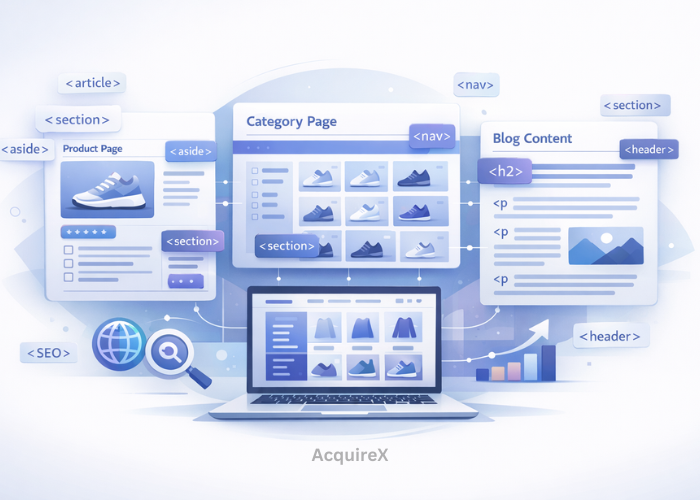
Product Pages
Use Semantic HyperText Markup Language to structure product pages effectively:
<article>for product details<section>for specifications<aside>for related products
This helps search engines understand your offerings better while improving user experience.
Category Pages
For category pages:
- Use
<nav>for filters - Use
<section>for product groups
This improves crawlability and user navigation, making it easier for users to browse products and for search engines to index them efficiently.
Blog Content
Blogs are crucial for organic traffic. Using Semantic HyperText Markup Language ensures:
- Clear content hierarchy
- Better indexing
- Higher chances of ranking for informational queries
This is especially important for content marketing strategies in eCommerce.
Best Practices for Using Semantic HTML
1. Use Proper Tags
Avoid overusing <div> and instead use meaningful elements:
<header>for page headers<main>for primary content<footer>for closing sections
2. Maintain Logical Structure
Ensure a clear hierarchy:
- One
<h1>per page - Organized
<h2>and<h3>sections
This improves both SEO and readability.
3. Combine with Structured Data
While Semantic HTML helps with structure, combining it with schema markup enhances results further.
For example:
- Product schema
- Review schema
- FAQ schema
4. Optimize for Mobile & Speed
A clean structure using Semantic HTML reduces code bloat and improves performance, which is critical for mobile-first indexing and global eCommerce audiences.
Semantic HTML Quick Guide for eCommerce
Use <header> for logo and top navigation.
Use <nav> for menus and category links.
Use <main> for the main page content (only once).
Use <article> for product details or blog posts.
Use <section> to group related content like description or specs.
Use <aside> for related products or extra content.
Use <h1> for the main title, <h2> and <h3> for subheadings.
Use <img> with alt text for product images.
Use <ul> and <li> for features or lists.
Use <footer> for bottom links and info.
Use <button> for actions like “Add to Cart”.
Use <a> for navigation links.
Use <meta> tags for SEO and structured data (JSON-LD) for better search visibility.
Common Mistakes to Avoid
Even experienced developers make mistakes with Semantic HTML. Avoid these:
- Using
<div>instead of semantic tags - Skipping heading hierarchy
- Overcomplicating structure
- Ignoring accessibility
Fixing these issues can significantly improve SEO performance and user satisfaction.
How Semantic HTML Aligns with Google E-E-A-T
Google’s E-E-A-T (Experience, Expertise, Authoritativeness, Trustworthiness) framework emphasizes high-quality content and reliable structure.
Semantic HTML supports this by:
- Enhancing content clarity
- Improving accessibility
- Supporting structured data
This builds trust with both users and search engines, especially in industries like eCommerce where credibility influences buying decisions.
According to Google Search Center, structured and meaningful content helps search engines better understand and present your pages in search results.
The Future of Semantic HTML in SEO
As AI and machine learning continue to evolve, search engines will rely even more on context and meaning. It will become a foundational requirement rather than an option.
Emerging trends include:
- AI-powered search engines
- Voice-first interfaces
- Personalized search experiences
All of these depend on structured, meaningful content. Businesses that fail to adopt Semantic HTML may struggle to compete in increasingly intelligent search environments.
Read All About: Hreflang SEO Eliminating Massive Global Traffic Loss
Final Thoughts
In 2026, Semantic HTML is not just a technical best practice, it’s a competitive advantage. For eCommerce businesses, it directly impacts:
- Search rankings
- User experience
- Conversion rates
By adopting it, you ensure your website is future-ready, accessible, and optimized for both users and search engines. Investing in proper structure today will deliver long-term SEO benefits, making your brand more discoverable, trustworthy, and scalable in the evolving digital marketplace.
FAQ’s
1. What is Semantic HTML and why is it important for SEO?
Semantic HTML uses meaningful tags like <header> and <article> to structure content. It helps search engines understand pages better, improving rankings and visibility.
2. How does Semantic HTML improve eCommerce website performance?
It improves structure, speed, and user experience. It helps search engines crawl product pages efficiently, boosting traffic and conversions.
3. Does Semantic HTML help with voice search and AEO?
Yes, it supports voice search and AEO by making content easier for AI and search engines to interpret and display as direct answers.
4. What mistakes should be avoided in Semantic HTML?
Avoid overusing <div>, skipping heading structure, and ignoring accessibility. These issues can harm SEO and usability.
5. Is Semantic HTML still relevant in 2026?
Yes, it is essential in 2026 for AI-driven search, better UX, and strong SEO performance, especially in eCommerce.