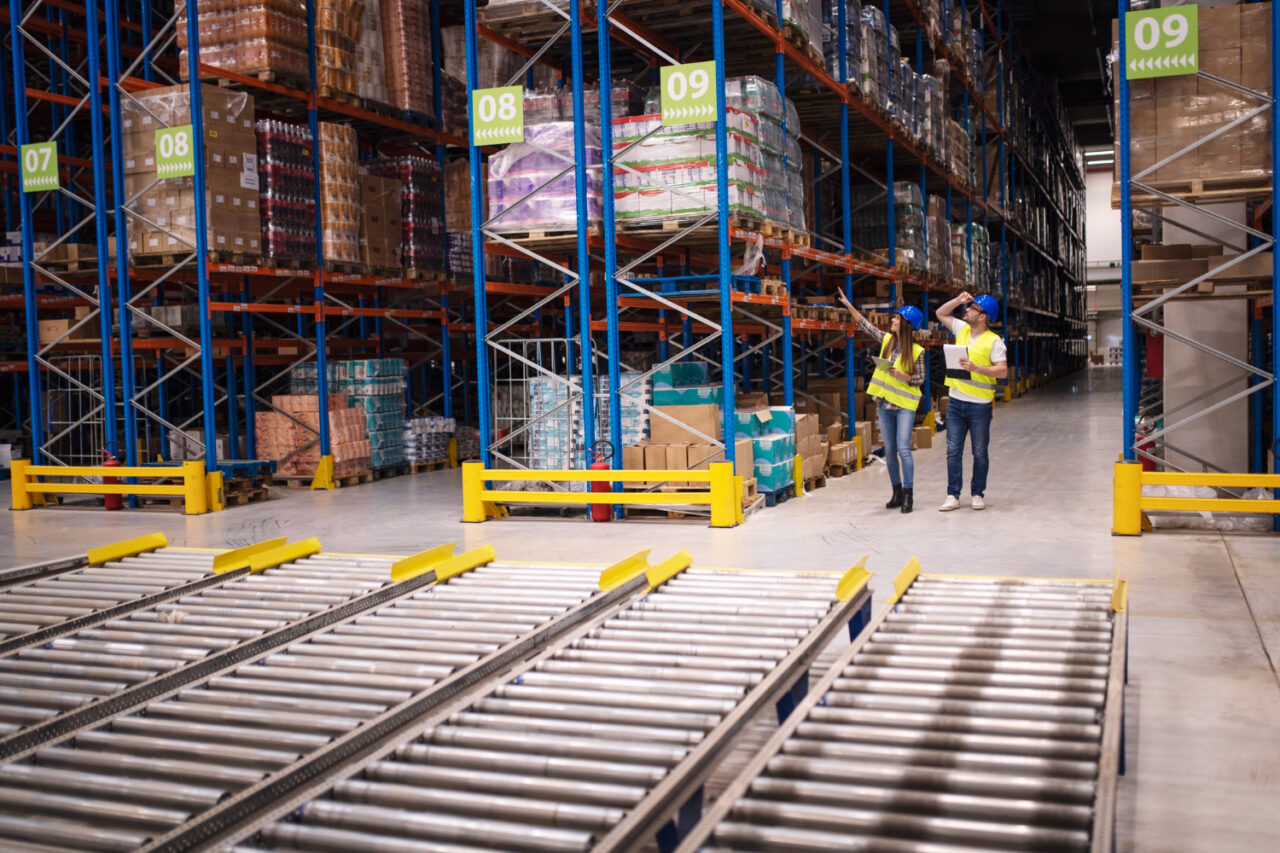
Picture this. A warehouse worker walks 7 to 10 miles a day just to pick orders. That’s the reality in most manual warehouses. Now imagine a system where the products come to the worker instead. No walking. No searching. No wasted time.
That’s exactly what an automated storage and retrieval system does.
An AS/RS is a computer-controlled combination of hardware and software that automatically stores products in specific locations and retrieves them on demand — without human hands touching the goods until the final pick. It’s like a massive, intelligent vending machine for your entire warehouse.
Whether you run a distribution center, a 3PL operation, or an e-commerce fulfillment center, this guide covers everything: how AS/RS works, every system type explained, real costs, ROI timelines, industry-specific use cases, manufacturer comparisons, and a step-by-step buyer’s framework.
Let’s get into it.
What Is an Automated Storage and Retrieval System?
An automated storage and retrieval system (AS/RS) is a technology-driven setup that uses computer-controlled equipment to automatically place items into storage and pull them out when needed.
Think of it this way. In a traditional warehouse, a worker gets an order, walks to a shelf, finds the product, grabs it, and walks back. In an AS/RS warehouse, the worker stays put. The system brings the product to them.
The core idea behind every AS/RS is simple: move goods, not people.
Here’s what makes it work:
- Stacker cranes or robotic shuttles that travel along rails to store and retrieve items
- High-density racking systems engineered to hold pallets, totes, trays, or cartons
- A warehouse management system (WMS) that acts as the brain — assigning locations, tracking inventory, and coordinating every movement
- Conveyor systems that transport items to and from the AS/RS
- Barcode scanning and RFID tracking for real-time inventory visibility
- Pick-to-light systems that guide workers to the exact item at the goods-to-person station
The result? Retrieval times measured in seconds instead of minutes. Inventory accuracy above 99.9%. And labor savings that can cut your workforce needs by 60% or more.
Modern AS/RS technology is also deeply connected to broader supply chain management strategies that prioritize speed, accuracy, and cost control.
A Brief History of AS/RS
Most competitor guides skip this. But understanding where AS/RS came from helps you understand where it’s going.
- 1960s — The first AS/RS installations appeared in Europe and the U.S. These early systems handled heavy pallet loads using fixed-aisle cranes. They were slow, rigid, and expensive. But they proved one thing: machines could store and retrieve goods more reliably than humans.
- 1970s–1980s — Computer controls arrived. Warehouse management systems started coordinating crane movements. Mini-load systems emerged for handling smaller items like totes and cartons. Industries like automotive and pharmaceuticals became early adopters.
- 1990s — Barcode scanning and RFID tracking transformed inventory accuracy. AS/RS became faster and smarter. Vertical lift modules (VLMs) and horizontal carousels gained popularity for smaller warehouses.
- 2000s–2010s — The e-commerce explosion forced warehouses to handle millions of SKUs with same-day delivery expectations. Robotic storage and retrieval systems (like AutoStore’s grid-based robots) entered the market. Goods-to-person technology became the gold standard for order fulfillment automation.
- 2020s — AI-powered slotting, digital twins, swarm robotics, and deep WMS integration are reshaping the industry. The global warehouse automation market surpassed $21 billion in 2024, with AS/RS as a core driver. Analysts project this market will exceed $40 billion by 2030.
The trajectory is clear. AS/RS is no longer a luxury — it’s becoming a necessity for any warehouse that wants to stay competitive. The same AI-driven automation reshaping e-commerce is now standard in warehouse operations.
How Does an AS/RS Work? (Step-by-Step)
Here’s exactly what happens from the moment a product enters your warehouse to the moment it ships.
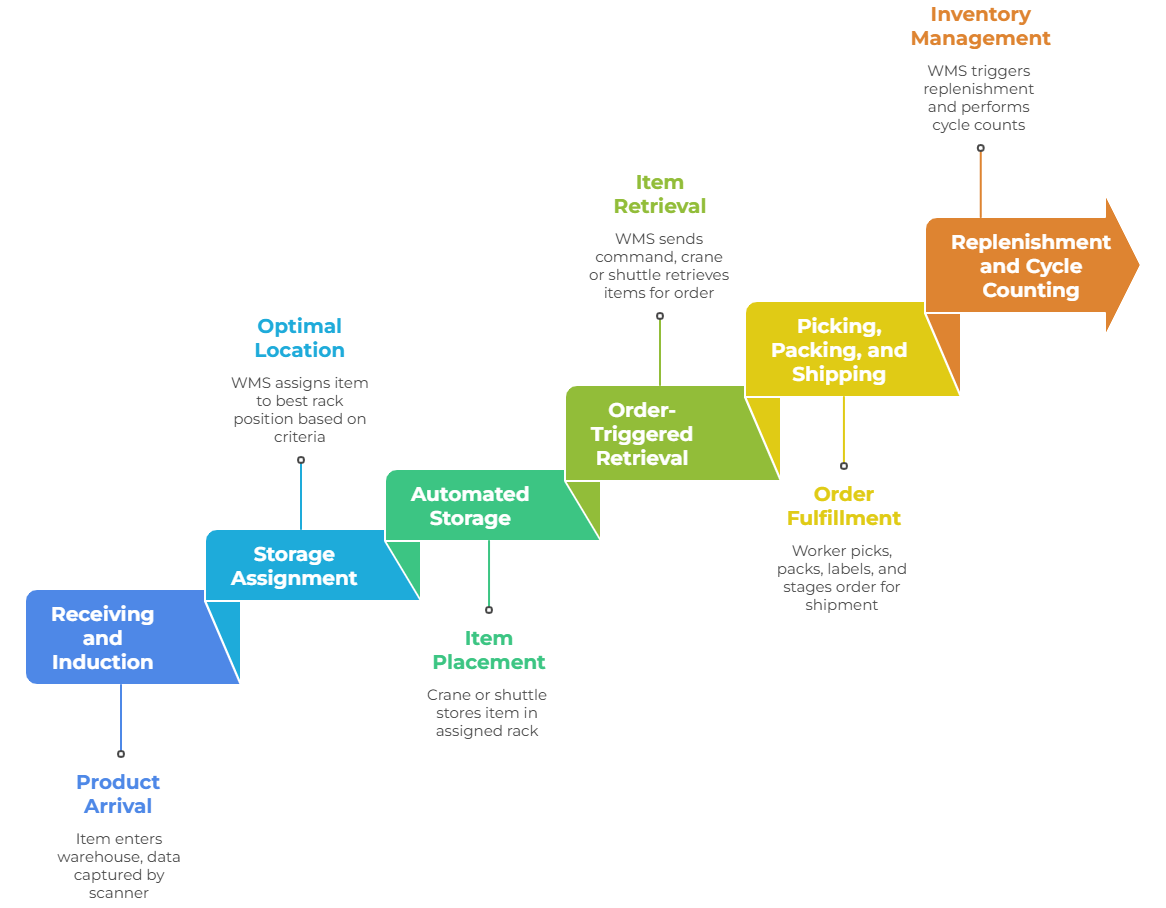
Step 1 — Receiving and Induction
A product arrives at your warehouse dock. It moves onto a conveyor system and reaches the AS/RS induction station. Here, a barcode scanner or RFID reader captures the item’s data — SKU, weight, dimensions, lot number, expiration date (if applicable).
Step 2 — Storage Assignment
The warehouse management system analyzes the item and assigns it to the optimal storage location. This isn’t random. The WMS considers:
- Demand velocity — Fast-moving products go closer to retrieval points
- Weight and size — Heavy items go to lower positions for stability
- Product compatibility — Chemicals stored away from food, temperature-sensitive items routed to cold zones
- Slotting efficiency — Items frequently ordered together are stored near each other
Step 3 — Automated Storage
A stacker crane, robotic shuttle, or VLM extractor picks up the item and places it in the assigned rack position. The system logs the exact location, timestamp, and any relevant batch data. Every move is tracked in real time.
Step 4 — Order-Triggered Retrieval
When a customer places an order, the WMS sends a retrieval command. The system calculates the most efficient route to grab all needed items. A crane or shuttle retrieves each item and delivers it to the pick station, goods-to-person workstation, or conveyor.
Step 5 — Picking, Packing, and Shipping
At the pick station, a pick-to-light system or on-screen display tells the worker exactly which item to grab and how many. The worker picks, packs, labels, and stages the order for shipping. The inventory management system updates counts instantly.
Step 6 — Replenishment and Cycle Counting
As items are retrieved, the WMS monitors stock levels. When inventory drops below a set threshold, the system triggers replenishment from reserve storage. Cycle counting happens automatically — no manual audits needed.
Total time from order to retrieval? Often under 60 seconds for mini-load systems. Under 3 minutes for full pallet retrieval.
For businesses managing complex multi-channel operations, connecting your AS/RS to a robust inventory management workflow becomes critical for seamless performance.
7 Types of AS/RS Systems Explained
This is where most guides get shallow. They list 3 or 4 types and move on. Here’s every major AS/RS type with honest pros, cons, and use cases.
1. Unit Load AS/RS
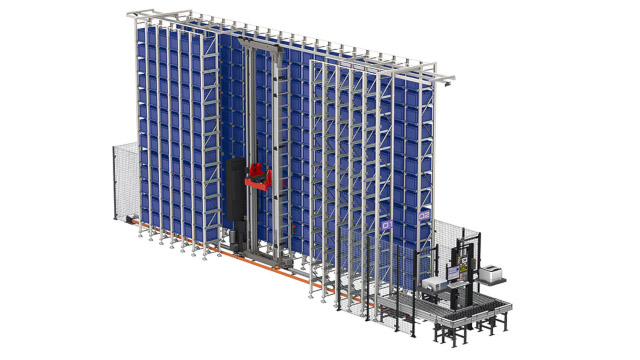
The heavyweight of warehouse automation. Unit load systems handle full pallets or large containers weighing 1,000 to 5,500+ pounds.
How it works: A stacker crane moves horizontally along an aisle and vertically up a mast. It picks entire pallets from receiving and stores them in high-rise racking that can reach 100+ feet.
Best for: Distribution center automation, food and beverage warehouse automation, automotive parts storage, manufacturing buffer storage
Performance specs:
- Throughput: 20–40 pallets per hour per aisle
- Height: Up to 130 feet in high-bay configurations
- Aisle width: As narrow as 5 feet (vs. 12+ feet for forklifts)
Two subtypes:
- Fixed-aisle cranes — One crane per aisle. Faster but less flexible.
- Aisle-changing cranes — One crane serves multiple aisles via a transfer car. Slower but more cost-effective for lower throughput needs.
Pros: Maximum storage density, handles heavy loads, proven technology with 60+ years of track record Cons: High upfront cost ($1M–$15M+), long installation time, inflexible once installed
2. Mini Load AS/RS
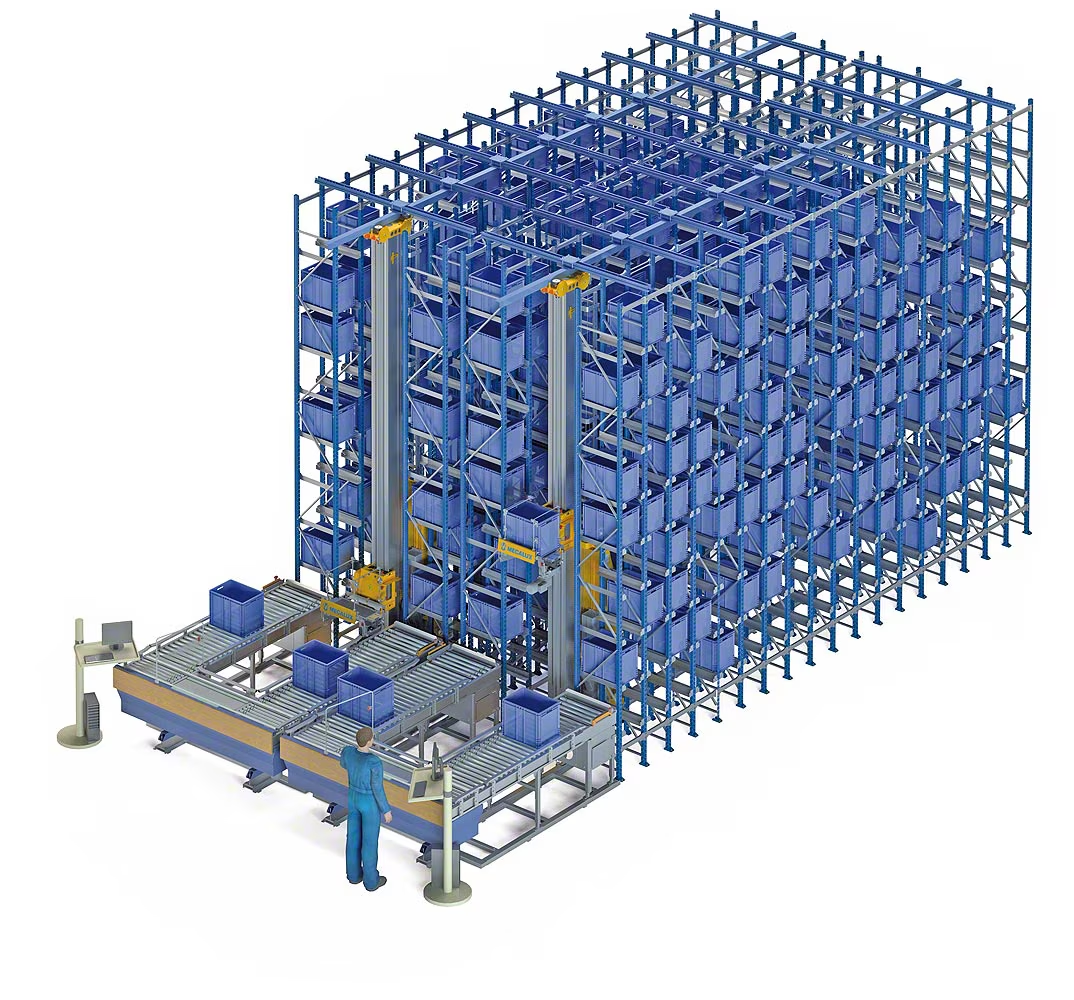
The workhorse for small-to-medium items. Mini load systems handle totes, trays, cartons, and cases — not full pallets.
How it works: A smaller crane retrieves totes from racking and delivers them to a goods-to-person workstation. Workers pick individual items from the tote, and the system returns it to storage.
Best for: E-commerce fulfillment centers, pharmaceutical cold chain automation, automated retrieval systems for small parts, electronics distribution
Performance specs:
- Throughput: 40–120 totes per hour per aisle
- Height: Up to 60 feet
- Load capacity: Typically 50–250 lbs per tote
Pros: Fast cycle times, great for high-SKU environments, excellent accuracy Cons: Not suitable for full pallets, complex integration, requires regular maintenance
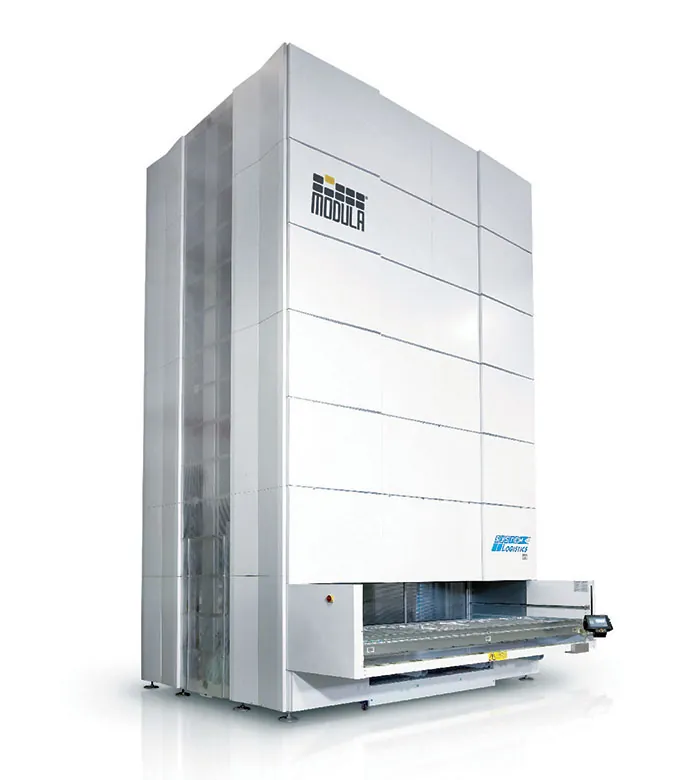
3. Vertical Lift Module (VLM)
A VLM is like a tall, enclosed elevator for inventory. Two columns of trays sit inside, and an extractor shuttle moves vertically between them.
How it works: An operator requests an item via a touchscreen or WMS command. The extractor retrieves the correct tray and presents it at an ergonomic access window. The worker picks the item, and the tray returns to storage.
Best for: Automated storage systems for pharmacies, aerospace parts retrieval, maintenance tool cribs, clean rooms, lab storage
Performance specs:
- Height: Up to 46 feet (can span multiple floors)
- Trays: 40–120 per unit
- Floor space savings: Up to 85% compared to static shelving
Pros: Massive space savings, ergonomic design, easy to install (standalone unit), good security for high-value items Cons: Limited throughput compared to crane-based systems, single-point access can create bottlenecks
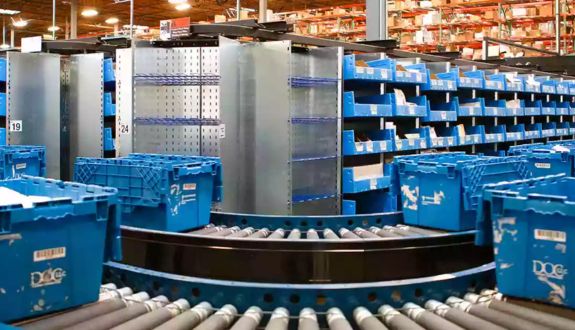
4. Horizontal Carousel
Think of a dry cleaning rack, but for warehouse inventory. Bins rotate horizontally on an oval track.
How it works: An operator requests an item. The carousel rotates until the correct bin reaches the pick window. A pick-to-light system indicates exactly which compartment holds the item.
Best for: Order fulfillment automation with small to medium items, kitting operations, parts distribution
Performance specs:
- Pick rate: 2–3x faster than walking to shelves
- Footprint: Wider than VLMs but lower profile
- Best in pods: 2–3 carousels grouped with one operator for maximum efficiency
Pros: High pick rates in pod configurations, reliable technology (few moving parts), good for batch picking Cons: Uses more floor space than VLMs, limited height, noise can be an issue
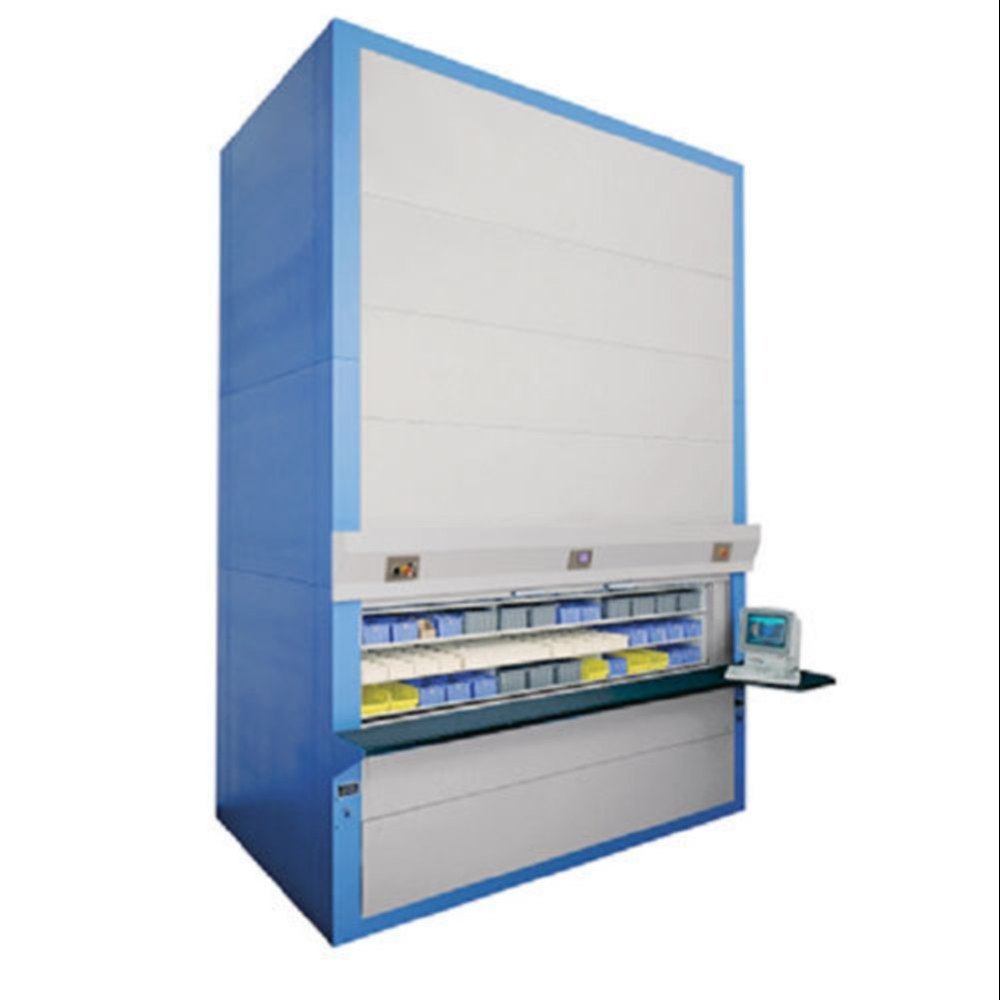
5. Vertical Carousel
Similar concept to horizontal carousels, but the bins rotate vertically — like a Ferris wheel for inventory.
How it works: Bins attached to a chain loop rotate up and down. The system brings the requested bin to an access point at counter height.
Best for: Smaller items that need secure storage, parts rooms, clean environments
Pros: Good space utilization (uses vertical space), enclosed for cleanliness and security Cons: Lower throughput than VLMs, weight limitations, less popular than VLMs in modern installations
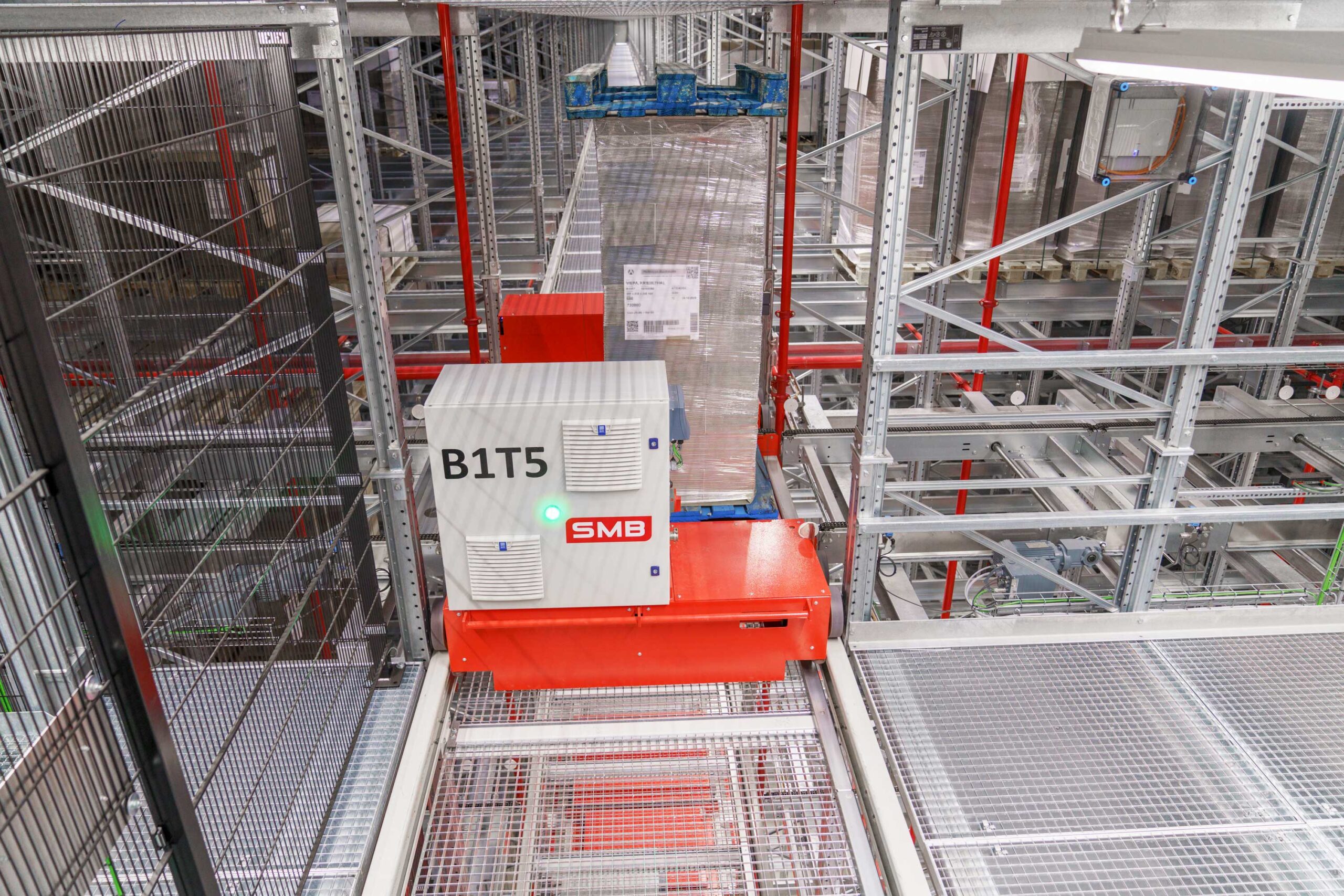
6. Shuttle-Based AS/RS
A newer alternative to traditional crane-based systems. Instead of one crane per aisle, independent shuttles operate on each level of racking.
How it works: A lift transfers totes or cases to the correct level. A shuttle on that level moves horizontally to store or retrieve the item. Multiple shuttles can work simultaneously.
Best for: High-throughput e-commerce fulfillment, grocery distribution, 3PL warehouse technology
Performance specs:
- Throughput: Significantly higher than single-crane systems (multiple shuttles work in parallel)
- Scalability: Add more shuttles to increase capacity without structural changes
- Flexibility: Shuttles can be redeployed to different levels based on demand
Pros: Higher throughput than cranes, scalable, less single-point-of-failure risk Cons: More complex software control, higher number of moving parts to maintain
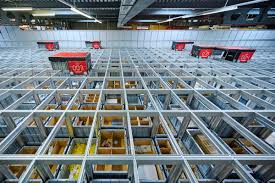
7. Robotic Cube Storage (Grid-Based AS/RS)
The newest and fastest-growing category. This is the technology behind systems like AutoStore and Ocado’s OSRS.
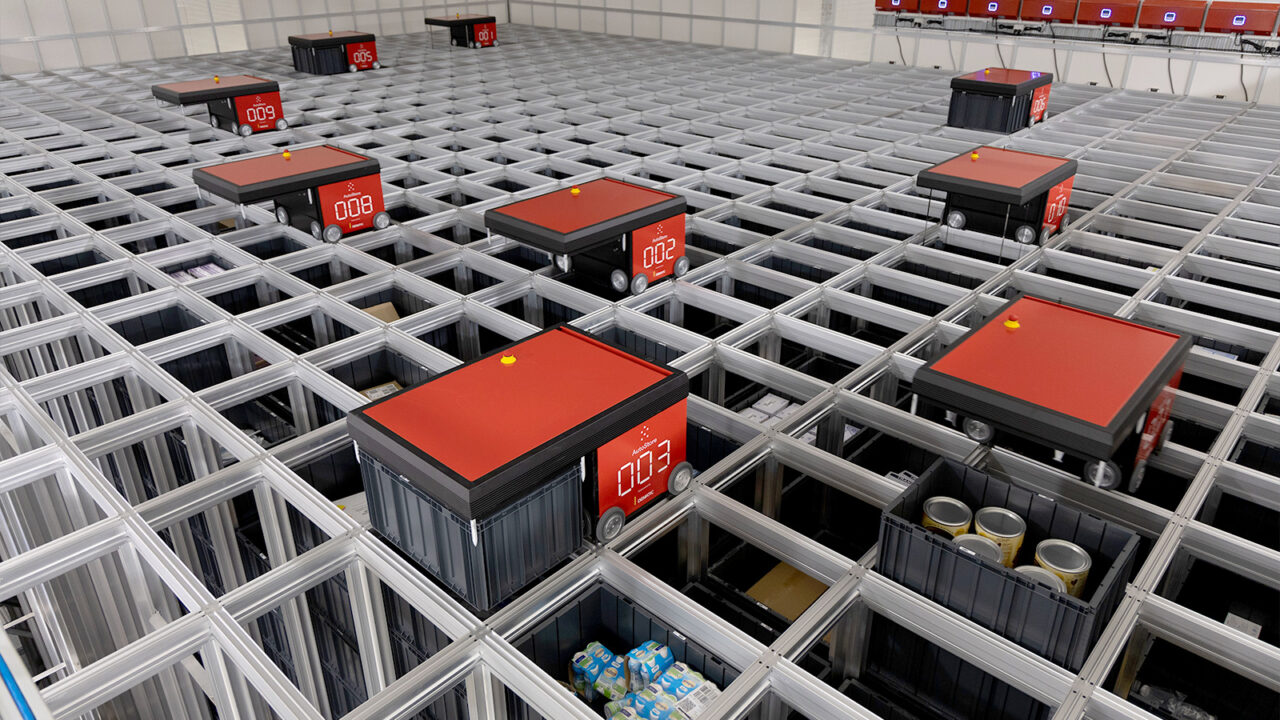
How it works: All inventory sits in bins stacked inside a dense aluminum grid (the “cube”). Autonomous robots travel across the top of the grid, diving into stacks to retrieve specific bins. Robots deliver bins to workstations at the grid’s edge.
Best for: E-commerce, 3PL operations, micro-fulfillment centers, any operation needing maximum storage density
Performance specs:
- Storage density: Up to 4x denser than traditional racking
- Scalability: Add more robots to increase throughput (no structural changes)
- Uptime: 99.7%+ (if one robot fails, others take over)
Pros: Extreme density, easy to scale, no single point of failure, modular design Cons: Limited to bin-sized items (no pallets), deeper bins take longer to retrieve, initial cost still significant
These emerging technologies are rapidly changing how warehouses operate at every scale.
Key Components of Every AS/RS
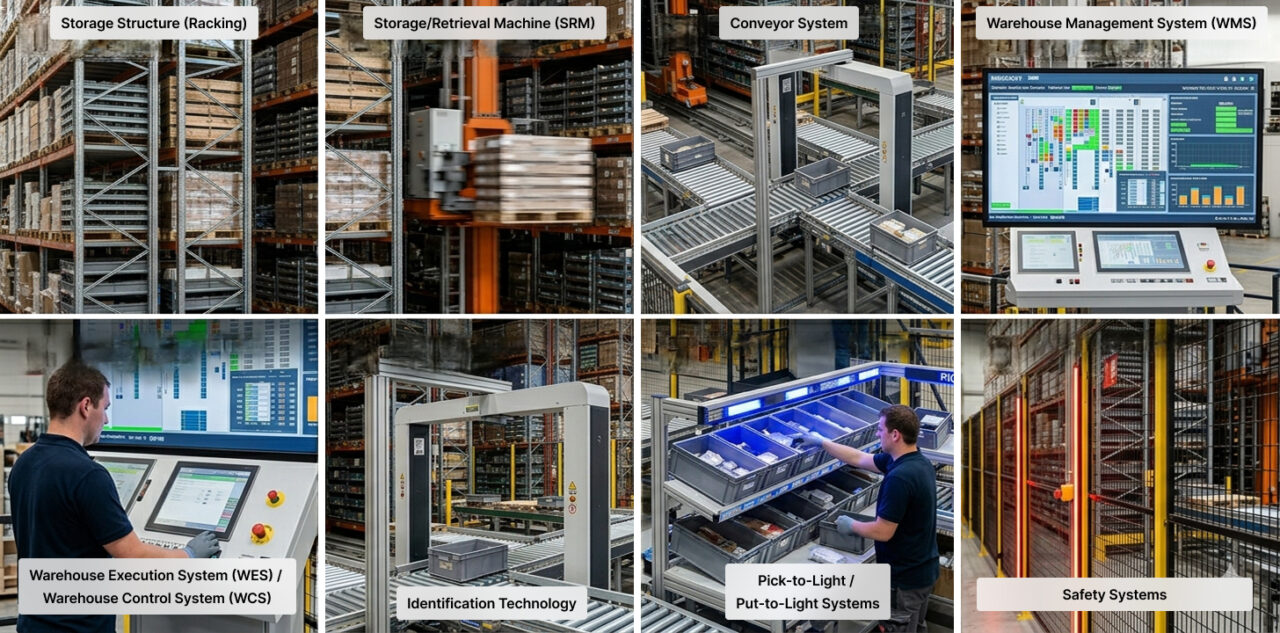
Regardless of type, every automated storage and retrieval system shares these core building blocks.
1. Storage Structure (Racking) The physical framework — steel racking designed to hold pallets, totes, bins, or trays. Height, depth, and configuration depend on the system type.
2. Storage/Retrieval Machine (SRM) The device that physically moves items. This could be a stacker crane, shuttle, robotic cart, or VLM extractor. The SRM is the muscle of the system.
3. Conveyor System Conveyors move items to and from the AS/RS. They connect the induction point (where items enter) to the storage area and the retrieval point to packing stations.
4. Warehouse Management System (WMS) The brain. The WMS manages inventory data, assigns storage locations, coordinates retrieval sequences, and provides real-time visibility.
5. Warehouse Execution System (WES) / Warehouse Control System (WCS) Think of this as the air traffic controller. The WES/WCS translates WMS commands into physical machine movements. It decides which crane moves where, which shuttle picks which bin, and in what order.
6. Identification Technology Barcode scanning and RFID tracking ensure every item is correctly identified, stored, and retrieved. RFID is faster (no line-of-sight needed) but more expensive than barcodes.
7. Pick-to-Light / Put-to-Light Systems Light displays at workstations guide operators to the exact item and quantity. This boosts pick accuracy to 99.9%+ and speeds up the picking process.
8. Safety Systems Light curtains, emergency stops, fencing, and interlocks protect workers from moving machinery. All modern AS/RS must comply with safety standards.
For operations already using ERP systems, integrating AS/RS data into your existing tech stack can unlock serious efficiency gains.
Real-World AS/RS Examples by Industry
Here’s where AS/RS actually shows up — and what it does in each setting.
E-Commerce Fulfillment Centers
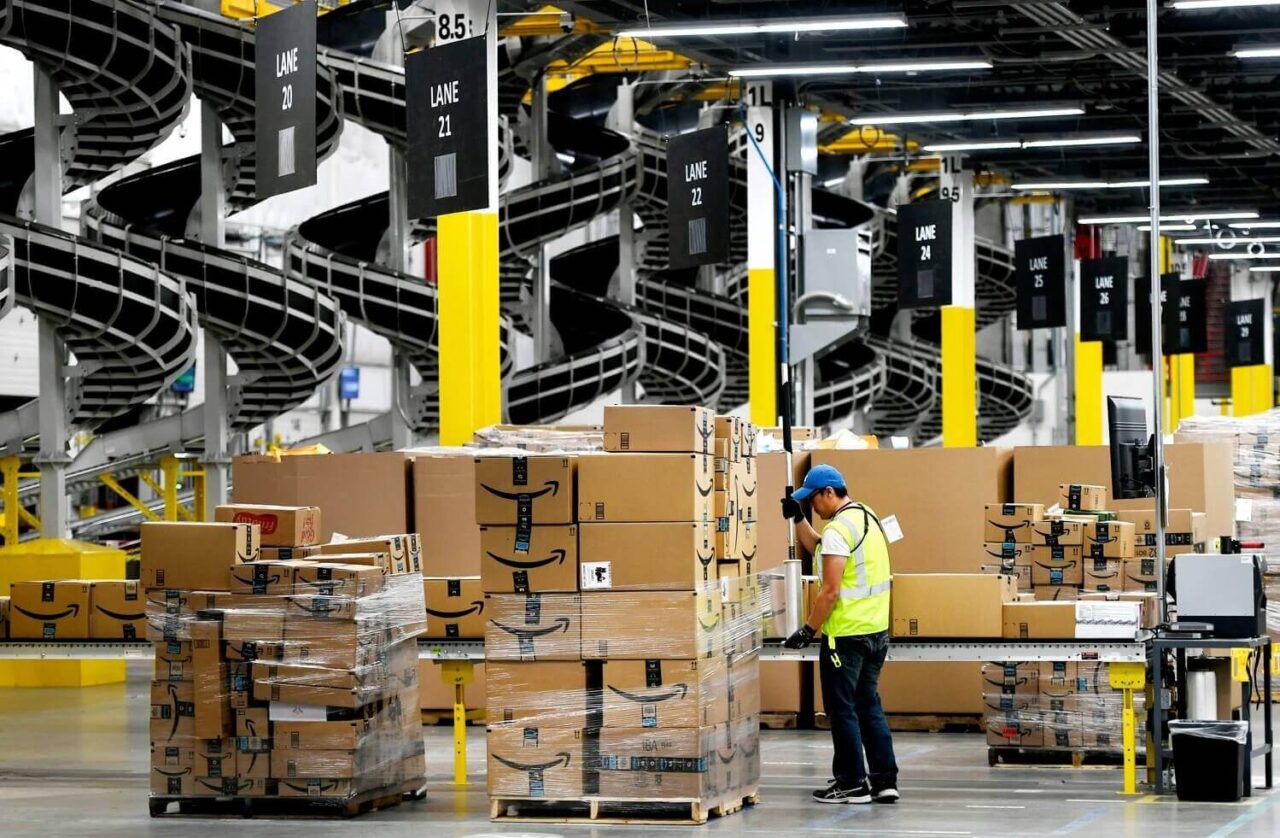
- The challenge: Millions of SKUs, same-day delivery expectations, and massive demand spikes during sales events.
- How AS/RS helps: Robotic cube storage and mini-load systems bring items to packers at goods-to-person stations. A single operator can process 300+ orders per hour. Returns get automatically re-slotted into the correct storage location.
- Key technologies used: Robotic grid-based AS/RS, mini load, shuttle systems, pick-to-light
Running a high-volume e-commerce operation means tackling major operational challenges head-on — and AS/RS is one of the most effective solutions.
Pharmaceutical and Healthcare
- The challenge: Strict regulatory compliance, temperature-controlled storage, and zero tolerance for picking errors. One wrong medication can be life-threatening.
- How AS/RS helps: Mini-load systems and VLMs in cold rooms maintain precise temperatures while RFID tracking logs every item movement for FDA and GxP compliance. Automated storage systems for pharmacies ensure medications are dispensed accurately every time.
- Key technologies used: VLMs, mini load AS/RS, cold storage automation, RFID tracking
Food and Beverage
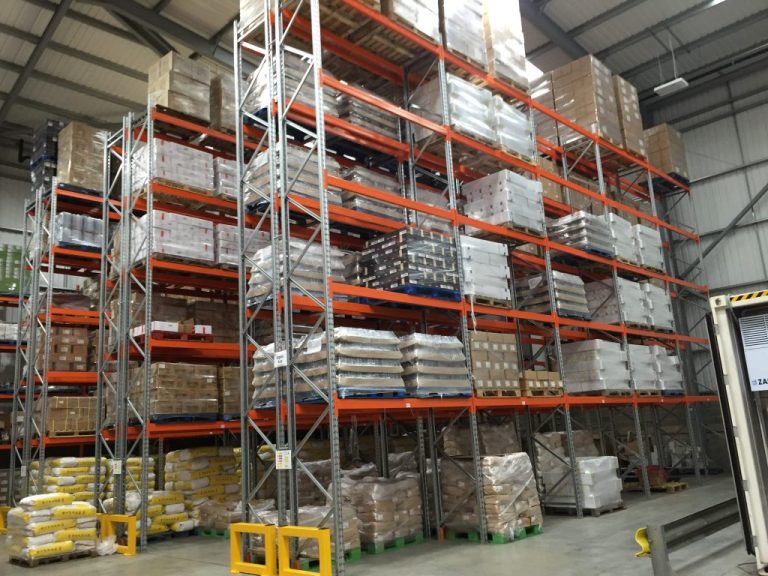
- The challenge: Frozen products at -20°F, FIFO (first in, first out) rotation requirements, heavy pallets, and strict food safety regulations.
- How AS/RS helps: Unit load systems handle full pallets in automated cold storage. Workers never enter freezing environments. The WMS enforces FIFO automatically, ensuring older stock ships first.
- Key technologies used: Unit load AS/RS, automated pallet storage systems, cold storage automation, conveyor systems
Automotive Manufacturing
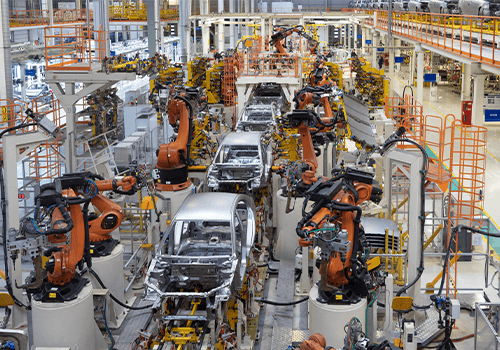
- The challenge: Thousands of parts — from tiny bolts to full body panels — that need to arrive at the right assembly station at the right time to support just-in-time (JIT) manufacturing.
- How AS/RS helps: Unit load and mini-load systems store parts and deliver them to production lines on demand. RFID tracking ensures every component is accounted for.
- Key technologies used: Unit load AS/RS, mini load, RFID tracking, conveyor systems
Aerospace
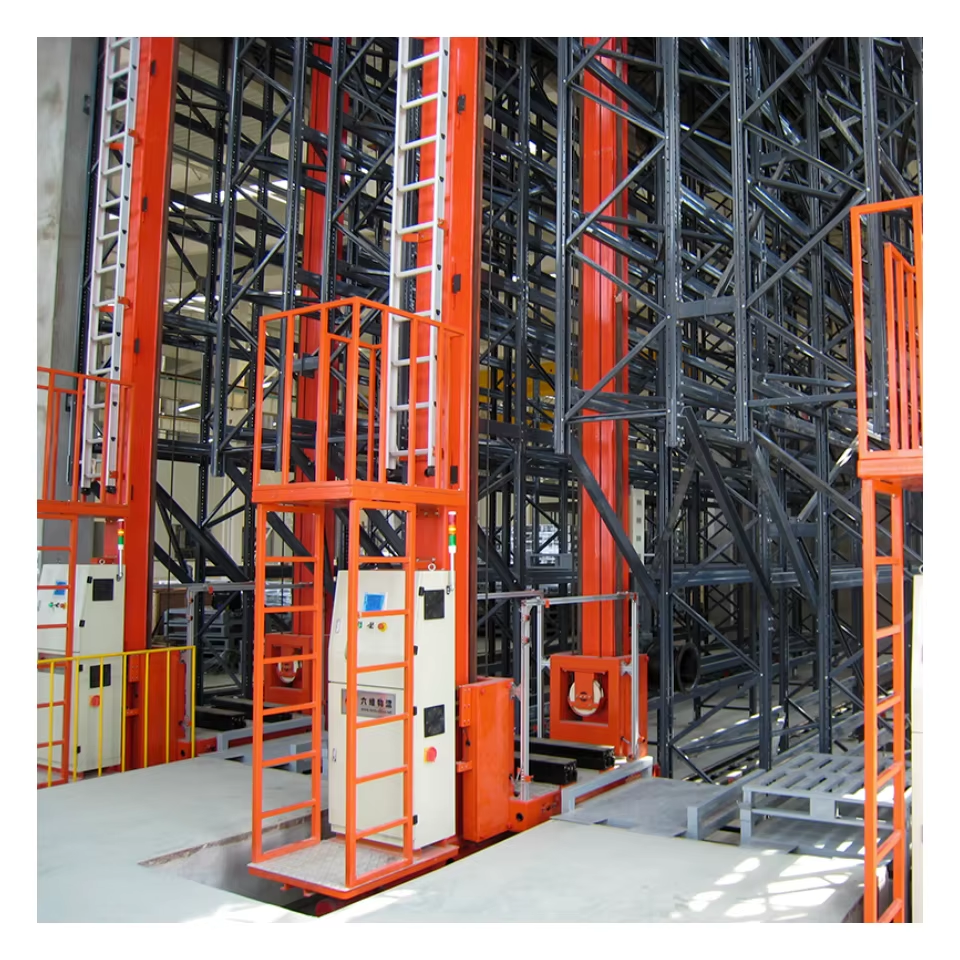
- The challenge: Extremely high-value, safety-critical parts that require full traceability. A single misplaced fastener can ground an aircraft.
- How AS/RS helps: VLMs and mini-load systems store thousands of small parts securely. Every retrieval is logged with batch numbers, dates, and operator IDs.
- Key technologies used: VLMs, mini load AS/RS, barcode scanning, RFID tracking
3PL (Third-Party Logistics)
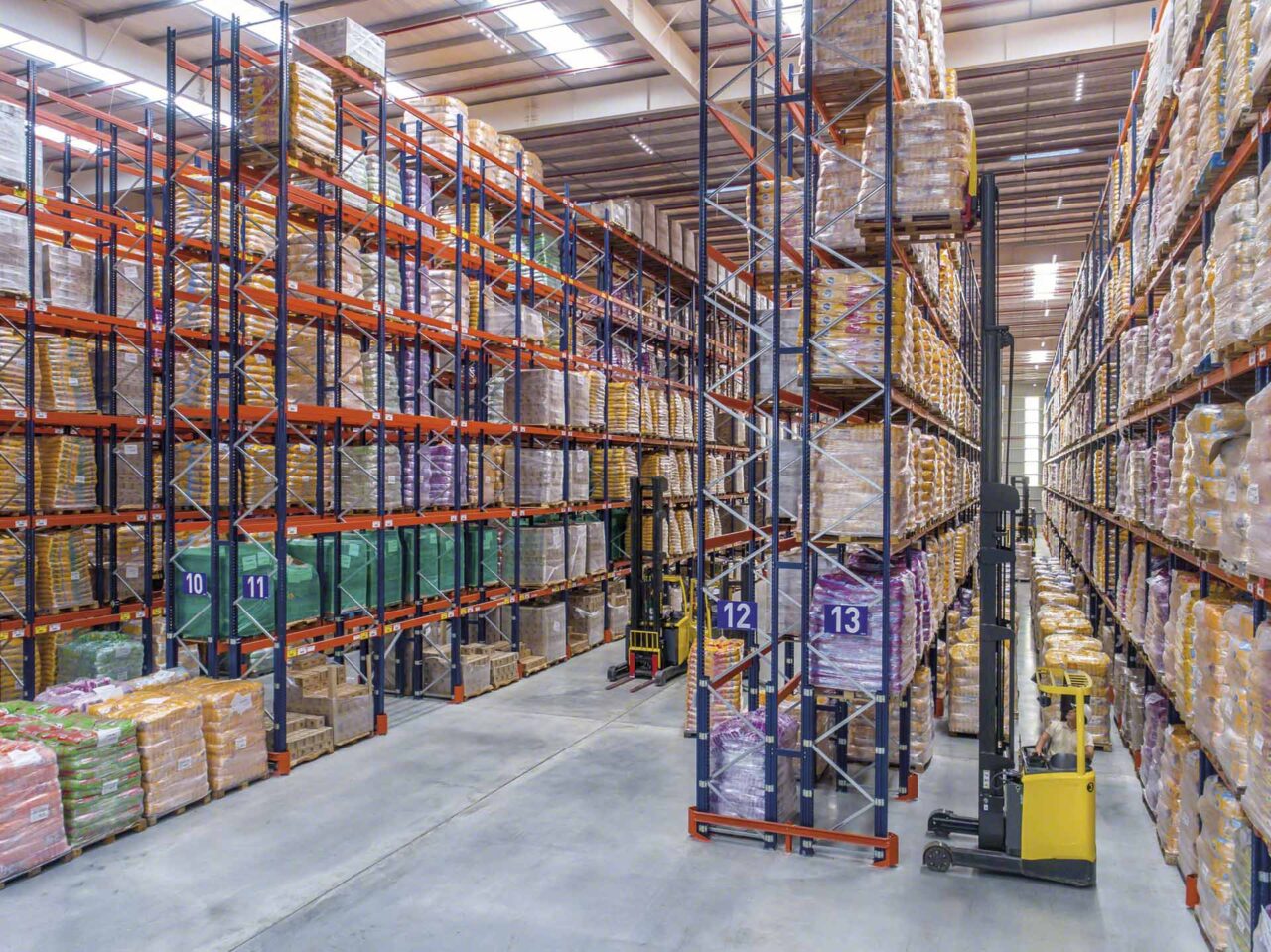
- The challenge: Multiple clients with different products, volumes, and delivery requirements — all in one warehouse.
- How AS/RS helps: Robotic cube storage is a game-changer here. When a client’s volume spikes, the 3PL adds more robots. When volume dips, robots get reassigned. No wasted infrastructure.
- Key technologies used: Robotic AS/RS, shuttle systems, goods-to-person technology
Distribution Centers
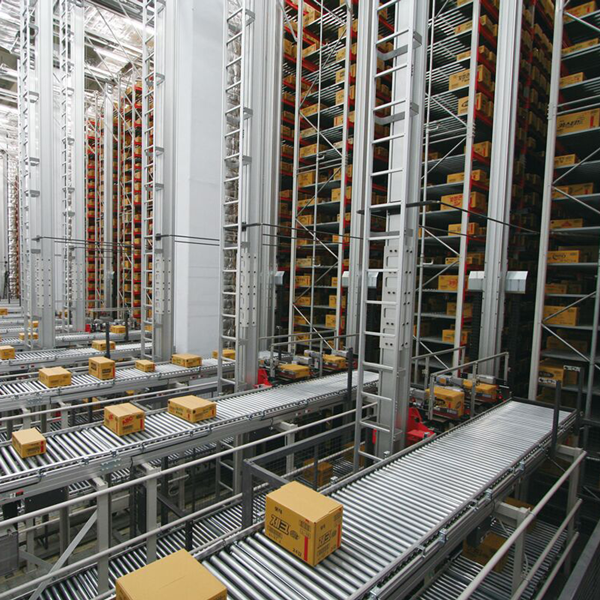
- The challenge: Moving thousands of pallets daily with tight delivery windows.
- How AS/RS helps: Unit load AS/RS with high-speed conveyor systems coordinates inbound receiving, storage, and outbound shipping in a continuous flow. The WMS optimizes staging so trucks get loaded in the correct route sequence.
- Key technologies used: Unit load AS/RS, conveyor systems, stacker cranes, WMS integration
For businesses leveraging AI and machine learning in their supply chain, AS/RS is the physical backbone that makes digital intelligence actionable.
AS/RS Cost Breakdown (With ROI Analysis)
Let’s talk money. This is the section most competitors gloss over. Here’s an honest, detailed breakdown.
Upfront Cost by System Type
| System Type | Typical Cost Range | What You Get |
|---|---|---|
| Vertical Lift Module (VLM) | $50,000 – $125,000 per unit | Single standalone unit, 40–120 trays |
| Horizontal Carousel | $30,000 – $75,000 per unit | Single carousel; best in pods of 2–3 |
| Vertical Carousel | $25,000 – $60,000 per unit | Compact vertical rotation system |
| Mini Load AS/RS | $500,000 – $5 million | Full aisle system with crane and racking |
| Unit Load AS/RS | $1 million – $15 million+ | High-bay pallet system, stacker crane |
| Shuttle-Based AS/RS | $1 million – $10 million+ | Multi-level shuttle system |
| Robotic Cube Storage | $500,000 – $10 million+ | Grid, bins, and robot fleet |
What Drives Costs Up?
- Warehouse height and layout complexity — Retrofitting an existing building costs more than greenfield construction
- Number of aisles and storage positions — More aisles = more cranes = higher cost
- Cold storage or clean room requirements — Specialized environments add 20–40% to base cost
- Throughput requirements — Higher speed demands more hardware
- Software integration — Connecting AS/RS to your existing WMS, ERP, and TMS
- Fire suppression systems — Required for high-bay installations
- Installation, commissioning, and operator training
The ROI Case
Here’s where the numbers get interesting.
- Labor savings: A single goods-to-person station replaces 4–6 manual pickers. At an average fully loaded labor cost of $45,000/year per worker, replacing 10 manual pickers saves $450,000/year.
- Space savings: AS/RS reduces footprint by 40–85%. If you’re leasing warehouse space at $8–$12/sqft/year, recovering 50,000 sqft saves $400,000–$600,000/year in rent alone.
- Accuracy improvements: Manual picking error rates average 1–3%. AS/RS achieves 99.9%+. Each picking error costs $10–$50 in reshipping, returns processing, and customer service. At 10,000 orders/day with a 2% error rate, that’s 200 errors/day x $25 average cost = $5,000/day wasted. AS/RS virtually eliminates this.
- Injury reduction: Warehouse injuries cost an average of $40,000–$80,000 per incident (workers’ comp, lost productivity, OSHA fines). AS/RS dramatically reduces exposure.
- Research from MIT found that AS/RS implementations reduced storage and retrieval processing time by 67% and total processing time by 37%. The projected payback period: 4–5 years.
- Industry average: Most businesses see full ROI in 3–7 years, depending on system size and operational volume.
Leveraging business intelligence tools can help you model these ROI projections accurately before making a purchase decision.
Advantages of Automated Storage and Retrieval Systems
Here’s what AS/RS delivers — and why the investment pays for itself.
- Speed that humans can’t match. Retrieval times drop from 5–10 minutes (manual) to under 60 seconds. Stacker cranes don’t take lunch breaks, don’t call in sick, and don’t slow down during the holiday rush.
- Accuracy that eliminates costly errors. Barcode scanning and RFID tracking remove guesswork. Inventory accuracy jumps from ~95% (manual) to 99.9%+. No more phantom inventory. No more mis-picks.
- Massive space savings. AS/RS uses vertical space that humans can’t safely access. A VLM can store the same inventory in 15% of the floor space. Unit load systems eliminate wide forklift aisles, doubling or tripling storage density.
- Dramatic labor reduction. One operator at a goods-to-person station does the work of 4–6 manual pickers. In a tight labor market, this isn’t just a cost savings — it’s a survival strategy.
- Safety improvements. Workers don’t climb ladders, drive forklifts in narrow aisles, or spend hours in freezing cold storage. Ergonomic workstations reduce repetitive strain injuries.
- 24/7 operation capability. Machines don’t need shifts. Lights-out warehousing — where the automated warehouse runs with minimal human presence — is now a reality for many operations.
- Full traceability. Every item movement is logged with timestamps, locations, and operator IDs. This is critical for pharmaceutical cold chain automation, food safety compliance, and aerospace quality requirements.
- Energy efficiency. Modern AS/RS systems use regenerative drives that capture energy during braking. LED lighting (or no lighting in automated zones) cuts energy costs.
- Scalability (especially robotic systems). Robotic cube storage lets you add capacity by simply adding more robots — no structural changes required. Shuttle systems offer similar flexibility.
Disadvantages of Automated Storage and Retrieval Systems
No technology is perfect. Here’s the honest downside — and what you can do about it.
- High upfront capital investment. A full unit load system can cost $5–$15 million. For smaller businesses, even a VLM at $75,000–$125,000 is a significant spend. Mitigation: Leasing options exist. Some manufacturers offer pay-per-pick pricing models.
- Long implementation timelines. From planning to go-live, expect 6–12 months for VLMs/carousels and 12–24 months for large crane or shuttle systems. Mitigation: Start with modular systems (VLMs, robotic cube) that install faster.
- Inflexibility once installed. Fixed-aisle crane systems are difficult to reconfigure if your product mix changes dramatically. Mitigation: Choose shuttle or robotic systems that offer more flexibility.
- Maintenance dependency. When a stacker crane breaks down, that entire aisle goes offline. Mitigation: Negotiate strong SLAs with your manufacturer. Keep critical spare parts on-site. Some robotic systems have no single point of failure (if one robot fails, others continue).
- Software complexity. Integrating AS/RS with your WMS, ERP, TMS, and order management system requires skilled IT resources. Mitigation: Choose manufacturers with proven integration APIs and dedicated integration teams.
- Not suitable for every product. Oversized, irregularly shaped, or extremely heavy items may not fit standard AS/RS configurations. Mitigation: Hybrid approaches work — automate what you can, handle exceptions manually.
- Power dependency. A power outage shuts everything down. Mitigation: Uninterruptible power supplies (UPS) and backup generators are essential.
AS/RS vs. Manual Warehousing: Head-to-Head Comparison
| Factor | Manual Warehouse | AS/RS Warehouse |
|---|---|---|
| Pick accuracy | 95–97% | 99.9%+ |
| Floor space utilization | 100% (baseline) | 40–60% of manual footprint |
| Labor requirement | High (many pickers) | Low (few operators) |
| Pick speed | 40–80 picks/hour/person | 150–300+ picks/hour/person |
| Upfront cost | Low (shelving + forklifts) | High ($500K–$15M+) |
| Operating cost (annual) | High (labor, errors, injuries) | Low (energy + maintenance) |
| Scalability | Add more people (if available) | Add more machines/robots |
| Operating hours | Shift-limited (2–3 shifts) | 24/7 capable |
| Safety risk | Higher (forklifts, falls, strain) | Lower (ergonomic stations) |
| Inventory visibility | Periodic cycle counts | Real-time tracking |
| Temperature capability | Workers in cold = limited shifts | Full cold storage automation |
| Payback period | N/A | 3–7 years |
Top AS/RS Manufacturers and Suppliers (2026)
Choosing the right partner is as important as choosing the right system. Here’s a breakdown of leading automated storage retrieval system manufacturers.
| Manufacturer | Headquarters | Best Known For | System Types |
|---|---|---|---|
| Daifuku | Japan | Largest global material handling company | Unit load, mini load, AGVs |
| Dematic (KION Group) | Germany/US | Scalable e-commerce and distribution solutions | Multi-shuttle, mini load, robotic |
| SSI Schaefer | Germany | Full-range warehouse automation | Unit load, mini load, shuttle |
| Swisslog (KUKA Group) | Switzerland | Healthcare and pharma automation | Mini load, shuttle, VLMs |
| AutoStore | Norway | Pioneered robotic cube storage | Robotic grid-based AS/RS |
| Kardex | Switzerland | VLMs and carousels | VLM, horizontal/vertical carousel |
| Mecalux | Spain | Pallet racking with integrated AS/RS | Unit load, pallet shuttle |
| TGW Logistics | Austria | Grocery and e-commerce fulfillment | Shuttle, mini load, conveyor |
| Bastian Solutions (Toyota) | USA | Custom-engineered systems for North America | Unit load, mini load, robotic |
| Murata Machinery | Japan | Semiconductor and clean room AS/RS | Mini load, cleanroom systems |
| Exotec | France | Skypod robotic system | Robotic goods-to-person |
| OPEX Corporation | USA | Perfect Pick and Sure Sort systems | Mini load, sorting automation |
What to Ask Every Manufacturer
Before you sign a contract, get clear answers to these questions:
- What is the guaranteed throughput per hour?
- What is the expected system uptime (target 99%+)?
- What’s included in the maintenance contract?
- What is the average response time for critical breakdowns?
- How does your software integrate with our existing WMS and ERP system?
- Can you provide 3+ reference sites in our industry?
- What does scalability look like (adding aisles, cranes, robots)?
- What is the total cost of ownership over 10 years (including maintenance, software updates, spare parts)?
How to Choose the Right AS/RS for Your Business
Use this 8-step framework to make a smart decision.
Step 1 — Define Your Throughput Requirements
How many picks per hour do you need? How many pallets, totes, or cases move per day? Peak season numbers matter more than averages. Design for your busiest day, not your average day.
Step 2 — Audit Your Product Mix
What are you storing? Full pallets? Small parts? Mixed sizes? Temperature-sensitive goods? Your product profile determines which AS/RS type fits.
- Full pallets only → Unit load AS/RS
- Totes and cartons → Mini load or shuttle
- Small parts, high SKU count → VLM or robotic cube
- Mixed → Hybrid system
Step 3 — Measure Your Space
How much floor space is available? How high are your ceilings? Are there column obstructions? Is this a new build or a retrofit?
VLMs work in tight spaces with high ceilings. Unit load systems need clear spans and significant height. Robotic cube systems are incredibly dense but need flat, level floors.
Step 4 — Set Your Budget (Total Cost of Ownership)
Don’t just look at the purchase price. Calculate total cost of ownership over 10 years, including:
- Equipment and installation
- Software licenses and updates
- Annual maintenance contracts
- Spare parts inventory
- Energy costs
- Training
- Opportunity cost of the implementation period
Step 5 — Evaluate Integration Requirements
Your AS/RS must talk to your WMS, ERP, TMS, and order management system. Poor integration creates data silos and manual workarounds that erode ROI.
If you’re running a retail management system, make sure your AS/RS supplier has proven integration experience with your platform.
Step 6 — Plan for Growth
Don’t buy for today. Buy for where you’ll be in 5 years. Robotic cube storage and shuttle systems are the easiest to scale — add capacity by adding hardware, not rebuilding infrastructure.
Step 7 — Visit Reference Sites
Don’t just read case studies. Visit actual installations in industries similar to yours. Watch the system run. Talk to the operators. Ask about downtime, maintenance pain points, and what they’d do differently.
Step 8 — Get Competitive Bids
Get proposals from at least 3 manufacturers. Compare not just price, but:
- Throughput guarantees
- Uptime SLAs
- Integration support
- Maintenance response times
- Scalability options
- Total cost of ownership
AS/RS Integration With WMS, ERP, and Other Systems
An AS/RS is only as good as the software ecosystem it plugs into. Here’s how the key integrations work.
- WMS (Warehouse Management System) The WMS is the master system. It manages inventory, assigns storage locations, prioritizes retrieval sequences, and reports on warehouse performance. Every AS/RS must integrate tightly with the WMS.
- WES (Warehouse Execution System) The WES translates WMS commands into machine-level instructions. It decides which crane moves where, which shuttle picks which bin, and optimizes task sequencing in real time.
- WCS (Warehouse Control System) A simpler version of the WES. Controls the physical equipment (conveyors, cranes, shuttles) without the advanced optimization logic.
- ERP (Enterprise Resource Planning) The ERP manages business-level data — procurement, sales orders, financials. AS/RS inventory data flows into the ERP for accurate demand planning and financial reporting.
- TMS (Transportation Management System) The TMS coordinates shipping. When AS/RS stages outbound orders, the TMS ensures they’re loaded in the correct truck, in the correct sequence, for the optimal delivery route.
- OMS (Order Management System) For e-commerce operations, the OMS feeds customer orders directly to the WMS, which triggers AS/RS retrieval. This end-to-end automation is what enables same-day and next-day delivery.
Connecting these systems is a core part of AI-driven business operations — and it’s where the real competitive advantage lives.
The Future of Automated Storage (2026 and Beyond)
Warehouse automation isn’t slowing down. Here’s what’s coming next — and what it means for your business.
- AI-Powered Dynamic Slotting Machine learning algorithms will continuously analyze order patterns and automatically rearrange inventory for faster picks. Instead of static slotting rules, the system adapts in real time.
- Digital Twins Virtual replicas of your entire AS/RS let you simulate changes — adding aisles, changing throughput, testing new product mixes — before touching the physical warehouse. This eliminates costly trial-and-error.
- Swarm Robotics Instead of one large crane per aisle, hundreds of small, coordinated robots will work together. If one fails, the swarm redistributes the workload. This mirrors the approach AutoStore and Exotec are already pioneering.
- Energy Harvesting Next-gen systems will recover energy from braking cranes, use solar panels on warehouse roofs, and optimize energy consumption with AI — cutting operating costs further.
- Deeper Software Integration AS/RS will connect directly to e-commerce platforms, supplier systems, and customer-facing tools. The warehouse becomes a real-time data node, not a black box.
- Micro-Fulfillment Centers Small-format AS/RS installations inside urban stores and dark stores will enable sub-2-hour delivery for groceries and essentials. Robotic cube storage is ideal for these tight footprints.
- Sustainability Focus Supply chain sustainability is now a boardroom priority. AS/RS supports this by reducing energy use (lights-out operations), minimizing waste (fewer picking errors), and enabling smaller warehouse footprints.
Frequently Asked Questions
What does AS/RS stand for?
AS/RS stands for Automated Storage and Retrieval System. It refers to any computer-controlled system that automatically stores and retrieves items from defined locations in a warehouse, distribution center, or manufacturing facility.
How long does it take to install an AS/RS?
It depends on the system type. Standalone VLMs can be installed in 4–8 weeks. Mini-load and shuttle systems take 6–12 months. Large unit load high-bay systems take 12–24 months from design through commissioning.
Can AS/RS work in cold storage?
Absolutely. Cold storage automation is one of the strongest use cases. AS/RS keeps workers out of freezing environments (-20°F or colder) while maintaining full throughput. The WMS enforces FIFO automatically for expiration-date compliance.
Is AS/RS worth it for small businesses?
Yes — if you choose the right system. A single VLM ($50K–$125K) can transform a small warehouse by saving 85% of floor space and doubling pick speed. For very low volumes (under 50 orders/day), manual picking may still be more cost-effective.
What’s the difference between AS/RS and AMRs?
AMRs (Autonomous Mobile Robots) are more flexible than AGVs — they navigate dynamically instead of following fixed paths. Some modern AS/RS systems (like robotic cube storage) use AMR-like robots, blurring the line between the two categories.
Where can I find automated storage and retrieval system PDF spec sheets?
Most manufacturers provide downloadable spec sheets on their websites. Daifuku, Dematic, SSI Schaefer, AutoStore, and Kardex all have detailed PDF resources available for free.
How does AS/RS handle returns?
When a return arrives, the WMS identifies the item, inspects it (manually or with automated quality checks), and assigns it a new storage location in the AS/RS. The system re-slots the item automatically.
Can AS/RS integrate with my existing WMS?
Yes. Most modern AS/RS systems offer standard APIs and integration modules for major WMS platforms (Manhattan, Blue Yonder, SAP EWM, Oracle WMS). Integration complexity varies — discuss this early with your manufacturer.
What happens if the system goes down?
Critical breakdowns can take an entire aisle offline. This is why maintenance SLAs, on-site spare parts, and system redundancy matter. Robotic cube systems have an advantage here — if one robot fails, others continue working.
Your Next Steps
If you’re running a warehouse — whether it’s a 3PL operation, a fulfillment center, or a manufacturing plant — here’s exactly what to do next.
- Audit your current operation for 30 days. Track pick rates, error rates, labor costs, space utilization, and injury incidents. You need baseline numbers before you can calculate ROI.
- Identify your top 3 pain points. Is it labor cost? Pick speed? Storage density? Accuracy? Cold storage challenges? Your biggest pain point determines which AS/RS type to explore first.
- Use this guide to shortlist 2–3 AS/RS types that match your products, volumes, and facility constraints.
- Contact 3–5 AS/RS manufacturers. Request proposals, site visits, and reference customer contacts.
- Run the ROI model. Compare upfront cost against 5–10 year savings in labor, space, accuracy, and injury reduction. Use AI-powered tools to model scenarios.
- Start small if needed. A single VLM or a small robotic cube system can prove the concept before you commit to a full-warehouse rollout.
The warehouses that invest in automation today won’t just save money. They’ll be the ones that can actually fulfill orders fast enough to keep their customers. The ones that wait? They’ll be hiring more people, burning more cash, and falling further behind.
The choice is yours. But the data is clear.