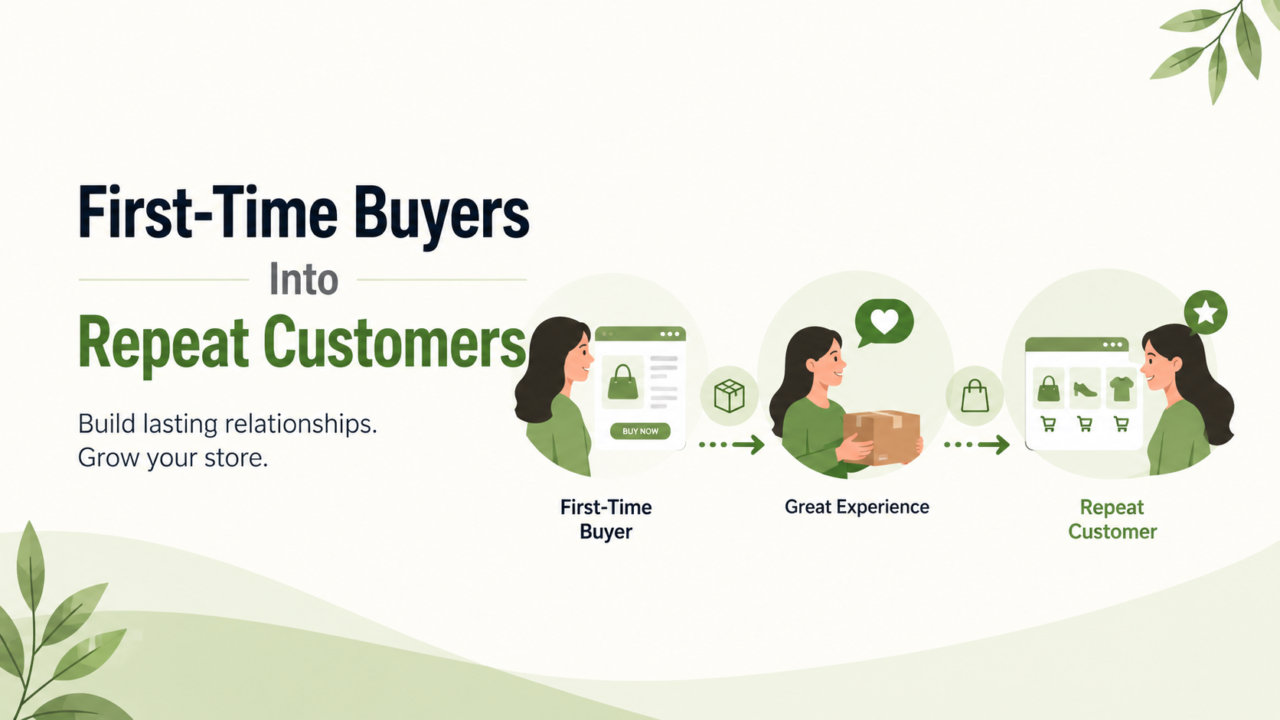
Quick Answer: To turn first-time Shopify buyers into repeat customers, you build a system that runs after the sale, not before it. Reassure buyers right away, make the first product experience great, personalize the next offer, send well-timed emails and texts, give people a reason to come back like a loyalty program, and win them back before they drift away. We call this the REPEAT Loop. Brands that get this right grow faster because every dollar of ad spend works twice.
Getting a first order feels great. But if that buyer never comes back, you are stuck on a treadmill. You spend on ads, win a sale, lose the customer, then start over. That is expensive, and it is exhausting.
The real money in ecommerce is in the second order. And the third. And the tenth. A first sale is the start of a relationship, not the finish line. This guide shows you a simple, repeatable way to keep buyers coming back on Shopify.
Key Takeaways
- Repeat customers cost far less than new ones and spend more over time.
- Most first-time buyers leave because the brand never gives them a reason to return.
- The REPEAT Loop is a six-step system you run after every order.
- Email and text are powerful, but loyalty, unboxing, and timing matter just as much.
- You should track repeat purchase rate, customer lifetime value, and time between orders.
- Someone has to own this work every day, or it quietly falls apart.
Why do repeat customers matter more than new ones?
Repeat customers are buyers who come back and purchase again, and they are the cheapest growth you will ever find. You already paid to get them the first time. The second sale does not need a new ad click.
The numbers back this up:
- According to research from Bain & Company by Frederick Reichheld (shared in Harvard Business Review), raising customer retention by just 5% can lift profits by 25% to 95%.
- That same Harvard Business Review piece notes it can cost five to 25 times more to win a new customer than to keep one you already have.
- The chance of selling to an existing customer is around 60% to 70%, while the chance of selling to a brand-new prospect is only 5% to 20% (Marketing Metrics).
Here is what that means in plain terms. If you only chase new buyers, you are playing the hardest, most expensive game in ecommerce. If you keep the buyers you already won, every part of your business gets easier.
Repeat customers also:
- Spend more per order once they trust you
- Buy faster because they already know your brand
- Leave more reviews and refer friends
- Stick around when ad costs spike
That last point matters a lot right now. Ad costs keep climbing, so a brand that leans only on paid acquisition is fragile. A brand with strong repeat sales is steady.
What is a good repeat customer rate on Shopify?
A repeat customer rate is the share of your customers who buy from you more than once. Many Shopify stores land somewhere in the 20% to 30% range, though it varies a lot by product type.
You do not need to guess yours. You can find it inside Shopify analytics under your customer reports. Brands that sell consumable products, like skincare, coffee, or supplements, should aim higher because people run out and reorder. Brands that sell one-time big purchases, like furniture, will naturally sit lower.
The point is not to hit a magic number. The point is to watch your own rate over time and push it up month after month.
One simple test: Out of 100 first-time buyers last quarter, how many came back for a second order? If you do not know that number, that is the first gap to close.
The REPEAT Loop: a simple framework to win the second order
The REPEAT Loop is a six-step system you run after every single order. Each letter is one job. Done together, they turn a one-time buyer into a regular.
Most brands skip straight to a discount code and hope for the best. That is not a system. This is.
R: Reassure them right after they buy
Reassurance means calming the small wave of doubt every buyer feels after they hit “pay.” This is your first chance to build trust, and most brands waste it on a plain receipt.
Do this:
- Brand your order confirmation so it sounds like you, not a robot.
- Set clear shipping expectations so they are not left guessing.
- Send simple shipping and delivery updates.
- Answer the quiet question in their head: “What happens next?”
Good reassurance also cuts down on “where is my order” messages, which frees up your support team. Strong post-purchase support is one of the biggest hidden drivers of retention, and we break that down in our guide on building a customer service system for better retention.
E: Earn trust with the first experience
The first experience is everything that happens when the box arrives and the product gets used. This is where loyalty is truly born, long before any loyalty app.
Focus on:
- Packaging that feels considered, even if it is simple
- A short note or insert that makes them feel like part of something
- Clear help on how to use, style, or care for the product
- A fast answer if something goes wrong
When the first experience is great, the second order almost sells itself. When it is flat, no email flow will save it. Thoughtful packaging and inserts are also a creative job, which is why brands often lean on a design and creative team to get the unboxing right.
P: Personalize the next offer
Personalization means matching the next offer to what the customer actually bought, not blasting everyone the same thing. A buyer who bought a coffee grinder should hear about beans, not random sale items.
Simple ways to personalize:
- Suggest products that pair with their first order
- Time a refill reminder to when they will likely run out
- Use “customers who loved this also bought” logic
- Group buyers by what they purchased, then speak to each group
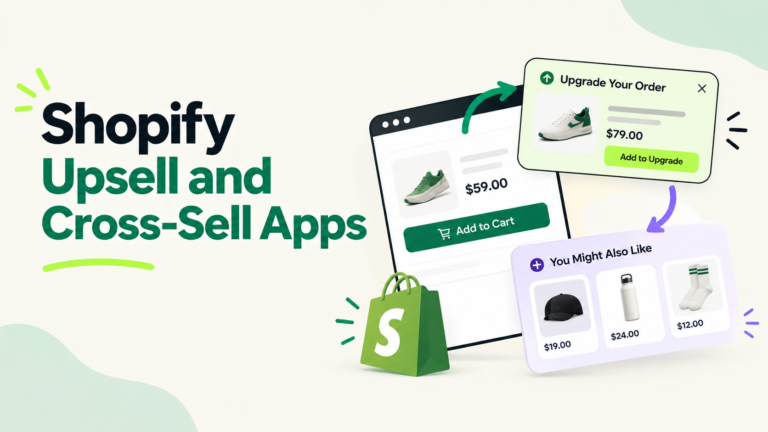
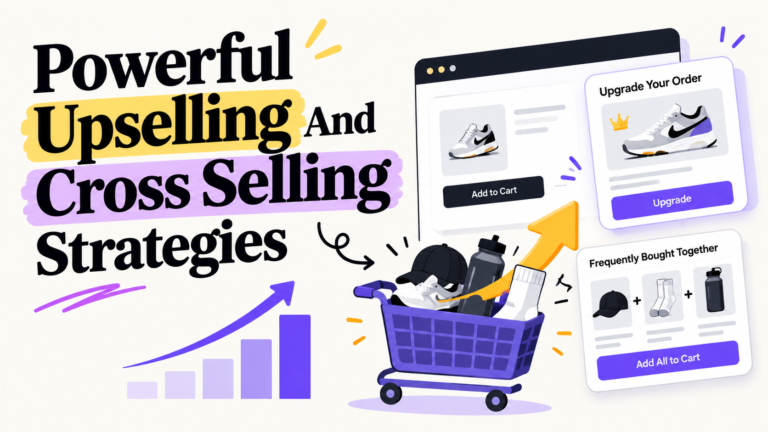
This is where good cross-selling pays off. We cover the playbook in our post on upselling and cross-selling strategies, and bundles are another easy win, which we explain in our guide to Shopify product bundles.
E: Email and text at the right time
This step is about reaching out through email and SMS on a smart schedule, not all at once. Timing beats volume every time.
A clean post-purchase flow often looks like this:
- Day 0: Branded order confirmation
- 1 hour to 1 day later: A warm thank-you that invites a reply
- A few days later: A helpful “how to get the most out of it” message
- Around 1 to 2 weeks later: A check-in or feedback ask
- At the right reorder moment: A relevant next-order nudge
Notice that discounts are not the star here. If your suggestions are useful, they feel like service, not selling. Setting all of this up by hand is slow, so most scaling brands use ecommerce marketing automation to run it on autopilot.
A: Add a reason to come back
This step gives buyers a clear, ongoing reason to choose you again instead of a competitor. A reason can be points, perks, early access, or a subscription.
Strong options:
- A simple loyalty or points program
- A members-only perk or early access to launches
- A subscribe-and-save option for products people reorder
- An account that saves their info for a faster checkout next time
Encouraging account creation is a small move with a big payoff. Saved info means a future order takes seconds. Just remember the order of things: loyalty programs do not create loyalty, good experiences do. The program rewards loyalty you already earned.
T: Trigger a win-back before they forget
A win-back is a message you send when a customer has gone quiet for longer than normal. The goal is to reach them before they forget you exist.
To do this well:
- Know your normal time between orders for each product
- Set a “lapsed” trigger a bit past that window
- Lead with value or a reason to return, not just a coupon
- Make coming back feel easy
For example, if buyers usually reorder every 45 days, a buyer at day 60 is drifting. That is your moment. A timely, friendly nudge often brings them back for far less than a new ad click would cost.
How do you turn happy customers into advocates?
An advocate is a happy customer who brings you more customers, and they are the most valuable buyers you will ever have. A repeat customer is great. A repeat customer who refers friends is even better.
Once your REPEAT Loop is running, layer these on top:
- Referral rewards. Give a happy buyer a simple reason to share you, like a perk for them and their friend. Word of mouth from a real person beats any ad.
- Reviews and ratings. Ask for a review after a good experience, then show those reviews on your product pages. Social proof helps the next buyer say yes.
- User-generated content. Invite customers to share photos or videos with your product, then reshare the best ones. It builds community and gives you free, trusted content.
- A community feel. A simple group, a branded hashtag, or a members space makes buyers feel part of something, not just a transaction.
These work best after the basics are solid. A referral push will not save a weak product experience, but it pours fuel on a strong one. If building brand love is the goal, our guide on customer relationship management for ecommerce goes deeper.
Which Shopify features help turn first-time buyers into repeat customers?
Shopify has built-in tools that make the second order easier, and most stores leave them switched off. You do not need a pile of apps to start. Use what is already there.
- Customer accounts. Turn on accounts so buyers can log in, see past orders, and reorder in a tap.
- Shop Pay. Saved shipping and payment details mean a repeat order takes seconds, not minutes.
- Shopify Email and Flow. Build your thank-you, education, and win-back messages, then let Flow send them automatically based on what people buy.
- Customer segments. Group buyers by behavior, like first-time versus repeat, so each group gets the right message.
- Subscriptions. For products people reorder, a subscribe option turns one sale into steady, predictable revenue.
- Customer reports. Check your repeat purchase rate and your first-time versus returning sales right inside Shopify analytics.
The tools are only half the job. Someone still has to switch them on, write the messages, and keep them current, which is the work most founders do not have time for.
How do you measure if it is working?
You measure retention by tracking a few key numbers over time, not by watching open rates alone. Open rates feel nice, but they do not pay the bills.
Watch these:
- Repeat purchase rate: The share of customers who buy again. This is your headline number.
- Customer lifetime value (CLV): The total a customer spends with you over the whole relationship.
- Purchase frequency: How often a typical customer buys in a set period.
- Time between orders: The average gap between a first and second order, which tells you when to send win-backs.
Here are the core formulas, kept simple:
- Repeat purchase rate = (repeat customers / total customers) x 100
- Customer lifetime value (CLV) = average order value x purchase frequency x customer lifespan
- Churn rate = (customers lost in a period / customers at the start) x 100
To raise CLV, push any of its three parts up: a bigger average order, more frequent orders, or a longer customer lifespan. Small gains in each one stack up fast.
You should also look at quiet signals that things are working:
- Customers reply to your emails
- Fewer “where is my order” tickets
- Second orders come in faster
- People recommend you without being asked
If you want to go deeper on the support side of this, our breakdown of customer support KPIs that predict retention shows which numbers to track.
What common mistakes kill repeat purchases?
The most common mistake is treating the first sale like the end of the job. Here are the traps we see scaling brands fall into.
- Going silent after the order. A confirmation email, then nothing, is a missed chance.
- Asking for too much, too soon. A review request, loyalty push, and discount all at once feels pushy and self-focused.
- Leading with discounts every time. Train buyers to wait for a coupon and you shrink your margins.
- Treating new and repeat buyers the same. A loyal customer should not get the same “welcome” message a stranger gets.
- Ignoring the unboxing. A weak first experience cannot be fixed by clever emails later.
- No one owns it. The flows get set up once, then no one updates or watches them.
That last one is the silent killer, and it leads to the question most founders avoid.
Who actually runs all of this?
Retention is not a one-time setup, it is a daily operation that someone has to own. This is where many growing brands get stuck.
The founder built the store and won the first wave of customers. But now the post-purchase emails need updating, support tickets need fast answers, loyalty perks need managing, and win-back flows need watching. All of that competes with running the actual business.
This is the gap AcquireX was built to fill. We are not an agency you hand a task list to. We build a dedicated, embedded team that owns execution like it is your own company. That can include:
- Performance marketing and growth to run your email, SMS, and retargeting
- Customer service operations to answer buyers fast and keep them happy
- Catalog and content work to keep product pages and cross-sells sharp
- Design and creative for packaging, inserts, and email
The result is simple. You focus on growth and big decisions. A real team handles the execution that keeps customers coming back. If you want to scale without the chaos, that is the model that works, and it is the same approach we describe in our guide to scaling a Shopify brand from 7 to 8 figures.
Your quick-start plan
You do not need a 27-email machine to start. You need a few strong moves done well. Start here this week:
- Check your repeat purchase rate in Shopify so you have a baseline.
- Write one warm thank-you email that sounds like a person and invites a reply.
- Add one helpful “how to use it” message a few days after delivery.
- Pick one reason to return, like a simple points program or a subscribe-and-save option.
- Set one win-back trigger based on your normal time between orders.
Do those five things and you will already be ahead of most stores. Then improve one piece at a time.
Turning first-time buyers into repeat customers is not luck, and it is not a single app. It is a system you run on purpose, every order, every day. Build the loop, watch the numbers, and let it compound.
Ready to build a retention system that runs itself?
AcquireX builds dedicated, embedded ecommerce teams that own the work behind repeat sales, from post-purchase flows to support to creative. Stop managing scattered vendors and start building a system. Talk to our team to see what a dedicated team could run for your brand.
Frequently Asked Questions
How long does it take to turn first-time buyers into repeat customers?
It usually takes one full buying cycle to see real movement. For consumable products that can be a few weeks, while for higher-priced goods it can take months. The key is to start the post-purchase system now so it is working when buyers are ready to return.
Do I need a loyalty app to get repeat customers on Shopify?
No. A loyalty app helps, but it is not the starting point. A great first experience, a warm post-purchase email flow, and smart timing matter more. Add a loyalty program once those basics are running well.
What is the single most important step in keeping customers?
The first product experience. If the unboxing and the product itself feel great, the second order is easy to earn. No email or coupon can fix a weak first experience, so start there.
How often should I email customers after a purchase?
Spread your messages out over the first few weeks instead of sending them all at once. A common rhythm is a thank-you within a day, a helpful tip a few days later, a check-in around one to two weeks in, then a reorder nudge at the right time.
Should I discount to bring customers back?
Not by default. If you lead with a coupon every time, you train buyers to wait for one and you shrink your margins. Lead with value, helpful content, or relevant product suggestions first, and use discounts carefully.
What numbers should I track for retention?
Track repeat purchase rate, customer lifetime value, purchase frequency, and the average time between orders. These four show whether your retention system is actually working, far better than open rates alone.
How do you calculate repeat purchase rate?
Repeat purchase rate is the share of your customers who buy more than once. The formula is repeat customers divided by total customers, multiplied by 100. So if 250 of your 1,000 customers came back for another order, your repeat purchase rate is 25%. You can find this number inside Shopify customer reports.