Most D2C brands live order to order. You spend on ads, win a sale, then start again from zero next month. It is exhausting, and it is expensive.
Subscriptions change that math. Instead of chasing a new sale every time, you earn the same customer again on a schedule. The revenue shows up whether or not you run ads that week.
This guide shows you how subscription ecommerce actually works for a scaling brand. You will get real numbers, a simple framework, and the exact levers that keep subscribers paying.
Key Takeaways
- Subscription ecommerce means selling a product on a repeat schedule (weekly, monthly, or quarterly) so revenue renews on its own.
- The win is not the first sale. It is lifetime value. A subscriber can be worth 5x a normal repeat buyer.
- About 1 in 4 lost subscriptions is just a failed card, not a real cancel. Fixing that is free money.
- Most cancels happen after the first delivery. Nail box one and you keep far more subscribers.
- On Shopify, you can start with the free native Subscriptions app, then move to a paid app when you need more control.
- Use the RENEW Framework below to launch and hold recurring revenue: Right model, Easy controls, No failed payments, Early win, Worth staying.
What Is Subscription Ecommerce?
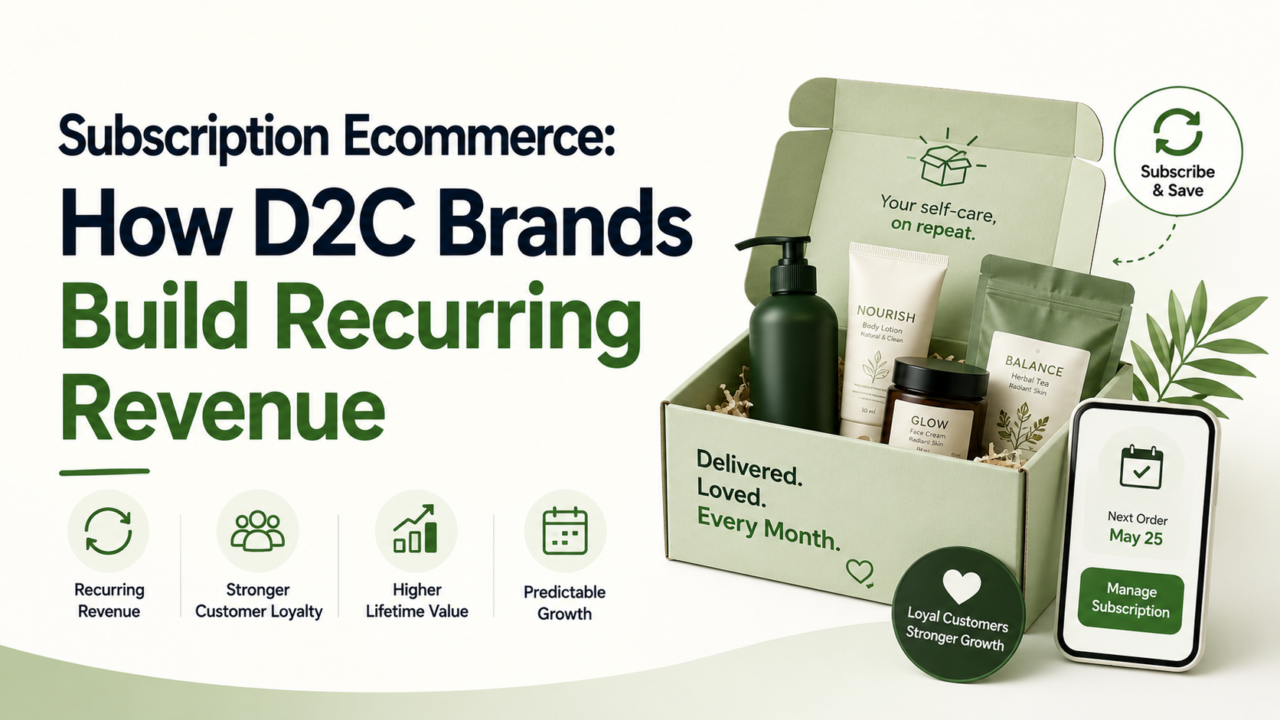
Subscription ecommerce is a sales model where a customer pays for a product on a repeat cycle instead of one time.
The order renews on its own. The customer does not have to come back and decide again. That single change is why the model builds such steady revenue.
One warning. Recurring billing and subscription ecommerce are not the same thing. Recurring billing is just an automatic charge. Subscription ecommerce is a full relationship: the right offer, easy controls, good support, and a real reason to stay. Miss that difference and you build a billing loop that customers quietly cancel.
What Are the Main Types of Subscription Model?
Most brands fit one of five models. The first three are the classics for physical D2C brands.
- Replenishment (Subscribe and Save). The customer needs the product on a clock. Coffee, supplements, pet food, razors, skincare. The subscription replaces a re-order they would make anyway. Example: Dollar Shave Club ships razors on a schedule, and Chewy Autoship does the same for pet food.
- Curation (subscription box). The customer buys surprise and discovery. A beauty box, a snack box, a book box. The fun is the reveal. Example: a monthly beauty box that sends new samples each time.
- Access or membership. The customer pays for perks, not a shipment. Member pricing, free shipping, early drops, or a monthly credit to spend. Example: Amazon Prime is the giant version, and a D2C brand might run a paid VIP tier with member-only deals.
- Digital or service. The customer pays for ongoing access to content, software, or a service. Example: Netflix, Spotify, or an online course library.
- Usage-based. The customer pays for what they use. More usage, higher bill. Example: cloud storage or an API. This is common in software and rare in physical D2C.
Some brands run a hybrid that mixes two of these. Think a coffee subscription that also unlocks a members-only recipe library.
Which model holds subscribers longest? Replenishment, because the need is real. Curation churns faster because novelty wears off. Access and hybrid sit in the middle and lean on perks and content to stay sticky.
How Do You Choose the Right Model?
Start with why the customer would subscribe, not with billing.
- Want convenience? Use replenishment.
- Want discovery? Use curation.
- Want status or savings? Use access or membership.
- Selling content or software? Use digital or usage-based.
Pick the model that matches how people already use your product. Forcing the wrong one just creates cancels and refund requests.
Why Do Subscriptions Matter for D2C Brands?
Because they turn one hard problem into one steady system.
The opportunity is real. Subscription commerce has grown fast for over a decade, and North America is the largest market. One US estimate put the domestic subscription ecommerce market near $6 billion in 2025. Exact size figures vary a lot by research firm, so treat any single number with care. The direction is not in doubt: more brands add recurring revenue every year.
Here is what recurring revenue does for a scaling brand:
- Predictable cash flow. You can forecast next month before it starts. That makes hiring, inventory, and ad budgets far less risky.
- Higher lifetime value. A subscriber keeps paying for months. A one-time buyer may never return.
- Lower reliance on ads. When a chunk of revenue renews on its own, one bad ad week does not sink you.
- Better inventory planning. You know roughly how many units ship next cycle, so you buy smarter.
- A real relationship. You learn what each customer wants and keep improving the offer.
The core idea is simple. Stop rebuying the same customer with ads every month. Own the relationship instead.
A Worked Example: What Is a Subscriber Really Worth?
Let us put real numbers on it. All figures are US dollars.
Say your brand sells a $40 product. Your contribution margin is 55%, so you keep about $22 in margin per order after product and fulfillment cost. (If you are unsure how to find that number, work it out first, because every decision below rides on it.)
A normal repeat buyer:
- Places about 2.5 orders in their life with you.
- Lifetime margin: $22 x 2.5 = $55.
A subscriber with 8% monthly churn:
- Average lifespan is 1 divided by the churn rate: 1 / 0.08 = 12.5 billing cycles.
- Lifetime margin: $22 x 12.5 = $275.
That subscriber is worth about 5x the normal repeat buyer. Same product. Same margin per order. The only difference is that the customer keeps coming back on a schedule.
Now watch what a small retention fix does.
Suppose you cut monthly churn from 8% to 7% just by recovering failed payments (more on that below).
- New lifespan: 1 / 0.07 = 14.3 cycles.
- New lifetime margin: $22 x 14.3 = $314.60.
That is a 14% jump in lifetime value from fixing billing plumbing. You spent nothing on ads to get it.
At 5,000 active subscribers, cutting churn by one point saves roughly 50 subscribers a month. At $40 each, that is about $2,000 in retained revenue every month, and it compounds.
How Do You Add Subscriptions to Shopify?
You have two paths, and the right one depends on how complex your offer is.
Path 1: Start with the free native app.
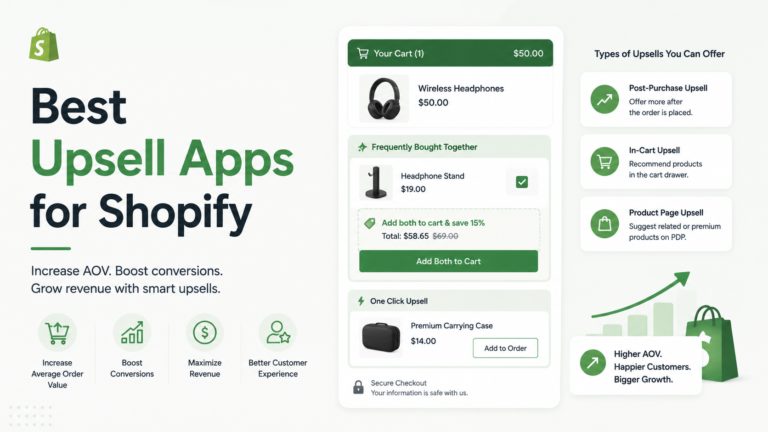
Shopify has a free Subscriptions app in the App Store. It runs on Shopify’s Selling Plans and Subscription Contracts, so the subscription option shows up right inside your normal checkout. No clunky redirect.
The native app is great when:
- You sell a simple Subscribe and Save product.
- You want to launch fast and cheap.
- You do not need build-a-box or heavy retention tools yet.
Setup is quick:
- Install the free Shopify Subscriptions app.
- Create a selling plan (for example, “every month” at 10% to 15% off).
- Apply it to your top repeat-purchase products only. Not everything needs a subscription.
- Update the product page so the subscribe option and the discount are easy to see.
Path 2: Move to a paid app when you scale.
Paid apps like Recharge, Loop, Appstle, and Skio add build-a-box, prepaid plans, deep dunning, and loyalty tie-ins. They usually charge a monthly fee plus a small percent of subscription revenue and a per-order fee. That is fine at scale, but it eats margin, so switch when the extra features clearly pay for themselves.
A simple rule: start native, graduate to a paid app when you need advanced retention, bundles, or memberships.
The RENEW Framework for Recurring Revenue
Most brands treat subscriptions as a checkbox. They add the app and hope. That is why so many programs stall.
Recurring revenue is not a feature. It is a loop you have to run on purpose. Use the RENEW Framework to build it and hold it.
R: Right Model
Match the model to the product.
- Replenishable product (you buy it again anyway)? Use Subscribe and Save.
- Discovery product (novelty and surprise)? Use a curated box.
- Premium brand with fans? Use a membership or VIP tier.
Do not force a subscription on something people buy once. That just creates cancels and refund requests.
E: Easy Controls
Give subscribers full self-service.
- Skip a delivery.
- Pause for a month.
- Swap a product.
- Change the ship date.
This matters more than most founders think. A large share of subscribers will cancel outright if they cannot pause or skip. Make it one click. A skip keeps the relationship alive. A cancel ends it.
N: No Failed Payments
This is the quietest revenue leak in your whole business.
About 1 in 4 lost subscriptions is not a real cancel. The card expired, hit a limit, or got flagged. The customer wanted to stay. Nobody recovered the payment, so they were gone.
Fix it with three tools:
- Smart retries that reattempt the charge at a smart time, not instantly.
- A card updater that refreshes expired card numbers automatically.
- Pre-dunning messages by email and text that warn the customer before the charge fails.
Stripe found that subscriptions saved from a failed payment go on to last about seven more months on average. That is like winning a new subscriber for free.
E: Early Win
Most cancels happen right after the first delivery. If box one disappoints, the relationship rarely recovers.
So treat the first delivery like a first date.
- Use signup answers to personalize box one.
- Set clear expectations on what ships and when.
- Send a warm welcome flow and a great unboxing moment.
- Ask for feedback so you can fix problems before cycle two.
Win the first box and you win months of revenue.
W: Worth Staying
Every month, the value has to beat the cost. If it does not, one click ends it.
Keep giving reasons to stay:
- Member-only pricing.
- Loyalty points or perks that grow over time.
- A surprise gift on cycle three or six.
- Useful content, tips, or community access.
Subscribers do not stay for the product alone. They stay for the feeling that leaving would cost them something good.
Why Do Subscribers Cancel, and How Do You Reduce Churn?
Churn comes in two flavors, and they need different fixes.
Voluntary churn is when the customer chooses to leave. Fix it with value, flexibility, and a smart cancel flow that offers a pause, a skip, or a discount before the final goodbye.
Involuntary churn is when the payment fails and the customer never chose to leave. Fix it with the retries, card updater, and pre-dunning from the RENEW step above.
For most D2C subscription brands, involuntary churn is around 20% to 40% of all churn. That means a big slice of your losses are a billing problem, not a product problem. Billing problems are the easiest and cheapest to fix.
A quick churn-reduction checklist:
- Turn on smart retries today (it is often free and off by default).
- Add a card updater so expired cards refresh on their own.
- Send a friendly “your card needs updating” message before billing.
- Build a cancel flow that offers pause and skip first.
- Personalize the first delivery to stop early cancels.
- Watch churn by cohort, not just one blended number.
Subscription vs One-Time Purchase: Which Builds More LTV?
Both have a place. But for lifetime value, subscriptions win by a wide margin when the product fits the model.
| Factor | One-Time Purchase | Subscription |
|---|---|---|
| Revenue pattern | Starts at zero each month | Renews on its own |
| Lifetime value | Lower, often one or two orders | Much higher, many cycles |
| Ad dependence | High, you rebuy each sale | Lower, revenue recurs |
| Forecasting | Hard | Easy |
| Customer data | Thin | Rich and repeated |
| Best for | New or impulse products | Replenishable or fan-favorite products |
The takeaway is not “subscribe-lock everything.” It is this. For products people use up or love, a subscription turns a single sale into months of margin. For true one-time items, keep the classic checkout and win with cross-sell instead.
A Simple 60-Day Plan to Launch Subscriptions
You do not need a huge project. You need a focused start.
Days 1 to 15: Pick and set up.
- Find your top 20% of products by repeat purchase.
- Choose your model (Subscribe and Save is the fastest win).
- Install the native Shopify Subscriptions app.
- Set a fair discount, usually 10% to 15% for consumables.
Days 16 to 30: Make the offer clear.
- Redesign the product page so the subscribe option stands out.
- Add self-service controls: skip, pause, swap.
- Turn on smart retries and a card updater.
Days 31 to 45: Win the first box.
- Build a welcome and onboarding flow.
- Personalize box one from signup data.
- Add pre-dunning messages before the first renewal.
Days 46 to 60: Grow and hold.
- Promote the subscription in ads and email.
- Add a cancel flow with pause and skip offers.
- Track churn, recovered payments, and subscriber LTV every week.
Common Mistakes to Avoid
- Forcing subscriptions on one-time products. You will drown in cancels and refunds.
- Hiding the skip and pause buttons. No controls means fast cancels.
- Ignoring failed payments. This is the leak that never stops until you plug it.
- A weak first box. The first delivery decides most of your churn.
- Discounting too hard. A giant discount buys subscribers who quit the moment the deal ends.
- Ignoring subscription fatigue. People already juggle many subscriptions. Yours has to clearly earn its slot every single month.
- Watching one blended churn number. Track cohorts so you can see what is really happening.
Frequently Asked Questions
What is the subscription ecommerce model?
It is a way of selling where customers pay for a product on a repeat schedule, like weekly, monthly, or quarterly. The order renews on its own, so the brand earns steady, predictable revenue instead of chasing a new sale each time.
What are the main types of subscription ecommerce?
The five main types are replenishment (Subscribe and Save), curation (subscription boxes), access or membership, digital or service subscriptions, and usage-based billing. Some brands run a hybrid that mixes a physical shipment with a digital perk. Replenishment usually holds subscribers the longest because the need is real.
How do I add subscriptions to my Shopify store?
Start with the free native Shopify Subscriptions app. Install it, create a selling plan (for example, monthly at 10% to 15% off), and apply it to your top repeat products. Move to a paid app like Recharge or Loop when you need build-a-box, memberships, or advanced retention tools.
What is a good churn rate for a subscription brand?
It depends on your category. Replenishment products (supplements, coffee, pet food) churn lower. Curated boxes and beauty churn higher, often in the 8% to 15% monthly range. Compare yourself to brands in your own category, not to a blended average.
How do I reduce subscription churn?
Fix failed payments first with smart retries, a card updater, and pre-dunning messages. Then add self-service skip and pause, nail the first delivery, and build a cancel flow that offers a pause before the final cancel.
Is a subscription worth more than a one-time purchase?
Usually yes, when the product fits the model. A subscriber keeps paying for many cycles, so lifetime value can be 5x a normal repeat buyer. For true one-time products, a classic checkout with strong cross-sell often works better.
Turn Subscriptions Into a System, Not a Side Project
Subscriptions do not fail because the app is bad. They fail because nobody owns the loop. Acquisition, onboarding, dunning, and cancel flows all need a team running them every day.
That is what AcquireX builds. We give you a dedicated offshore team that runs both sides of recurring revenue: performance marketing to bring subscribers in, and customer support and retention operations to keep them paying.
Stop managing vendors and stitching tools together. Build a system that owns the whole subscriber journey.