Choosing the right business analytics tools can be the difference between guessing and knowing what drives your growth. This guide explains how analytics tools help a business and compares seven widely used options for business analysis, from process modeling to large-scale data platforms and self-service dashboards.
Key takeaways
- Business analytics tools turn raw data into insights for strategy, finance, workforce planning and operations.
- Process and requirements tools such as BPMN tools, CASE Spec and Blueprint help you document and improve how work gets done.
- Data platforms and BI tools such as Teradata, Spotfire, Board and Sisense help you analyze, visualize and forecast.
- Pick a tool based on your data volume, the questions you need answered and who will use it day to day.
How Can Business Analytics Tools Help Your Business?
The methodical application of data to gain a competitive edge is known as business analytics.
A business analytics tool helps you gain insights into business by collecting and analyzing data further such information can be used for building effective strategies for business growth.
Business analytics tools help to gain insights into employee performance for better workforce management, help in financial analysis to make wise financial decisions, help in risk management by identifying potential risks and also help in optimizing business operations leading to improved efficiency.
Data is only useful when it shapes decisions, as we explain in our article on the role of data in driving business decisions and strategy. With that in mind, here are seven popular business analytics tools for your business.
Top 7 Business Analytics Tools for Business Analysis
1. BPMN Tools for Business Process Modeling
A graphical notation for describing business processes in a process mode is called the Business Process Modelling Notation (BPMN). With an effective visual representation of business processes, the BPMN tool helps in business analysis.
This business analytics tool helps in compliance and auditing by assisting in documenting processes, using workflow or Business process management system it helps in process automation and it helps in process analysis by locating inefficiencies, obstructions, and potential improvement zones inside a business process.
2. CASE Spec for Requirements and System Analysis
The fundamental concept behind CASE (Computer-Aided Software Engineering) tools is that built-in programs may assist with system analysis as it develops to improve quality and produce better results.
It primarily helps in project management, code generation, documentation management, diagramming and version control. This business analytics tool is effective in many ways.
3. Teradata for Large-Scale Data Analytics
Teradata is a widely used business analytics platform for managing and analyzing very large volumes of data.
Uses:
1. Analyzing customer behaviour, their interactions and preferences to build effective marketing strategies and encourage customer-centric decision-making.
2. Enables businesses to manage rising data quantities and rising analytical expectations.
3. Teradata provides sophisticated analytics tools that enable businesses to do in-depth investigations including statistical analysis, machine learning, and predictive modelling.
4. Spotfire for Interactive Data Visualization
With the help of interactive visualization, Spotfire enables integrating data for a single analysis and obtaining a comprehensive understanding of it.
It performs statistical analysis to calculate descriptive statistics, helps to design interactive dashboards and reports, can track inventory levels, and analyzes supply chain data. It is also useful in predictive analysis and geospatial analysis.
5. Board for Planning and Performance Management
In the supply chain and inventory management Board, a business analytics tool plays a major role as it can be used to achieve efficiency by analyzing supply chain data and optimizing supply chain operations.
Board tool is also helpful in performance management like tracking performance indicators across different areas. This business analytics tool provides data-driven insights to streamline business processes, it gets used for profitability analysis, sales and revenue analysis.
6. Blueprint for Visual Documentation and Data Flow Diagrams
Blueprint tool helps create a visual representation and documentation of technical architectures.
Blueprint, a business analytics tool, enables us to create Data flow diagrams for analyzing data transformations and exchanges. We can create diagrams using the Blueprint tool so it can serve in training and onboarding, impact analysis, and risk analysis.
7. Sisense for Self-Service Analytics
Sisense, a business analytics tool simplifies complex data analysis and enables users to build strategies based on that. It is a popular choice for teams that want analytics without heavy engineering support.
It aids in financial analysis like financial budgeting, reporting and forecasting. It helps to gain insights into customers’ behaviour and their interactions. It eliminates the need for technical experts by allowing users to perform ad hoc queries on large datasets. It is also helpful in data analysis, predictive analysis and supply chain optimization.
How to Choose the Right Business Analytics Tool
There is no single best tool for every company. Before you commit, consider:
- The questions you need answered: process improvement, financial forecasting, customer behavior or supply chain performance.
- Your data volume and sources: spreadsheets and a few apps need a very different tool than an enterprise data warehouse.
- Who will use it: analysts can handle complex platforms, while business users usually need self-service dashboards.
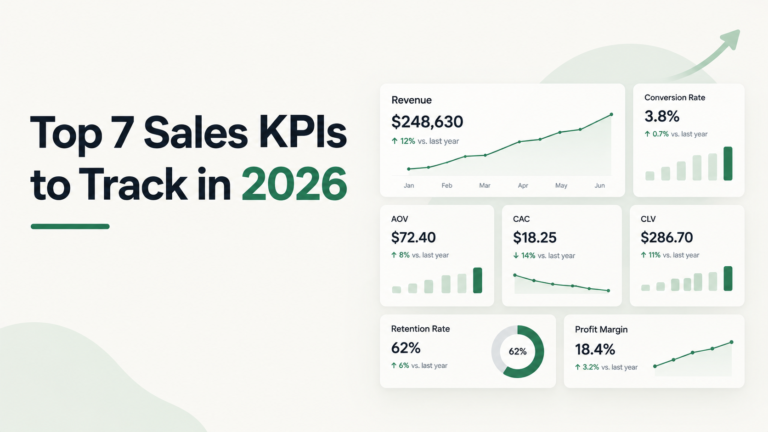
- The metrics that matter: define your KPIs first, such as the sales KPIs worth tracking, then pick a tool that reports on them well.
For a deeper evaluation framework, read our guide on how to choose the right AI and analytics tools for your organization. And because tools only deliver value in skilled hands, see how to build a successful analytics team.