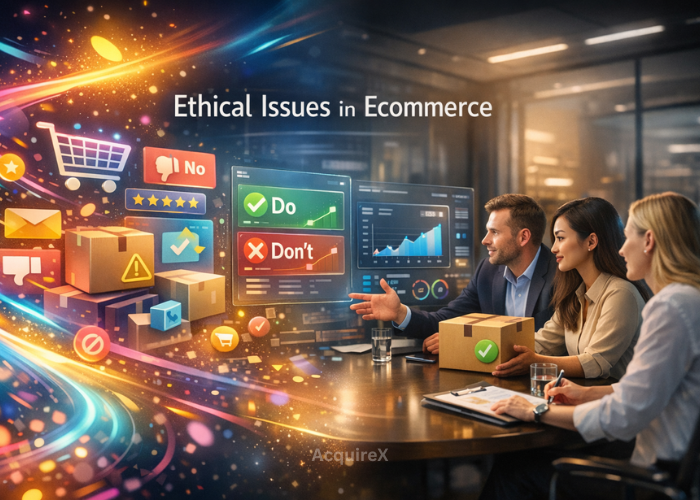
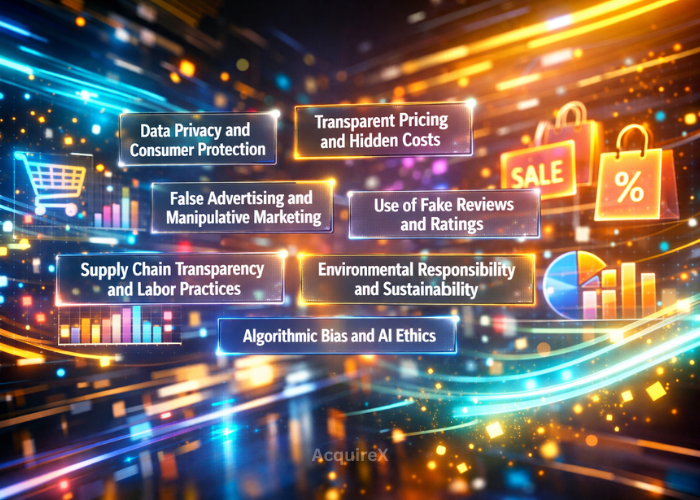
Ethical issues in ecommerce are the ways online selling can mislead, exploit, or put customers and workers at risk. The seven that come up most are data privacy, hidden pricing, deceptive marketing, fake reviews, supply chain labor, environmental impact, and algorithmic bias. Several are now regulated, so ignoring them can cost you fines as well as trust.
Key Takeaways
- The seven big issues: data privacy, hidden pricing, deceptive marketing, fake reviews, supply chain labor, environmental impact, and algorithmic bias.
- The FTC finalized a rule in 2024 banning fake reviews and testimonials, and California has required all-in pricing since July 2024.
- Most fixes are operational: show full prices early, collect only the data you need, verify reviews, and audit suppliers.
- Write the policy down, assign an owner, and review it every quarter.
What Are ethical issues in ecommerce?
Ethical issues in ecommerce refer to moral challenges and responsibilities that arise when businesses sell products or services online. These issues span customer data protection, transparency, labor practices, environmental impact, and honest marketing.
Unlike traditional retail, e-commerce operates in a data-rich, algorithm-driven environment. This increases both opportunity and risk. Brands that ignore ethical issues in ecommerce may see short-term gains, but often face long-term damage through legal penalties, customer churn, and loss of search visibility.
Why Do Ethical Issues Matter for Online Sellers?
Ethics and performance are linked: customers abandon brands they distrust, regulators fine deceptive sellers, and marketplaces suspend accounts for violations.
Key reasons ethics matter:
- Builds long-term customer trust and loyalty
- Reduces regulatory and legal risks
- Improves brand reputation and reviews
- Supports sustainable and scalable growth
In short, fixing these issues is about staying in business, not just compliance.
What Are the 7 Biggest ethical issues in ecommerce?
1. Data Privacy and Consumer Protection
One of the most critical ethical issues in ecommerce is how brands collect, store, and use customer data. Personal information, payment details, and browsing behavior are extremely sensitive.
Unethical practices include:
- Collecting data without consent
- Selling user data to third parties
- Weak cybersecurity protections
Global regulations like GDPR and consumer protection laws demand transparency. Ethical e-commerce brands clearly communicate privacy policies and protect user data proactively. Security belongs here too; our checklist of cybersecurity questions to ask your IT vendor is a good starting point.
2. Transparent Pricing and Hidden Costs
Fake discounts, inconsistent dynamic prices, and hidden fees are common complaints. California has required all-in pricing without hidden mandatory fees since July 2024 (SB 478), and the FTC’s 2025 junk-fees rule covers live-event tickets and short-term lodging.
Examples of unethical pricing:
- Inflated “original” prices to show fake discounts
- Surprise shipping or handling fees
- Region-based price discrimination without disclosure
Transparency in pricing directly reduces cart abandonment and reinforces ethical credibility. For how pricing choices affect margin, read our pricing strategies guide.
3. False Advertising and Manipulative Marketing
Marketing ethics are central to ethical issues in ecommerce. Exaggerated claims, fake scarcity tactics, and misleading product images erode consumer trust.
Common problems include:
- Overstated product benefits
- Fake reviews or testimonials
- Countdown timers that reset artificially
Fake countdown timers and exaggerated claims can be treated as deceptive advertising under FTC rules.
4. Use of Fake Reviews and Ratings
Social proof drives conversions, which is why fake reviews are a serious problem. In August 2024 the FTC finalized a rule banning fake reviews and testimonials, including buying reviews and review suppression, with civil penalties for violations.
Ethical alternatives include:
- Encouraging verified buyer reviews
- Displaying both positive and negative feedback
- Actively moderating, not manipulating, reviews
Addressing this ethical issues in ecommerce improves credibility and conversion quality. For a clean way to collect real reviews, see how to ask for reviews after purchase.
5. Supply Chain Transparency and Labor Practices
Many problems start beyond the website, in factories, warehouses, and logistics networks. A 2025 Labour Behind the Label report on factories supplying Amazon sellers in Pakistan found forced overtime and missing employment protections, and the BBC has reported excessive hours at factories supplying Shein.
Key concerns:
- Poor labor conditions
- Child or forced labor in supply chains
- Lack of transparency about sourcing
Ethical e-commerce brands audit suppliers, publish sourcing standards, and communicate openly about production practices. Our supplier scorecard guide shows how to track compliance alongside cost and quality. Source: Labour Behind the Label, Unboxing Marketplace.
6. Environmental Responsibility and Sustainability
Fast shipping and fast fashion have environmental costs. Packaging waste, carbon emissions, and overproduction are now central ethical issues in ecommerce.
Responsible practices include:
- Sustainable packaging
- Carbon-neutral shipping options
- Ethical sourcing of raw materials
Consumers increasingly choose brands that balance convenience with environmental responsibility.
7. Algorithmic Bias and AI Ethics
Personalization engines and AI-driven recommendations power modern e-commerce, but they can also introduce bias. Read more in our piece on the ethical implications of AI.
Unethical risks include:
- Discriminatory pricing algorithms
- Biased product visibility
- Excluding certain demographics
Ethical use of AI ensures fairness, explainability, and accountability in automated decision-making.
How Do Ethical Issues Affect Customer Trust?
Trust is the currency of digital commerce. Once lost, it is difficult and expensive to rebuild. Ethical issues in ecommerce directly influence trust signals such as reviews, repeat purchases, and brand advocacy.
Transparent communication, ethical policies, and consistent actions help brands convert first-time buyers into long-term customers.
How Can Brands Fix ethical issues in ecommerce?
Establish Clear Ethical Guidelines
Document and enforce policies around data use, marketing claims, pricing, and sourcing. Ethics should be part of onboarding, not an afterthought.
Invest in Compliance and Security
Strong cybersecurity, regular audits, and compliance checks reduce ethical and legal risks.
Be Transparent and Accountable
Publish clear privacy policies, sustainability reports, and sourcing information. Transparency reduces skepticism.
Educate Teams and Partners
Ethics apply across departments, from marketing to logistics. Training ensures alignment across the ecosystem.
Where Did Ecommerce Start?
Owner / Founding Team and Launch Year
Ecommerce is usually traced to Michael Aldrich, who in 1979 connected a television to a transaction-processing computer over a phone line.
Later, Amazon (founded 1994) and eBay (founded 1995) took online shopping mainstream, and each new scale brought new ethical questions.
Which Rules Apply to Ecommerce Ethics?
In the US, the Federal Trade Commission enforces rules on deceptive advertising, reviews, and data practices, and states such as California add their own privacy and pricing laws. In the EU, GDPR governs personal data. FTC business guidance is a good place to check current requirements.
What Ethical Issues Are Coming Next?
Expect more scrutiny of biometric data, AI-driven personalization, and supply chain due diligence.
Ethics is part of how customers decide whether to buy again.
What Should You Do First?
Start with the issues you can check this week: your pricing display, your review process, and your data collection.
Then ask suppliers for audits, write down your policy, and review it every quarter.
Frequently Asked Questions
What are the most common ethical issues in ecommerce?
Common ethical issues in ecommerce include data privacy violations, misleading pricing, fake reviews, false advertising, unethical labor practices, and environmental sustainability concerns.
Why are ethical issues important for ecommerce brands?
Ethical issues in ecommerce matter because they affect customer trust, brand reputation, legal compliance, and long-term business growth. Ethical brands retain customers and reduce risk.
How does data privacy relate to ethical issues in ecommerce?
Data privacy is a key ethical issues in ecommerce because online stores collect sensitive customer information. Ethical handling requires transparency, consent, and secure data protection.
Can unethical ecommerce practices affect SEO and rankings?
Indirectly. Misleading content and fake reviews can break Google’s spam and review policies, and lost trust shows up as fewer repeat buyers and worse ratings.
How can ecommerce businesses address ethical issues effectively?
Businesses can address ethical issues in ecommerce by using transparent pricing, protecting customer data, auditing supply chains, adopting sustainable practices, and training teams on ethics.