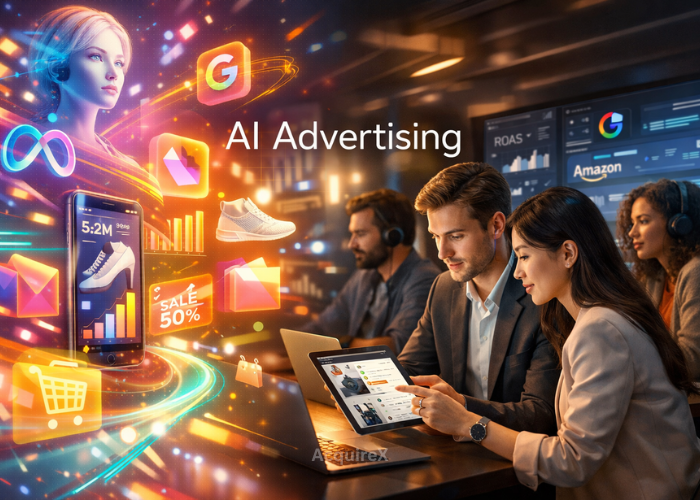
AI Advertising is rapidly redefining how eCommerce brands connect with customers in 2026. With rising competition, evolving consumer expectations, and increasing data complexity, traditional advertising methods are no longer enough. Businesses are now leveraging Artificial intelligence Advertising to create smarter, faster, and more personalized campaigns.
From automated targeting to predictive insights, AI Advertising helps brands maximize ROI while reducing manual effort. Whether you are a startup or an established eCommerce business, adopting AI-driven strategies is becoming essential for long-term growth.
What Is AI Advertising?
AI Advertising refers to the use of artificial intelligence technologies such as machine learning, natural language processing, and predictive analytics to optimize digital advertising campaigns.
Instead of relying on manual decision-making, Artificial intelligence Advertising systems analyze vast datasets in real time to:
- Identify the right audience
- Optimize ad placements
- Personalize messaging
- Predict user behavior
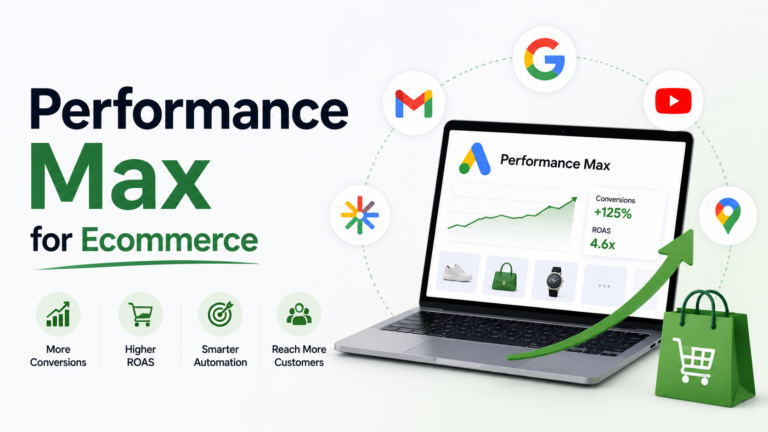
Platforms like Google Ads and Meta already use Artificial intelligence Advertising to automate and enhance campaign performance at scale.
Why AI Advertising Matters for eCommerce
In the fast-paced eCommerce landscape, AI Advertising provides a powerful competitive advantage.
Key Benefits
1. Hyper-Personalization
AI Advertising analyzes customer data such as browsing history and purchase behavior to deliver tailored ad experiences that improve conversions.
2. Higher ROI
By optimizing bids and targeting in real time, AI Advertising reduces wasted spend and increases profitability.
3. Real-Time Optimization
AI tools continuously monitor campaign performance and make instant adjustments for better results.
4. Scalable Campaign Management
Artificial intelligence Advertising enables businesses to manage thousands of ads efficiently without increasing operational workload.
Core Technologies Behind AI Advertising
AI Advertising is powered by multiple advanced technologies working together to improve marketing outcomes.
Machine Learning
Machine learning enables AI Advertising systems to learn from historical data and continuously improve campaign performance.
Predictive Analytics
Predictive models help forecast customer behavior, allowing businesses to target users more effectively.
Natural Language Processing (NLP)
NLP allows Artificial intelligence Advertising tools to generate ad copy, analyze sentiment, and enhance communication.
Computer Vision
Computer vision helps optimize visual content, making product ads more engaging and effective.
Use Cases of AI Advertising in eCommerce

Artificial intelligence Advertising is actively transforming how eCommerce businesses attract and convert customers.
1. Smart Product Recommendations
AI Advertising systems show personalized product ads based on user behavior, increasing cross-selling opportunities.
2. Dynamic Pricing Ads
AI adjusts pricing in real time based on demand, competition, and user intent.
3. Automated Ad Creation
Artificial intelligence Advertising tools generate headlines, descriptions, and creatives, reducing manual work.
4. Advanced Audience Segmentation
AI divides audiences into micro-segments, enabling highly targeted campaigns.
AI Advertising Tools and Platforms
Several platforms are leading the AI ads transformation in 2026:
- Google Marketing Platform – Offers advanced analytics and automation
- Amazon Advertising – Enables AI-powered product targeting
- Adobe Sensei – Delivers AI-driven creative and insights
- Salesforce – Provides predictive customer engagement tools
Challenges of AI Advertising
While AI ads offers numerous benefits, businesses must also address certain challenges.
Data Privacy and Compliance
Handling customer data responsibly is critical as regulations become stricter.
High Initial Costs
Implementing Artificial intelligence Advertising tools may require significant investment, especially for smaller businesses.
Data Dependency
AI systems rely heavily on data quality; poor data can lead to inaccurate insights.
Limited Human Creativity
Artificial intelligence Advertising optimizes performance, but human creativity remains essential for emotional engagement.
Future Trends in AI Advertising
Artificial intelligence Advertising continues to evolve with new innovations shaping the future of eCommerce marketing.
Voice and Conversational Ads
AI will enable ads through voice assistants and conversational interfaces.
AI-Generated Video Content
Video ads will be automatically created and optimized for different audience segments.
Predictive Customer Journeys
AI ads will map and influence the entire customer journey across touchpoints.
Cookieless Advertising
AI will rely more on first-party data and contextual targeting as third-party cookies phase out.
Best Practices for Implementing AI Advertising
To maximize the impact of AI ads, businesses should follow these best practices:
- Define clear marketing goals and KPIs
- Invest in high-quality, structured data
- Combine AI insights with human creativity
- Continuously test and optimize campaigns
- Adopt an omnichannel marketing approach
Owner & Founding Team and Establishment Year
Artificial intelligence Advertising has evolved through contributions from major technology companies:
- Google – Founded in 1998 by Larry Page and Sergey Brin
- Meta – Established in 2004 by Mark Zuckerberg
- Amazon – Founded in 1994 by Jeff Bezos
These organizations have played a significant role in shaping Artificial intelligence Advertising technologies used today.
Conclusion
It is transforming eCommerce marketing in 2026 by enabling smarter, faster, and more personalized campaigns. Businesses that adopt AI ads can significantly improve efficiency, customer engagement, and overall performance.
Although challenges such as data privacy and implementation costs exist, the long-term benefits of AI ads far outweigh the risks. The future of marketing lies in combining AI-driven insights with human creativity to deliver meaningful customer experiences.
Brands that embrace AI ads early will gain a strong competitive advantage, drive higher conversions, and build lasting customer relationships in the evolving digital marketplace.
FAQ’s
1. What is AI Advertising in eCommerce?
It uses artificial intelligence to automate and optimize digital ads for better targeting and conversions.
2. How does AI Advertising improve performance?
It analyzes data, optimizes ads in real time, and delivers personalized content to boost ROI.
3. Is AI Advertising suitable for small businesses?
Yes, it helps small businesses improve targeting, save time, and maximize limited budgets.
4. What are the main challenges of AI Advertising?
Key challenges include data privacy, high costs, data dependency, and limited human creativity.
5. What is the future of AI Advertising?
It includes voice ads, AI-generated videos, predictive journeys, and reliance on first-party data.