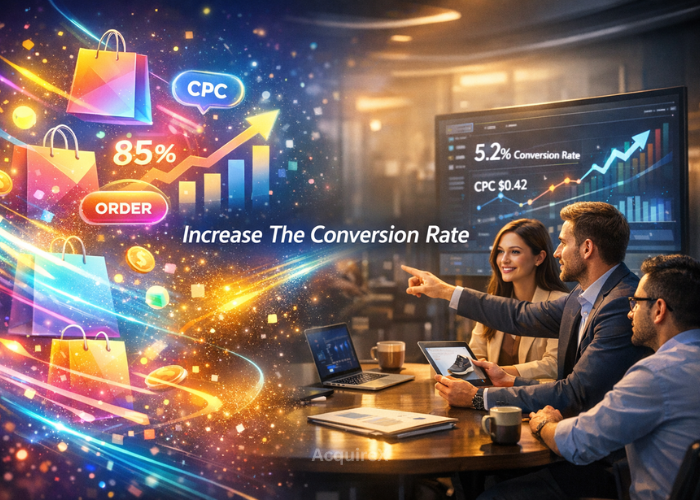

In today’s hyper-competitive digital marketplace, traffic alone doesn’t guarantee sales. What truly determines profitability is Ecommerce Conversion Rate Optimization, the systematic process of improving your online store to increase the percentage of visitors who complete a desired action.
Whether that action is purchasing a product, signing up for a newsletter, or adding items to a cart, Ecommerce Conversion Rate Optimization ensures you maximize every visitor’s value. For e-commerce brands, even a 1% lift in conversion rate can translate into significant revenue growth.
In this guide, we’ll explore nine powerful tools that make Ecommerce CRO measurable, scalable, and profitable.
Why Ecommerce Conversion Rate Optimization Matters in E-commerce
Acquiring traffic through ads and SEO is expensive. According to research by Forrester Research, improving customer experience can significantly boost conversions and revenue.
Instead of spending more on customer acquisition, Ecommerce Conversion Rate Optimization focuses on:
- Reducing Cart abandonment
- Improving checkout flows
- Enhancing user experience
- Personalizing product recommendations
- Building customer trust
The result? Higher ROI from existing traffic.
Top 9 Ecommerce CRO Tools
1. Optimizely (Founded 2010)
Founders: Dan Siroker and Pete Koomen
Established: 2010
Optimizely is one of the most advanced experimentation platforms for Ecommerce Conversion Rate Optimization. It enables A/B testing, multivariate testing, and personalization at scale.
Key Features:
- Server-side and client-side testing
- Personalization rules
- Feature experimentation
- Data-driven insights
E-commerce brands use Optimizely to test product page layouts, pricing displays, CTA placements, and checkout flows.
2. VWO (Founded 2010)
Founder: Paras Chopra
Established: 2010
VWO (Visual Website Optimizer) is ideal for businesses seeking affordable yet powerful Ecommerce Conversion Rate Optimization tools.
Key Features:
- Heatmaps
- Session recordings
- A/B testing
- Funnel analysis
For e-commerce brands, VWO helps identify friction points in product pages and checkout processes.
3. Hotjar (Founded 2014)
Founder: David Darmanin
Established: 2014
Hotjar focuses on understanding user behavior visually. In Ecommerce Conversion Rate Optimization, behavioral insights are crucial.
Key Features:
- Heatmaps
- Session recordings
- Feedback polls
- On-site surveys
E-commerce managers use Hotjar to understand why customers drop off before completing purchases.
4. Crazy Egg (Founded 2006)
Founders: Neil Patel and Hiten Shah
Established: 2006
Crazy Egg simplifies data visualization for Ecommerce Conversion Rate Optimization.
Key Features:
- Scroll maps
- Click tracking
- A/B testing
- Confetti reports
This tool helps optimize product page layouts and CTA placements for better engagement.
5. Google Analytics (Launched 2005)
Owner: Google
Established: 2005
No Ecommerce Conversion Rate Optimization strategy is complete without robust analytics.
Key Features:
- Conversion tracking
- Funnel visualization
- Audience segmentation
- E-commerce tracking
Google Analytics provides essential metrics like bounce rate, session duration, and cart abandonment rates. Learn more directly from the Official Platform
6. Klaviyo (Founded 2012)
Founders: Andrew Bialecki and Ed Hallen
Established: 2012
Email marketing plays a major role in Ecommerce Conversion Rate Optimization.
Key Features:
- Abandoned cart flows
- Personalized product emails
- Behavioral segmentation
- Predictive analytics
Klaviyo helps convert returning visitors and re-engage abandoned carts efficiently.
7. Shopify (Founded 2006)
Founders: Tobias Lütke, Daniel Weinand, Scott Lake
Established: 2006
For merchants using Shopify, built-in features support Ecommerce Conversion Rate Optimization.
Optimization Tools:
- App integrations
- Checkout customization
- Conversion analytics
- Mobile-first templates
Apps like upsell tools and review integrations directly improve trust and average order value.
8. HubSpot (Founded 2006)
Founders: Brian Halligan and Dharmesh Shah
Established: 2006
HubSpot enhances Ecommerce Conversion Rate Optimization through CRM-driven personalization.
Key Features:
- Lead tracking
- Automation workflows
- Smart content personalization
- Conversion reporting
Personalized landing pages significantly increase e-commerce Sales Conversions.
9. Unbounce (Founded 2009)
Founders: Rick Perreault, Carl Schmidt, Oli Gardner
Established: 2009
Unbounce specializes in high-converting landing pages.
Key Features:
- Drag-and-drop builder
- AI-powered copy optimization
- A/B testing
- Dynamic text replacement
For paid ad campaigns, Unbounce ensures landing pages are optimized for maximum Ecommerce Conversion Rate Optimization performance.
Core Strategies Behind Successful Ecommerce Conversion Rate Optimization
Tools alone don’t guarantee success. Effective Ecommerce Conversion Rate Optimization requires:
1. Data-Driven Testing
Always test hypotheses. Never rely on assumptions.
2. Mobile Optimization
Over 60% of e-commerce traffic is mobile. Optimize speed, layout, and checkout.
3. Trust Signals
Include:
- Customer reviews
- Secure checkout badges
- Clear return policies
4. Faster Page Speed
Google prioritizes fast-loading websites. Use PageSpeed Insights to improve performance.
5. Simplified Checkout
Reduce form fields and offer guest checkout options.
For deeper CRO insights, explore our internal resource: Advanced CRO Strategy Guide.
Measuring Ecommerce Conversion Rate Optimization Success
Track these KPIs:
- Conversion rate
- Average order value (AOV)
- Cart abandonment rate
- Customer lifetime value (CLV)
- Revenue per visitor
Continuous monitoring ensures Ecommerce CRO efforts align with revenue goals.
Common Mistakes to Avoid
Even experienced e-commerce brands make mistakes such as:
- Ignoring mobile UX
- Testing too many variables simultaneously
- Failing to analyze data properly
- Not segmenting audiences
- Overcomplicating checkout
Avoiding these pitfalls strengthens your Ecommerce Conversion Rate Optimization strategy.
The Future of Ecommerce Conversion Rate Optimization
Artificial intelligence, predictive analytics, and personalization engines are redefining Ecommerce Conversion Rate Optimization. Machine learning algorithms now tailor product recommendations in real time.
As customer expectations grow, optimization will move from reactive testing to predictive personalization.
Brands investing in structured experimentation and analytics today will dominate tomorrow’s digital commerce landscape.
Final Thoughts
Ecommerce Conversion Rate Optimization is not a one-time project, it’s an ongoing growth strategy. The right tools, combined with structured testing and customer-centric thinking, create sustainable revenue growth.
By implementing the nine tools above and maintaining a data-first approach, e-commerce businesses can transform traffic into consistent, scalable sales.
If your goal is long-term profitability, start investing in Ecommerce CRO today, and turn every visitor into an opportunity.
FAQ’s
What is Ecommerce Conversion Rate Optimization?
It is the process of improving an online store to increase the percentage of visitors who complete actions like purchases or sign-ups. It uses testing, analytics, and UX improvements to boost revenue.
Why is Ecommerce Conversion Rate Optimization important?
It increases sales without increasing ad spend. By improving checkout flow, mobile experience, and trust signals, businesses gain higher ROI from existing traffic.
What is a good e-commerce conversion rate?
Most e-commerce sites convert between 2%–4%, according to research from Nielsen Norman Group. Brands actively investing in Ecommerce Conversion Rate Optimization often exceed this range.
Which tools help with Ecommerce Conversion Rate Optimization?
Popular tools include Google Analytics for tracking, Hotjar for user insights, and Optimizely for A/B testing.
How long does Ecommerce Conversion Rate Optimization take to show results?
With consistent testing and sufficient traffic, measurable improvements typically appear within 4–8 weeks. Ongoing optimization delivers long-term growth.