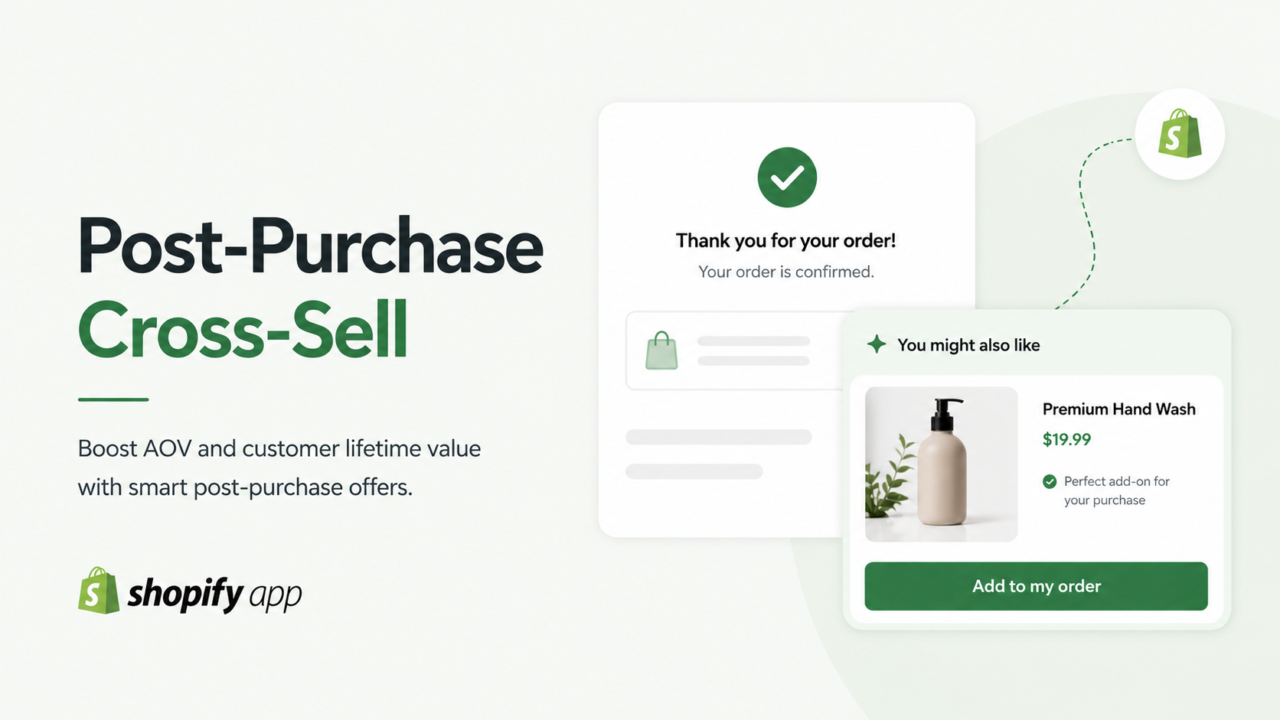
Your customer just hit “buy.” That is the warmest they will ever be.
They trust you. Their card is already out. They feel good about the choice they made. Most brands waste this exact moment with a plain order confirmation and nothing else.
Smart brands do something different. They use it to recommend the one product that makes the first purchase even better.
That is post-purchase cross-sell. Done right, it lifts your average order value and customer lifetime value without spending one more dollar on ads. Done wrong, it annoys people and gets ignored.
This guide shows you how to pick the right next product, every time, and where to put the offer so people actually say yes.
Key Takeaways
- Post-purchase cross-sell means recommending a complementary product right after someone buys, not a bigger version of the same item (that is an upsell).
- The post-purchase window works because trust and buying intent are at their peak, and the offer never risks the sale you already won.
- The right next product completes, refills, or extends the first purchase. Pick it from real “bought together” data, not a guess.
- Show one or two options, never ten. Choice overload makes people pick nothing.
- The three best spots are the thank-you page, the order confirmation email, and a follow-up flow 3 to 30 days later.
What is post-purchase cross-sell?
Post-purchase cross-sell is the practice of recommending a related, complementary product to a customer right after they complete an order.
The classic example is simple. Someone buys a camera, so you suggest an SD card and a case. They buy boots, so you offer waterproofing spray. The add-on makes the first product more useful or more enjoyable.
It is different from an upsell. A cross-sell points to a different product that pairs with what they bought. An upsell points to a better or bigger version of the same product. We break the two apart in the next section.
The “post-purchase” part matters. This offer shows up after payment is done, so it can never scare off the original sale. If the customer says no, you still keep the order you already have.
Why is post-purchase the best time to cross-sell?
Post-purchase is one of the best times to cross-sell because the customer already trusts you and feels good about their decision.
Think about your own behavior. The second you finish buying something you wanted, you feel a small rush. You are open, not defensive. That is the moment to show a helpful next step.
The numbers back this up:
- Selling to people who already bought is far easier than chasing strangers. The book Marketing Metrics by Paul Farris and his co-authors found the probability of selling to an existing customer is 60% to 70%, while the probability of selling to a new prospect is just 5% to 20%.
- Personalized follow-ups drive repeat buying. McKinsey reports that 71% of consumers expect personalized interactions and 76% get frustrated when they do not get them. Their research also found that 78% of consumers say personalized content makes them more likely to buy again.
- Personalization that is done well tends to lift revenue by 10% to 15%, according to the same McKinsey research.
There is one more reason this window is gold: it costs almost nothing. You already paid to acquire this customer. Every extra item they add is close to pure margin, with no new ad spend behind it.
If you want the bigger picture on retention, our guide on customer support KPIs that predict retention shows how repeat behavior compounds over time.
Cross-sell vs upsell: what is the difference?
A cross-sell offers a different product that goes with the purchase. An upsell offers a better version of the same product. Here is the simple breakdown:
| Cross-sell | Upsell | |
|---|---|---|
| What it offers | A different, complementary product | A bigger or better version of the same product |
| Goal | Widen the cart | Raise the value of one item |
| Example | New phone, then a case | Standard phone, then the Pro model |
| Best post-purchase use | Accessories, refills, next-step items | Premium tier, bigger size, a service plan |
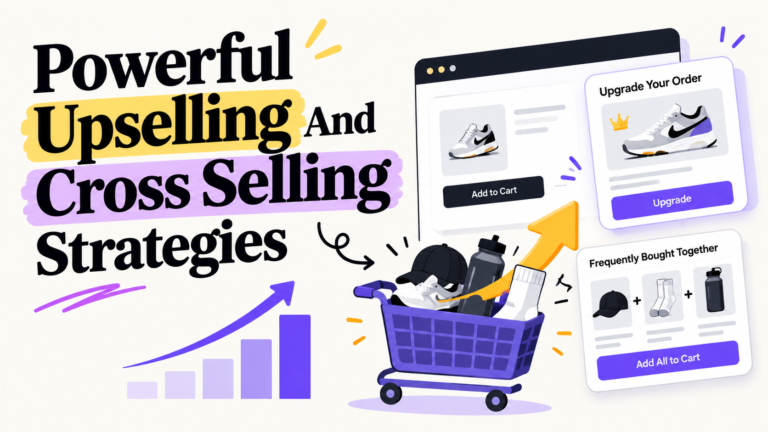
You do not have to choose one. The best stores use both at different moments. For a deeper playbook on both, see our piece on upselling and cross-selling strategies.
A quick note on the “35% of Amazon” stat
You will see this everywhere: “35% of Amazon’s revenue comes from product recommendations.” It gets repeated in almost every cross-sell article online.
Here is what most of them leave out. That figure traces back to a 2013 McKinsey article, and it describes Amazon’s entire recommendation engine across the whole shopping journey, not post-purchase cross-sell on its own. Some blogs even relabel it as a fresh 2023 number, which it is not.
We are flagging it because chasing a giant vanity number is the wrong goal. Amazon has billions of data points you do not have. What you can copy is the principle behind it: show the right product, to the right person, at the right time. That is a system any brand can build, and it is what the rest of this guide is about.
How do you pick the right next product?
The right next product is the one that solves the problem the first purchase just created. To find it fast, use the NEXT Method.
N: Name the need the purchase creates
Start with the job to be done, not your margin.
Every purchase creates a small new need. A new camera needs storage and protection. A new espresso machine needs beans and a cleaning tablet. A new dress needs the shoes that finish the look.
Ask one question: “What will this customer need to actually use or enjoy what they just bought?” That answer is your cross-sell.
E: Earn the yes, and price it under the anchor
The first product is the price anchor. The add-on should feel small next to it.
A good rule of thumb is to keep the cross-sell well below the price of what they just bought. A $14 add-on next to a $40 order feels easy. A $90 add-on next to that same order feels like a second decision, and second decisions get declined.
Lead with why the product is useful, not just a discount. A discount can help, but relevance does the heavy lifting.
X: eXclude the wall of choice
Show one or two picks. Never a carousel of ten.
When you give people too many options, many of them freeze and choose nothing. Two strong, relevant suggestions will almost always beat a long row of loosely related products.
T: Time it to the right window
One offer is not enough. Map each product to a moment:
- The thank-you page, for an instant one-click add.
- The order confirmation email, which gets opened far more than promotional emails.
- A follow-up flow 3 to 30 days later, once the product has arrived and the next need is real.
Pick the moment that fits the product. A refill belongs in a follow-up flow timed to when it runs out. An accessory belongs on the thank-you page while the buying mood is still hot.
Where should you place post-purchase cross-sells?
There are three high-value placements, and each one fits a different kind of offer.
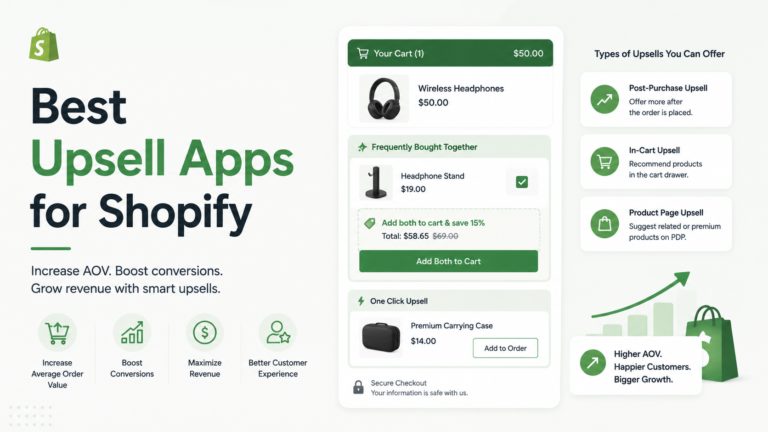
1. The thank-you page. This is the screen right after checkout. The customer is still on your site and still in buying mode. Use it for one quick, one-click add that pairs with their order. Keep it to a single clear offer.
2. The order confirmation email. People open these to check their order details, so your message gets seen. In Omnisend’s 2025 dataset of more than 27,000 brands, order and shipping confirmations were the highest-opened email type, with shipping confirmations hitting a 62.67% open rate, while promotional campaigns averaged around 30%. Add a simple “pairs perfectly with your order” block with one or two items, and frame it as a helpful suggestion, not a hard pitch.
One honest caution: in that same dataset, cross-sell emails carried the highest unsubscribe rate of any type, at 0.89%. The lesson is not to skip them. It is that the recommendation has to match what the customer actually bought. Relevance is the whole game.
3. The post-purchase flow. This is a short series of emails or texts in the days and weeks after the order. Use it for replenishment (“time to restock”) and for “complete the set” recommendations. This is where you build the habit of buying again.
Setting these up well is an automation job. Our guide to ecommerce marketing automation covers how the flows fit together.
A simple worked example
Let us keep the math simple so you can see the impact.
Say a US coffee brand gets 10,000 orders a month. The average order is a $40 starter kit. On the thank-you page, they add one cross-sell: a $14 bag of beans that pairs with the kit.
- 10,000 orders a month
- 5 out of every 100 buyers add the beans (a 5% attach rate, on the conservative side)
- That is 500 extra bags a month
- 500 times $14 = $7,000 in extra revenue every month
- Over a year, that is $84,000
The ad cost to earn that is close to zero, because these are people who already bought. Push the attach rate to 8% with sharper targeting and better creative, and the same store clears more than $134,000 a year from one offer.
Attach rates vary by product, price, and how relevant the offer is, so treat these as an example, not a promise. The point stands: small, smart offers add up fast at scale.
What cross-sell mistakes should you avoid?
Most failed cross-sells come down to a handful of repeat mistakes. Avoid these:
- Too many options. A wall of ten products causes choice overload and kills conversions.
- Random pairings. Offering a product with no link to the purchase feels like spam.
- Pricing too high. An add-on that costs as much as the original turns a quick yes into a hard decision.
- Guessing instead of using data. Base your pairings on what customers actually buy together, not a hunch.
- Set and forget. Offers go stale. Test new pairings, swap winners in, and refresh seasonally.
- Empty thank-you pages. The most common miss of all. A blank confirmation page is free revenue left on the table.
Bundling is a close cousin of cross-sell and avoids a few of these traps. See our guide on Shopify product bundles for that approach.
How AcquireX helps you build a post-purchase cross-sell system
Here is the hard truth. A great cross-sell is not one offer you switch on. It is a system: the right product pairings, the right placements, the creative, the tracking, and constant testing.
Most brands try to run this with a patchwork of part-time help and stop-start projects. The offers go stale. Nobody owns the numbers. Revenue leaks.
AcquireX fixes that by giving you a dedicated team that owns the whole thing as part of your business, not an agency you have to chase or a tool you have to manage yourself.
For post-purchase cross-sell, that team:
- Digs into your order data to find the pairings that actually convert.
- Builds and tests your thank-you page offers, confirmation emails, and follow-up flows as part of our performance marketing and growth work.
- Keeps your product data and pairings clean and current through catalog management.
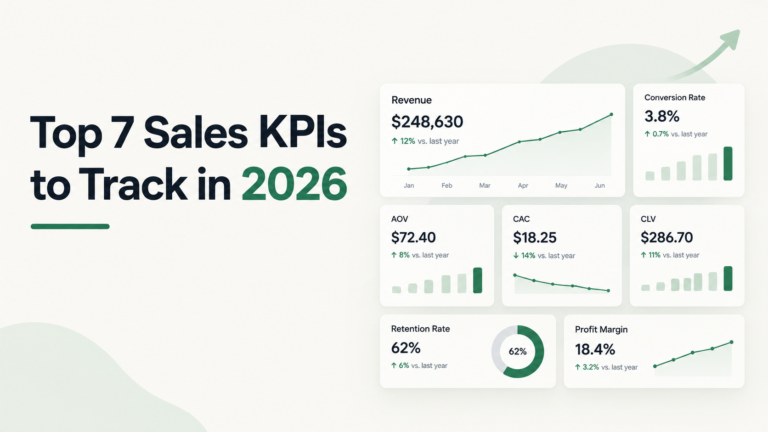
- Tracks attach rate, average order value, and lifetime value, then reports what is working and what to change next.
You focus on growth. We handle the execution. Want to turn your post-purchase window into a revenue engine? Talk to AcquireX.
The bottom line
The moment after checkout is the warmest your customer will ever be. Treat it like the asset it is.
Recommend one or two products that complete, refill, or extend what they just bought. Price the add-on low next to the order. Put the offer where it gets seen: the thank-you page, the confirmation email, and a smart follow-up flow. Use real data, keep testing, and never leave that confirmation page blank.
Do that, and you grow revenue from customers you already paid to win.
Frequently Asked Questions
What is the difference between cross-sell and upsell?
A cross-sell recommends a different, complementary product, like boots and then waterproofing spray. An upsell recommends a better or bigger version of the same product, like the standard boots and then the premium pair. Cross-sell widens the cart. Upsell raises the value of one item.
When is the best time to cross-sell?
Right after the purchase is one of the strongest windows, because the customer already trusts you and feels good about buying. The top spots are the thank-you page, the order confirmation email, and a follow-up flow 3 to 30 days later when the product arrives and gets used.
How many products should I recommend after purchase?
One or two. More than that causes choice overload, and many shoppers respond by picking nothing. Two strong, relevant picks beat a carousel of ten weak ones.
Does post-purchase cross-sell hurt the customer experience?
Not if the offer is relevant and helpful. The goal is to solve the next problem the purchase creates, like batteries for a new camera. When the suggestion saves the customer a trip or a search, it feels like service, not a sales pitch.
What products make the best post-purchase cross-sells?
Products that complete, refill, or extend the first purchase. Think accessories that finish the job, consumables that run out and need reordering, and the natural next step in the customer’s journey.
How is a post-purchase cross-sell different from a checkout upsell?
A checkout upsell happens before the order is placed, so it can add friction or make people second-guess the sale. A post-purchase cross-sell happens after payment, so it never risks the original order. If the customer says no, you still keep the sale you already have.