Quick answer: Ecommerce supply chain management is the planning and control of everything that gets a product from supplier to customer and back: demand forecasting, procurement, inventory and safety stock, inbound freight, warehousing and 3PL fulfillment, last-mile delivery and returns. Done well, it keeps best-sellers in stock, cash out of dead inventory and landed cost under control.
The articles that rank for this topic tend to fall into two camps: high-level definitions that list the “stages of the supply chain,” or logistics-provider guides focused on warehousing and shipping. Both are useful, but neither shows an operator how to actually run the system week to week. This guide connects the pieces: how to forecast, how to set safety stock and reorder points, how to calculate landed cost, how to choose and manage a 3PL, how to handle returns, and how a dedicated operations team runs all of it on a weekly cadence. It finishes with a KPI scorecard and FAQ.
What is ecommerce supply chain management?
Ecommerce supply chain management (SCM) is the coordination of demand planning, sourcing, inventory, logistics and returns for a brand that sells online. Its goal is simple to state and hard to execute: have the right product, in the right place, at the right cost, at the moment a customer clicks “buy.”
Ecommerce supply chains differ from traditional retail in a few important ways:
- Orders are small and individual. You ship single parcels to homes instead of pallets to stores, so pick-and-pack cost and shipping cost dominate.
- Demand is volatile. A creative that works on Meta, a marketplace deal or an influencer post can multiply demand in days.
- Channels compete for the same stock. Your Shopify store, Amazon FBA, Walmart and wholesale accounts all draw on one inventory pool.
- Returns are part of the model. Reverse logistics is a routine flow, not an exception.
- Delivery speed is a conversion lever. The delivery promise shown at checkout affects whether people buy.
What are the stages of an ecommerce supply chain?
An ecommerce supply chain runs as a loop of six connected stages. A mistake in any one stage shows up later as a stockout, a cash crunch, a late delivery or a support ticket.
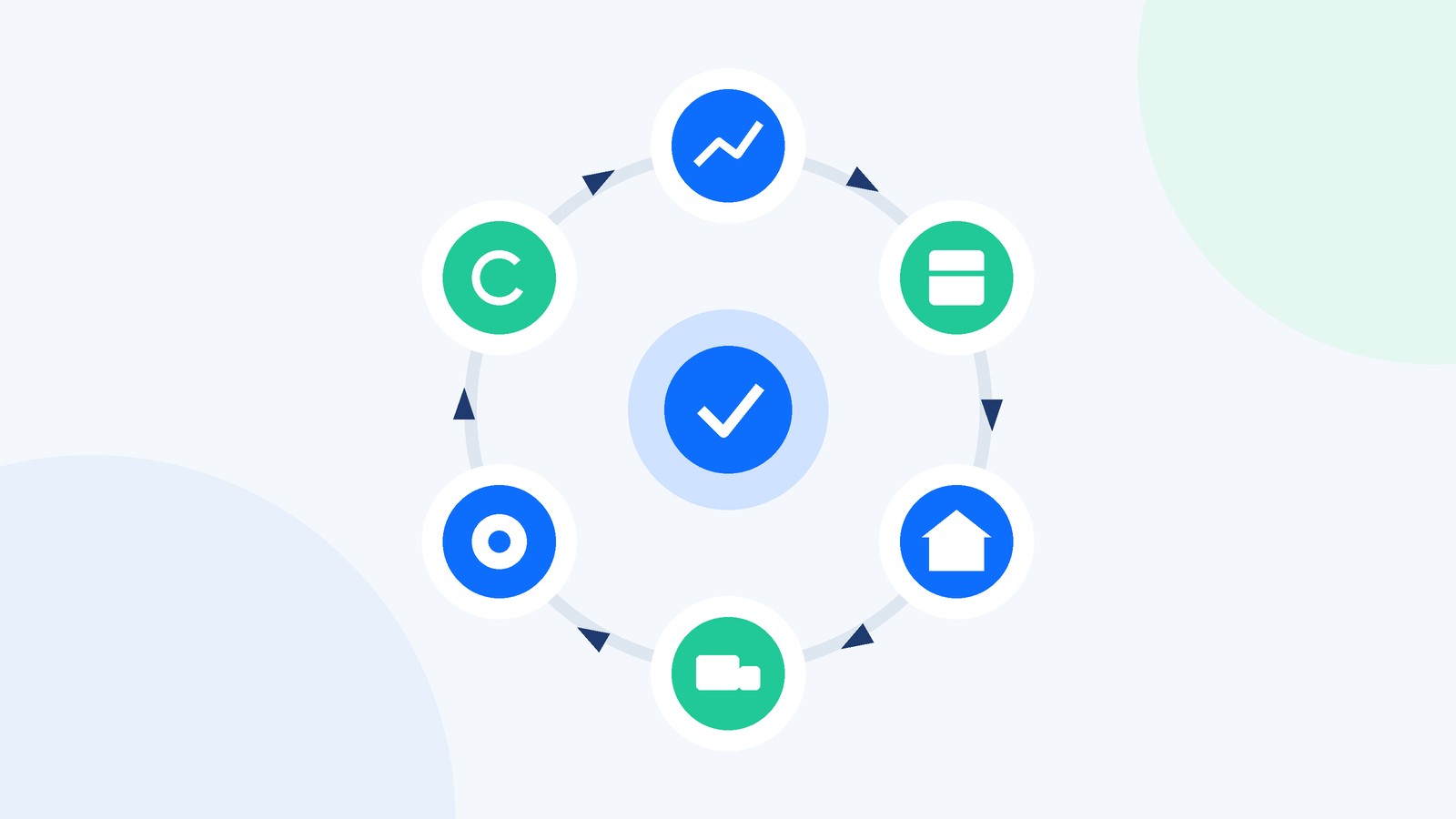
- Demand planning and forecasting: estimating how many units of each SKU you will sell, by channel and week.
- Procurement and sourcing: choosing suppliers, negotiating terms, placing purchase orders and controlling quality.
- Inbound logistics: freight, customs, duties and receiving into a warehouse or marketplace fulfillment center.
- Inventory and warehousing: storing, counting and allocating stock across locations and channels.
- Order fulfillment and delivery: picking, packing, carrier selection and last-mile delivery.
- Returns and reverse logistics: receiving, inspecting, restocking, refurbishing or liquidating returned goods.
The loop closes because returns data and sales data feed the next forecast. Brands that treat these as separate departments with separate spreadsheets are the ones that end up with too much of the wrong stock and too little of the right one.
How do you forecast demand for an ecommerce brand?
Demand forecasting estimates future unit sales per SKU so you can order the right quantity at the right time. For most ecommerce brands, a simple, regularly updated forecast beats a sophisticated model that nobody maintains.
A practical forecasting process:
- Start with clean sales history. Use units sold per SKU per week, by channel. Remove or adjust periods where you were out of stock, because a stockout hides real demand.
- Establish a baseline. A moving average of recent weeks is a reasonable starting point for stable SKUs.
- Layer in seasonality. Compare the same weeks last year to capture holidays, BFCM and category seasons.
- Add known events. Planned promotions, ad budget increases, new marketplace launches, price changes and product launches.
- Review weekly and measure error. Track forecast accuracy per SKU and adjust. Forecasts are never right; the goal is to be less wrong, faster.
Use ABC classification to focus effort: “A” SKUs (the small group driving most revenue) deserve weekly review and tighter safety stock; “C” SKUs can run on simple rules. For the formulas in detail, read our guide on demand forecasting and safety stock for ecommerce.
Why marketing and supply chain must share one plan
In ecommerce, the marketing calendar is the demand plan. If the performance marketing team scales spend on a SKU that has three weeks of cover and a ten-week lead time, the result is a stockout, wasted ad spend and lost ranking on marketplaces. A weekly meeting where marketing, marketplace and supply chain owners review the same inventory cover numbers prevents most of these collisions.
How do you set safety stock and reorder points?
Safety stock is extra inventory held to absorb variation in demand and supplier lead time. The reorder point is the stock level at which you place a new purchase order so that it arrives before you run out.
The core formulas are:
- Reorder point = (average daily sales × average lead time in days) + safety stock
- Basic safety stock = (maximum daily sales × maximum lead time) − (average daily sales × average lead time)
- Statistical safety stock = Z × standard deviation of demand over the lead time, where Z reflects the service level you want (a higher service level means more safety stock)
Illustrative example: a SKU sells an average of 20 units a day, the supplier lead time averages 45 days, and you decide to hold 300 units of safety stock. The reorder point is (20 × 45) + 300 = 1,200 units. When on-hand plus inbound stock falls to 1,200, you reorder.
Three practical rules matter more than the formula choice:
- Measure lead time from PO placed to stock available to sell, not to “shipped from factory.” Freight, customs and receiving all count.
- Set different service levels by ABC class. Running out of an “A” SKU costs far more than running out of a “C” SKU.
- Recalculate before peak season, when both demand and lead times change.
How should you manage inventory across channels and locations?
Inventory management decides where stock sits and which channel can sell it. The goal is maximum availability on high-velocity channels without tying up cash in slow stock.
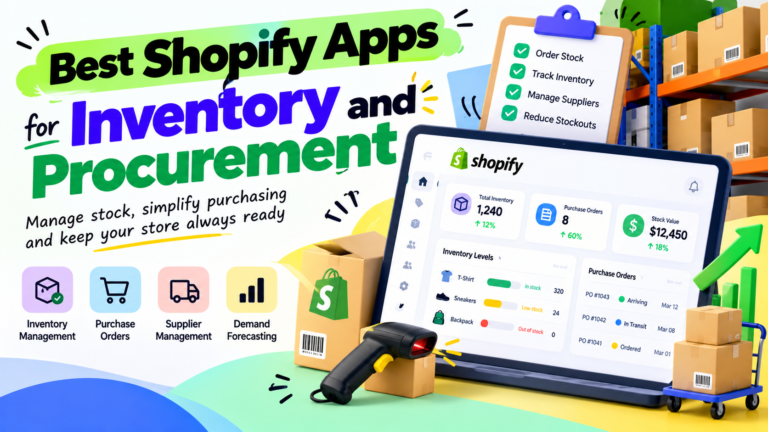
- Single source of truth: use an inventory or order management system that syncs stock across your store, marketplaces and warehouses in near real time. Our roundup of the best Shopify apps for inventory and procurement covers tool options.
- Channel allocation: decide how much stock each channel gets, including Amazon FBA replenishment, and protect a buffer for your own site.
- Multi-location placement: splitting stock between warehouses closer to customers can reduce shipping cost and transit time, but adds inventory and complexity. Model it before committing.
- Cycle counts: count a portion of SKUs regularly instead of relying only on an annual stock-take.
- Aged and dead stock review: flag SKUs with excessive weeks of cover and act early with bundles, promotions or liquidation.
If you sell on Amazon, the choice between FBA and merchant fulfillment changes your inventory strategy significantly; see Amazon FBA vs FBM: which fulfillment model protects your margin.
What is landed cost, and why does it matter?
Landed cost is the total cost of getting a product into your warehouse and ready to sell: the supplier price plus freight, insurance, duties, taxes that are not recoverable, customs brokerage, port and handling fees, and inbound transport. It is the true cost of goods for imported products.
Brands that price and calculate margin on the factory price alone often discover their best-selling SKU is barely profitable. Calculate landed cost per unit for every shipment, allocate freight sensibly (by volume or weight, not just by unit count), and update product margins when freight rates or duties change. Our full guide to landed cost and true COGS for imported products walks through the calculation.
Landed cost is also where procurement and supply chain meet. Supplier terms, order quantity, Incoterms and consolidation decisions all change it. AcquireX’s procurement and sourcing services handle the supplier side of this equation.
Should you fulfill in-house or use a 3PL?
Fulfill in-house when volume is low, products need special handling or you want full control. Use a 3PL (third-party logistics provider) when order volume, storage needs or multi-location delivery outgrow your space and team. Marketplace fulfillment such as Amazon FBA is a third option for marketplace orders.
| Factor | In-house fulfillment | 3PL | Marketplace fulfillment (e.g., FBA) |
|---|---|---|---|
| Control over packing and branding | Full | High, if specified in SOPs | Limited |
| Fixed cost | High (space, staff, equipment) | Low; mostly variable fees | Low; variable fees plus storage |
| Scalability for peaks | Limited by space and staff | Good, if capacity is agreed | Good, subject to platform limits |
| Multi-location delivery | Hard | Possible with multi-node 3PLs | Built in |
| Marketplace badge benefits | None | Depends on program eligibility | Yes, on that marketplace |
| Best for | Early-stage or special-handling products | Growing DTC and omnichannel brands | Marketplace-heavy sellers |
How to choose and onboard a 3PL
- Integrations: confirm native connections with your store, marketplaces and inventory system, including tracking sync back to orders.
- Fee structure: receiving, storage, pick-and-pack, packaging, kitting, returns processing, account minimums and peak surcharges. Model fees on your real order profile.
- Location: distance to your customer base affects shipping cost and delivery time.
- SLAs in writing: order cut-off times, same-day ship rate, order accuracy, dock-to-stock time and returns turnaround.
- Clean data: SKUs, barcodes, dimensions, weights and case packs must be correct before go-live.
- Pilot first: run test orders across single-item, multi-item and bundle orders before switching all volume.
How do you manage returns and reverse logistics?
Returns management is the process of receiving, inspecting and dispositioning returned products, and feeding the reasons back to the business. Every returned unit should be routed to the option that recovers the most value: restock, refurbish, sell as open-box, return to vendor, liquidate or recycle.
- Define disposition rules by product category and condition so warehouse staff do not guess.
- Set a returns processing time target, because returned stock sitting in a corner is invisible to sales channels.
- Capture structured return reasons and review them monthly with product, catalog and sourcing teams.
- Decide when a “keep it” refund is cheaper than return shipping and handling.
For the customer-facing side of returns, see our guide to reducing return rate and recovering margin on Shopify.
Which KPIs should you track for ecommerce supply chain management?
Track a focused scorecard of six to ten KPIs that cover availability, cash, speed, accuracy and cost. Review operational KPIs weekly and financial ones monthly.
| KPI | What it measures | How to calculate |
|---|---|---|
| In-stock rate | Availability of sellable SKUs | SKUs in stock ÷ active SKUs (weight by revenue for A items) |
| Weeks of cover | How long current stock will last | (On hand + inbound) ÷ forecast weekly sales |
| Inventory turnover | How efficiently stock converts to sales | COGS ÷ average inventory value |
| Forecast accuracy | Quality of the demand plan | 1 − (absolute error ÷ actual units), per SKU and in aggregate |
| Supplier on-time in-full (OTIF) | Supplier reliability | POs delivered on time and complete ÷ total POs |
| Dock-to-stock time | Speed from arrival to sellable | Time from receipt at warehouse to available inventory |
| Order accuracy | Correct items and quantities shipped | Error-free orders ÷ total orders |
| On-time ship rate | Fulfillment speed vs promise | Orders shipped by cut-off promise ÷ total orders |
| Fulfillment cost per order | Cost to serve | (Pick, pack, packaging, shipping, storage) ÷ orders |
| Landed cost per unit | True product cost | (Supplier cost + freight + duties + fees) ÷ units received |
Two pairs of metrics should always be read together: in-stock rate with inventory turnover (so you do not “fix” stockouts by overbuying), and fulfillment cost with on-time ship rate (so you do not cut cost by slowing delivery).
How does a dedicated ops team run ecommerce supply chain management?
A dedicated operations team runs the supply chain as a weekly rhythm rather than a series of fire drills. The same people own the forecast, the purchase orders, supplier follow-up, 3PL coordination and reporting, so nothing falls between departments.
A typical operating cadence looks like this:
- Daily: sync inventory across channels, review low-stock alerts, track inbound shipments and resolve 3PL exceptions (stuck orders, mis-picks, carrier delays).
- Weekly: update the forecast, review weeks of cover for A SKUs, raise or adjust purchase orders, align with marketing and marketplace teams on promotions, and replenish FBA or other fulfillment nodes.
- Monthly: score suppliers and the 3PL, update landed costs, review aged inventory and returns reasons, and report the KPI scorecard.
- Quarterly: plan peak-season inventory, renegotiate terms, review the fulfillment network and run a supply chain risk check (single-source suppliers, long lead times).
Why AcquireX uses an embedded supply chain team
AcquireX’s supply chain management services give brands a dedicated offshore operations team from Pune, India that owns this cadence end to end: demand forecasting, safety stock and reorder planning, purchase order management, supplier and freight follow-up, 3PL and FBA coordination, landed cost tracking and KPI reporting. Because the same team works alongside AcquireX’s marketplace, procurement and performance marketing specialists, inventory decisions and growth plans are made together instead of in separate silos.
Want an operations team that keeps best-sellers in stock without trapping cash in inventory? Book a call with AcquireX to map your current supply chain and see where a dedicated team fits.
What are the most common ecommerce supply chain mistakes?
- Ordering by gut feel instead of a forecast tied to reorder points.
- Ignoring hidden stockouts in sales history, which understates true demand.
- Using factory price as COGS instead of landed cost.
- Scaling ad spend without checking inventory cover.
- Single-sourcing critical SKUs with no backup supplier.
- Signing a 3PL contract without written SLAs or a pilot.
- Letting returns pile up unprocessed and unsellable.
- Running everything in disconnected spreadsheets owned by different people.
Frequently asked questions
What is ecommerce supply chain management in simple terms?
It is the planning and control of how products are forecast, bought, shipped in, stored, delivered to customers and returned. The aim is to keep products in stock, deliver on time and control total cost.
What is the difference between supply chain management and logistics?
Logistics is the movement and storage of goods: freight, warehousing and delivery. Supply chain management is broader and includes demand planning, sourcing, procurement, inventory strategy and returns, with logistics as one part.
How much safety stock should an ecommerce brand hold?
It depends on demand variability, lead time variability and the service level you want for each SKU. Hold more for high-revenue, long-lead-time products and less for slow, easily replaced items, and recalculate before peak season.
When should an ecommerce brand switch to a 3PL?
Consider a 3PL when packing orders takes up team time that should go into growth, when you run out of space, when peak seasons overwhelm your capacity, or when you need multiple locations to deliver faster.
What KPIs matter most in ecommerce supply chain management?
In-stock rate, weeks of cover, inventory turnover, forecast accuracy, supplier on-time in-full, dock-to-stock time, order accuracy, on-time ship rate, fulfillment cost per order and landed cost per unit.
How do you calculate a reorder point?
Multiply average daily sales by average lead time in days, then add safety stock. When on-hand plus inbound inventory falls to that number, place a new purchase order.
Can supply chain management be outsourced?
Yes. Many brands outsource planning and coordination to a dedicated operations team while keeping final approval on purchase orders and supplier choices. Physical fulfillment is often outsourced separately to a 3PL.
What software do ecommerce brands use for supply chain management?
Common layers are an inventory or order management system, forecasting and purchasing tools, the 3PL’s warehouse management system, shipping software and a returns platform, connected to the store and marketplaces.
Turn your supply chain into a growth advantage
Strong ecommerce supply chain management is not about one perfect forecast or one cheap freight quote. It is a disciplined weekly system that links demand, purchasing, inventory, fulfillment and returns, and a team that owns it. Get that right and you protect margin, free up cash and give marketing the confidence to scale.
Explore AcquireX’s ecommerce supply chain management services and book a call to plan your operations team.