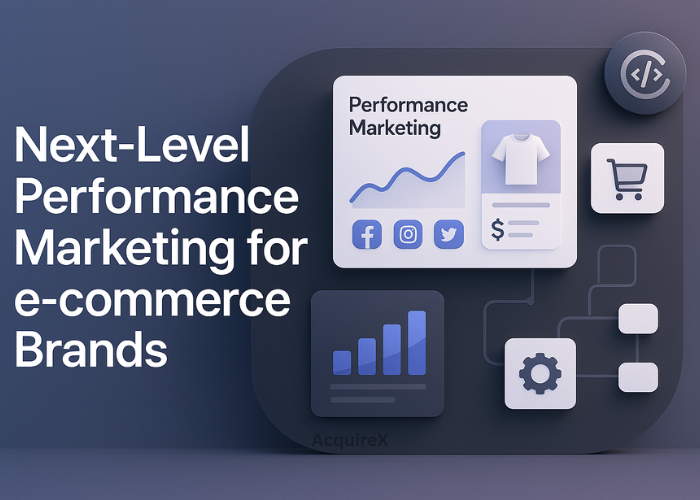
In the fast-paced digital economy, Performance Marketing has redefined how E-commerce brands approach advertising. Unlike traditional marketing that focuses on visibility and impressions, this data-driven approach ensures every marketing dollar is tied directly to measurable outcomes such as clicks, leads, or purchases.
For E-commerce businesses, Performance Marketing transforms advertising from an expense into a growth engine. It empowers marketers to make data-backed decisions, continuously refine their strategies, and directly link marketing spend to results. Let’s explore how to use this model to build long-term, scalable success for your brand.
Key Takeaways
- Performance marketing ties ecommerce ad spend to measurable actions such as clicks, leads and purchases.
- The core performance marketing channels for ecommerce are paid search, paid social, affiliates, retargeting and email, and performance-based influencer partnerships.
- Track CPA, ROAS, click-through rate, conversion rate and customer lifetime value to decide where budget should go.
- Automation, journey optimization, regular A/B testing, mobile-first design and solid analytics are what keep campaigns profitable as they scale.
What Is Performance Marketing for Ecommerce?
Performance Marketing is a measurable, results-based marketing model where advertisers pay only when a specific action occurs. Whether those actions are clicks, Sales, or leads, the focus remains on generating tangible outcomes.
It combines creative storytelling with analytics and automation, ensuring that every campaign contributes to clear business objectives. For E-commerce brands, it brings unmatched accountability, transparency, and flexibility. Campaigns can be tracked, analyzed, and optimized in real time, ensuring consistent improvement and higher returns.
Why Performance Marketing Matters for E-commerce
The E-commerce industry thrives on data, competition, and rapid shifts in consumer behavior. Performance Marketing aligns perfectly with these dynamics by offering measurable outcomes and full budget control.
Key Benefits Include:
- Pay for Results Only: You invest only when customers take action, ensuring efficient use of funds.
- Scalable Growth: Campaigns can be instantly expanded or paused based on data insights.
- Precision Targeting: AI and machine learning enable reaching customers who are most likely to convert.
- Complete Transparency: Every stage of the funnel can be tracked and improved.
For E-commerce brands, this means smarter investments, faster scaling, and predictable profitability.
Core Performance Marketing Channels for Ecommerce
To succeed in Performance Marketing, E-commerce businesses must focus on high-impact digital channels that generate measurable actions.
1. Paid Search Advertising (PPC)
Platforms like Google Ads and Microsoft Advertising let brands reach consumers who are actively searching for their products. When optimised with relevant keywords and engaging ad copy, PPC can deliver quick, trackable sales.
2. Social Media Advertising
Social networks such as Facebook, Instagram, and LinkedIn offer advanced audience segmentation and behavioral targeting. They are crucial for both brand discovery and customer retention.
3. Affiliate Marketing
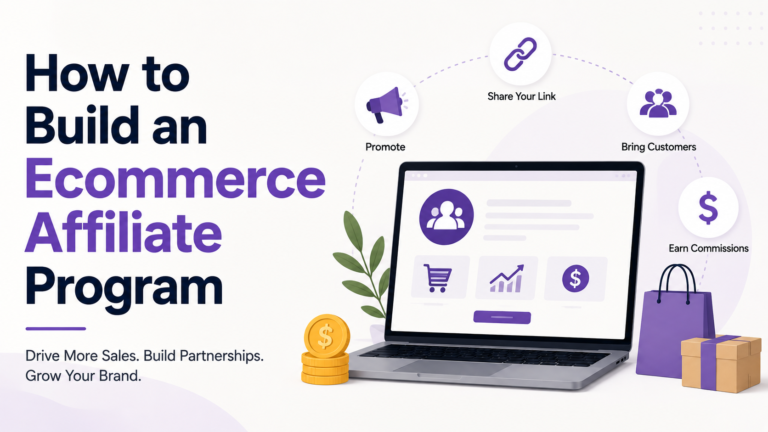
Affiliates and publishers promote your products and earn a commission per conversion. This approach minimizes upfront risk while expanding reach cost-effectively.
4. Retargeting and Email Campaigns
Retargeting ads bring back users who showed interest but didn’t purchase. Complementary email automation nurtures leads until conversion, creating a full-funnel performance system.
5. Influencer Collaborations
Performance-based influencer partnerships ensure brands pay for measurable outcomes such as clicks or conversions instead of general awareness.
Key Metrics to Track in Performance Marketing
The success of Performance Marketing depends on accurate performance tracking. E-commerce marketers should monitor:
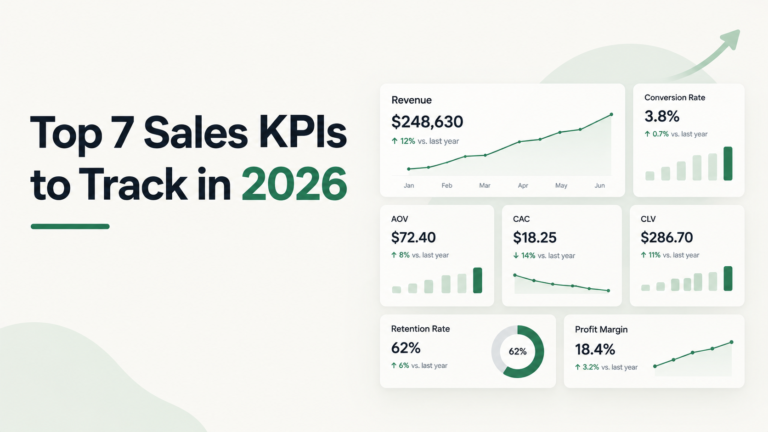
- Cost Per Acquisition (CPA): The total cost to acquire one customer.
- Return on Ad Spend (ROAS): The revenue earned per advertising dollar.
- Click-Through Rate (CTR): Measures how effectively ads attract user attention.
- Conversion Rate (CVR): The percentage of users who take the desired action.
- Customer Lifetime Value (CLV): Indicates long-term profitability per customer.
These metrics allow data-driven optimization, helping E-commerce businesses scale intelligently and sustainably. To set a defensible acquisition target, compare CPA with customer value using the LTV to CAC ratio for ecommerce.
Best Practices for E-commerce Performance Marketing
1. Leverage Automation and AI
Automation tools like Google Performance Max or Meta Advantage+ simplify campaign optimization and targeting, saving time and improving performance.
2. Optimize the Customer Journey
Ensure that your ad experience, website, and checkout process are cohesive and frictionless to boost conversion rates.
3. Run A/B Testing Regularly
Test different creatives, headlines, and call-to-actions to identify top-performing combinations.
4. Design for Mobile Shoppers
Since a majority of E-commerce purchases happen on mobile, fast-loading and mobile-optimized pages are essential.
5. Integrate Advanced Analytics
Use GA4, Meta Pixel, or Shopify Analytics to track customer behavior and measure campaign effectiveness in real time.
Challenges in Performance Marketing
Even with its benefits, Performance Marketing presents challenges that E-commerce brands must manage strategically.
- Data Overload: Massive datasets can complicate decision-making without a proper analytics framework.
- Ad Fatigue: Overexposure to repetitive creatives reduces engagement and CTR.
- Attribution Confusion: Pinpointing which touchpoint leads to conversion can be complex.
- Privacy and Compliance: Evolving data protection laws require transparent consent and ethical data usage.
By addressing these challenges with structured data analysis and creative optimization, brands can maintain efficiency and trust.
E-commerce Success Story
A mid-sized fashion retailer implemented a Performance Marketing strategy centered on dynamic product ads and retargeting. Over a 90-day campaign cycle, the brand achieved:
- A 43% increase in conversion rates
- A 30% drop in customer acquisition cost
- A 2.6x improvement in ROAS
This success highlights how integrating automation, analytics, and continuous testing can drive meaningful growth in the E-commerce sector.
The Future of Performance Marketing in E-commerce
The next evolution of Performance Marketing will be defined by automation, predictive analytics, and AI-powered personalization. Future campaigns will dynamically adapt to user behavior, enabling real-time creative optimization and budget allocation.
E-commerce businesses that embrace these innovations early will gain a decisive edge. The brands that blend data with creativity, technology with empathy, and precision with storytelling will lead the next decade of digital growth.
Conclusion: Building a Performance Marketing Engine
Performance Marketing is no longer a marketing trend; it’s a growth framework for E-commerce success. By focusing on measurable actions, optimizing campaigns continuously, and leveraging AI-driven insights, brands can turn data into sustainable revenue.
In an environment where efficiency and impact matter more than ever, Performance Marketing stands as the ultimate strategy for scaling E-commerce brands intelligently and profitably.
For a deeper operating playbook covering MER vs ROAS, channel mix, creative testing and measurement, read our guide to scaling ecommerce performance marketing profitably.
FAQ’s
1. What is Performance Marketing in E-commerce?
Performance Marketing in E-commerce is a results-based strategy where brands pay only for actions like clicks, leads, or sales. It ensures every ad spend delivers measurable results and boosts ROI.
2. How is Performance Marketing different from traditional marketing?
Traditional marketing focuses on visibility, while Performance Marketing tracks real results. You pay only for completed actions, making campaigns more efficient and cost-effective.
3. Which channels work best for E-commerce Performance Marketing?
Top-performing channels include Google Ads, social media, affiliate marketing, retargeting, and email campaigns. Using a mix of these helps E-commerce brands maximise reach and conversions.