Quick answer: Performance marketing for ecommerce is paid acquisition run against measurable business outcomes, not clicks or reach. To scale it profitably, set targets from contribution margin and LTV:CAC, judge the business on blended MER rather than platform ROAS alone, match channels to funnel stage, test creative relentlessly, and validate growth with incrementality tests.
Almost every ecommerce brand can buy revenue. Far fewer can buy profitable revenue at scale. The gap between the two is rarely the ad platform or a secret targeting trick. It is the operating system behind the spend: how targets are set, how budgets move between channels, how fast creative is produced and tested, and how honestly results are measured.
This guide is for founders and growth leads who already run paid media on Meta, Google, Amazon or TikTok and want to scale without watching margin evaporate. It covers the economics first, then channel mix, account structure, creative testing, measurement, a scaling playbook and how to staff the whole thing with a dedicated growth team.
What is performance marketing for ecommerce?
Performance marketing is advertising where spend is optimized toward a measurable action, usually a purchase, and judged by the return it produces. In ecommerce that means paid social, paid search and shopping, retail media on marketplaces, affiliates and, increasingly, connected TV bought on performance terms.
The definition most guides stop at is “pay for results.” The more useful definition for an operator is this: performance marketing is the discipline of turning ad spend into contribution margin, predictably, at increasing scale. Revenue and ROAS are inputs to that goal, not the goal itself.
How is performance marketing different from brand marketing?
| Dimension | Performance marketing | Brand marketing |
|---|---|---|
| Primary goal | Measurable conversions and profitable growth | Awareness, preference and long-term demand |
| Time horizon | Days to weeks | Months to years |
| Core metrics | CAC, ROAS, MER, contribution margin | Reach, recall, branded search, share of voice |
| Feedback loop | Fast and direct | Slow and indirect |
| Risk if over-relied on | Rising CAC as you exhaust in-market demand | Hard-to-prove spend and slow cash returns |
The two are not opposites. Strong brands make performance channels cheaper, and good performance creative builds brand. The most profitable ecommerce accounts deliberately run both, then measure the combined effect.
Which metrics should drive ecommerce paid growth: ROAS, MER or LTV:CAC?
Before choosing channels or creative, decide what “good” means. Most scaling failures start with a target that looks healthy in an ad dashboard but loses money on the P&L.
| Metric | Formula | What it answers | Watch out for |
|---|---|---|---|
| ROAS | Platform-attributed revenue ÷ platform spend | How efficient is this campaign by the platform’s own reporting? | Over-counting, view-through credit and overlap between platforms |
| Break-even ROAS | 1 ÷ contribution margin % (before ad spend) | What ROAS do I need just to not lose money on the first order? | Ignoring returns, discounts, shipping and payment fees |
| MER (blended ROAS) | Total revenue ÷ total marketing spend | Is the business as a whole getting a return on all spend? | Can hide a weak channel propped up by organic and repeat sales |
| aMER / new-customer CAC | New-customer revenue ÷ spend, or spend ÷ new customers | Are we actually acquiring new buyers efficiently? | Needs clean new vs. returning customer tagging |
| LTV:CAC | Customer lifetime gross profit ÷ cost to acquire | How much can we afford to pay for a customer? | LTV based on revenue instead of gross profit, or on optimistic cohorts |
| Payback period | Months until cumulative gross profit covers CAC | How long is cash tied up in each new customer? | A great LTV:CAC with a long payback can still starve cash flow |
A simple rule: use platform ROAS to optimize inside a channel, use MER and new-customer CAC to manage the business, and use LTV:CAC and payback to decide how aggressive you can be. If you need a refresher on calculating lifetime value on gross profit rather than revenue, read our guide to calculating the LTV to CAC ratio for ecommerce correctly.
How do you set a target CAC you can actually defend?
- Calculate contribution margin per order after COGS, shipping, fulfillment, payment fees, discounts and expected returns.
- Estimate 6- and 12-month gross profit per customer from real cohort data, not assumptions.
- Decide your payback tolerance based on cash position: a cash-constrained brand may need first-order profitability, while a well-funded brand can accept a longer payback.
- Set a target new-customer CAC and translate it into a blended MER target and per-channel guardrails.
- Review monthly as margins, AOV and repeat rates change.
How should you choose a channel mix: Meta, Google, Amazon or TikTok?
Each major channel plays a different role in the funnel. Think of them as a portfolio: demand creation channels fill the pipeline, demand capture channels harvest intent, and retention channels monetize customers you already paid for.
| Channel | Primary role | Strengths | Common pitfalls |
|---|---|---|---|
| Meta (Facebook & Instagram) | Demand creation and prospecting at scale | Broad reach, strong conversion optimization, flexible creative formats | Creative fatigue, over-reliance on retargeting, attribution inflation |
| Google Search & Shopping | Demand capture from active searchers | High intent, product feed-driven Shopping, Performance Max reach | Branded search taking credit for demand other channels created; poor feed quality |
| Amazon Ads | Marketplace demand capture and defense | Shoppers already in buying mode, closed-loop sales data | Rising CPCs, ignoring TACoS and organic rank effects |
| TikTok | Discovery and creative-led demand creation | Native, entertaining content can reach new audiences efficiently | Requires very high creative volume; ads that look like ads underperform |
| Email, SMS and affiliates | Retention, reactivation and partner reach | Low marginal cost, lifts LTV | Discount dependency, double-counting conversions |
Which channel should a growing ecommerce brand start with?
Start where your buyers already are and where your product can be understood fastest. Products with existing search demand often win first on Google Shopping and Search. Novel or visual products that need to be shown usually win first on Meta or TikTok. Brands already selling on Amazon need Sponsored Products to defend and grow organic rank. Add a second channel only when the first is profitable and you have the creative and operational capacity to run both well.
For channel-specific depth, see our breakdowns of Advantage+ vs. manual Meta campaigns, setting up Performance Max with profit guardrails, and how to split Amazon budget between Sponsored Brands and Sponsored Products.
What does a full-funnel paid media structure look like?
Ad platforms now automate much of the targeting, bidding and placement. That shifts the advertiser’s job toward three levers: account structure, creative and the conversion signal you feed back. A full-funnel structure gives each stage a clear job and a clear metric.
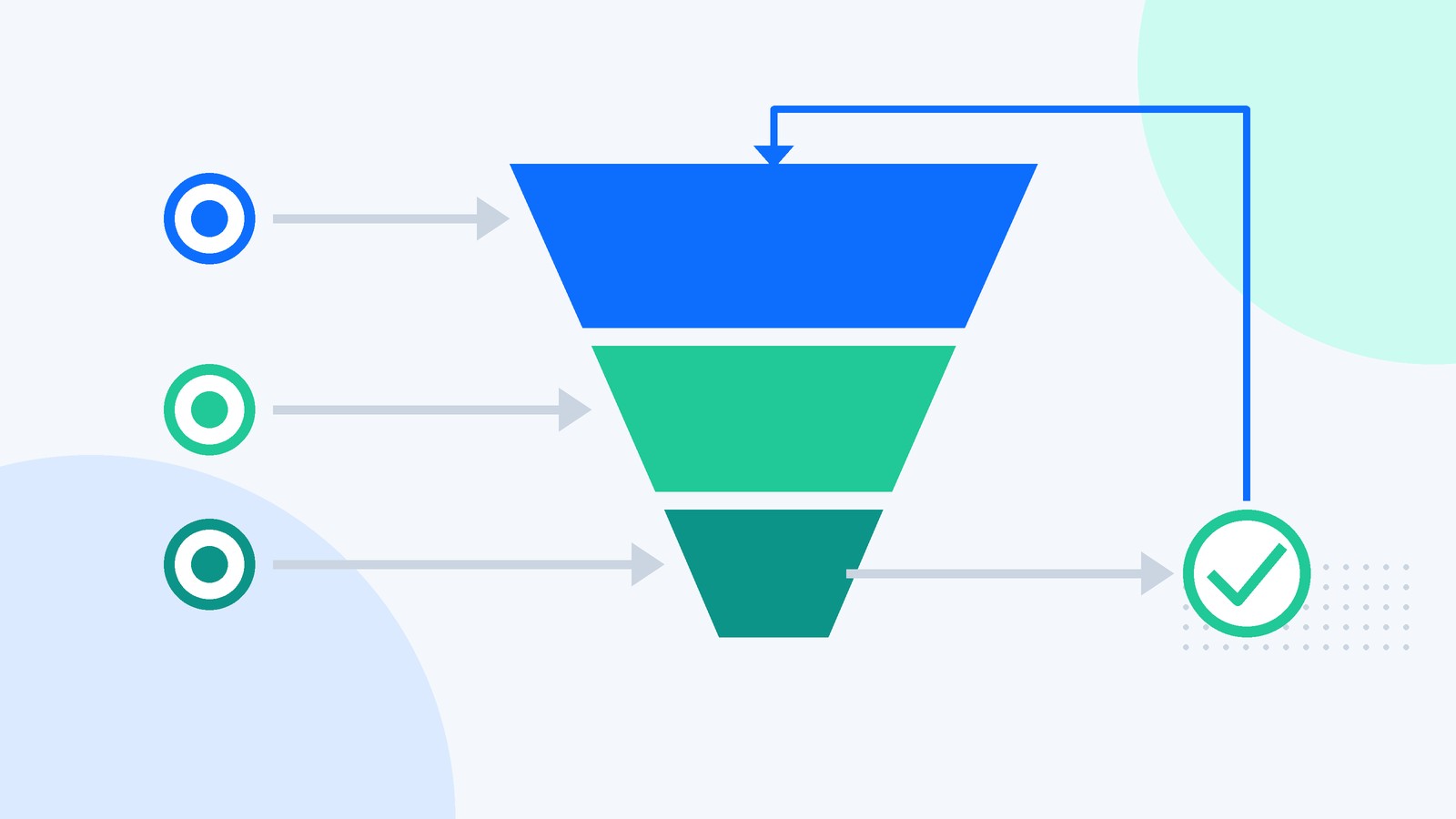
- Prospecting (top of funnel): Broad or lightly guided audiences on Meta and TikTok, YouTube and Demand Gen on Google. Judge on new-customer CAC and blended MER, not last-click ROAS.
- Consideration (mid funnel): Engaged viewers, site visitors and category searchers. Use proof-driven creative: reviews, comparisons, demonstrations and UGC.
- Conversion (bottom of funnel): Shopping, non-brand and brand search, dynamic product ads and cart abandoners. Cap spend here; it is easy for retargeting to claim sales that would have happened anyway.
- Retention: Email, SMS, loyalty and existing-customer audiences, measured on repeat rate and LTV.
Keep structures consolidated. Fewer campaigns with more budget and more conversions give platform algorithms more data to learn from. Fragmented accounts with dozens of tiny ad sets often look controlled but perform worse.
How do you build a creative testing system that scales?
In automated ad platforms, creative is the targeting. The image, hook and message determine who the algorithm shows the ad to and who responds. Brands that scale profitably usually out-produce and out-test competitors on creative rather than out-bid them.
What should you test, and in what order?
- Concepts and angles: The core reason to buy, such as a problem solved, a transformation, a comparison or social proof. Big swings here produce the biggest differences.
- Formats: UGC video, founder video, static product, carousel, demo, before-and-after.
- Hooks: The first one to three seconds of video or the headline of a static. Small changes can shift thumb-stop rate significantly.
- Offers and landing pages: Bundles, free shipping thresholds, guarantees and the page the ad sends traffic to.
- Iterations: Variations on proven winners to extend their lifespan.
What does a healthy creative testing process include?
- A fixed weekly or biweekly launch cadence with a set number of new concepts.
- A dedicated testing budget separate from scaling campaigns, sized so each test can reach a meaningful number of conversions.
- Pre-agreed kill and graduate criteria, such as CPA versus target after a defined spend.
- A creative log that records hypothesis, angle, format, result and learning for every ad.
- Feedback loops from customer reviews, support tickets and post-purchase surveys into new briefs.
Our creative testing framework for UGC ads goes deeper on briefing creators and structuring tests so spend keeps scaling.
How do you measure performance marketing accurately when attribution is broken?
Privacy changes, ad blockers, cross-device journeys and platform self-attribution mean no single tool tells the whole truth. Every platform tends to claim credit for the same sale. The solution is not a perfect attribution tool but a layered measurement stack where each layer checks the others.
| Measurement layer | What it does | Best used for |
|---|---|---|
| Platform reporting | Each platform’s own attributed conversions | Day-to-day optimization within that channel |
| Server-side tracking (Meta Conversions API, Google enhanced conversions) | Sends cleaner, first-party conversion data to platforms | Improving signal quality and optimization |
| GA4 and UTMs | Cross-channel, site-side view of sessions and conversions | Directional channel comparison and funnel analysis |
| Post-purchase surveys | Customers tell you where they heard about you | Capturing influence that clicks miss, such as TikTok, podcasts and word of mouth |
| Incrementality tests (geo holdouts, conversion lift) | Compares exposed vs. unexposed groups | Proving which spend causes sales that would not otherwise happen |
| Marketing mix modeling (MMM) | Statistical model of spend vs. outcomes over time | Budget allocation at larger spend levels |
| Blended MER and new-customer CAC | Total business view | The final scoreboard |
Smaller brands can get most of the value from server-side tracking, clean UTMs, a post-purchase survey and a weekly blended MER review. Our guide to post-purchase surveys and zero-party attribution explains how to set one up and reconcile it with platform data.
How do you scale ad spend without killing profitability?
Scaling is where most ecommerce brands lose money. Marginal returns fall as spend rises, because each additional dollar reaches a slightly less interested audience. The goal is to keep increasing spend while marginal CAC stays below your target.
- Scale vertically in steps. Increase budgets on proven campaigns gradually and watch marginal, not average, CAC.
- Scale horizontally with creative. New winning concepts open new audience pockets more reliably than new targeting settings.
- Expand channels deliberately. Add a channel when the current one shows diminishing returns, and give the new channel its own learning budget and success criteria.
- Protect the conversion rate. Landing page speed, offer clarity and product page quality multiply every ad dollar. Paid growth stalls quickly on a slow or confusing site.
- Plan around inventory. Scaling into stockouts wastes spend and damages marketplace rank. Align media plans with purchasing and supply chain.
- Use guardrails, not gut feel. Pre-set MER floors and CAC ceilings that trigger budget reductions automatically during weekly reviews.
What are the most common performance marketing mistakes?
- Setting ROAS targets without knowing contribution margin.
- Letting retargeting and branded search absorb budget and credit.
- Producing too little creative, then blaming the algorithm for fatigue.
- Fragmenting accounts into too many small campaigns.
- Trusting platform-reported revenue without reconciling to store orders.
- Scaling spend faster than inventory, site conversion or team capacity can support.
Should you run performance marketing in-house, with an agency or with a dedicated growth team?
Running performance marketing well requires several distinct skills: media buying across platforms, creative strategy and production, analytics, conversion optimization and close coordination with inventory and merchandising. Few brands can hire all of that onshore at early scale.
| Model | Strengths | Weaknesses |
|---|---|---|
| In-house hires | Deep brand context, full control | Expensive; hard to cover buying, creative and analytics with one or two people |
| Traditional agency | Platform expertise, quick start | Shared attention across clients; often optimizes toward platform ROAS; percentage-of-spend fees reward spending more |
| Freelancers | Flexible and specialized | Coordination falls on you; gaps between channels and creative |
| Dedicated embedded growth team | Full-time specialists working only on your brand, inside your tools and P&L targets, at offshore cost | Needs clear goals and an internal owner for strategy and budget approval |
How AcquireX runs performance marketing for ecommerce brands
AcquireX gives ecommerce brands a dedicated, embedded team in Pune, India that owns ecommerce functions end to end. Our ecommerce performance marketing and growth services put a full-time growth pod on your account:
- Media buying across Meta, Google, Amazon and TikTok, managed against contribution margin, MER and new-customer CAC targets.
- Creative strategy and testing with a steady cadence of new concepts, hooks and iterations, plus a documented creative log.
- Measurement setup, including server-side tracking, UTMs, post-purchase surveys and a weekly blended performance report.
- Full-funnel planning that connects prospecting, conversion and retention instead of optimizing each in isolation.
- Cross-functional alignment with marketplace, catalog and supply chain functions, so ads never scale into stockouts or broken listings.
Because the team works only on your brand, it can move at the speed paid media demands: daily optimization, weekly creative launches and monthly strategy reviews tied to your P&L.
Ready to scale paid growth without burning margin? Book a call with AcquireX to review your account structure, targets and creative pipeline, and see what a dedicated growth team would change in the first 90 days.
A 90-day plan to scale paid growth profitably
- Days 1-30: Fix the foundation. Calculate contribution margin and break-even ROAS by product, set MER and CAC targets, audit tracking and server-side events, and launch a post-purchase survey.
- Days 31-60: Restructure and test. Consolidate campaigns into a clear full-funnel structure, cap retargeting and brand search, and launch a regular creative testing cadence with defined kill and graduate rules.
- Days 61-90: Scale with guardrails. Increase budgets on winners in steps while tracking marginal CAC, run a first incrementality test on your largest channel, and decide whether to add a new channel based on evidence.
Frequently asked questions
What is performance marketing in ecommerce?
Performance marketing in ecommerce is paid advertising optimized toward measurable outcomes, usually purchases, across channels such as Meta, Google, Amazon, TikTok and affiliates. Its real objective is profitable growth, measured through contribution margin, CAC and MER rather than clicks or impressions.
What is a good ROAS for ecommerce?
There is no universal good ROAS. A good ROAS is one above your break-even ROAS, which equals one divided by your contribution margin percentage before ad spend. A brand with a 50% contribution margin breaks even at 2.0 ROAS on first purchase.
What is the difference between ROAS and MER?
ROAS measures revenue attributed by an ad platform against that platform’s spend. MER, or marketing efficiency ratio, divides total store revenue by total marketing spend. ROAS is useful for in-channel optimization; MER shows whether all marketing together is working.
How much should an ecommerce brand spend on performance marketing?
Spend should be set by unit economics, not a fixed percentage of revenue. Work back from contribution margin, LTV and acceptable payback period to a target CAC, then spend as much as you can while marginal CAC stays below that target.
Which is better for ecommerce, Meta ads or Google ads?
Neither is universally better. Meta excels at creating demand for products people are not yet searching for, while Google captures existing search intent. Most scaling ecommerce brands use both, along with Amazon Ads if they sell on marketplaces.
How often should ecommerce brands refresh ad creative?
Launch new creative on a regular cadence, often weekly or biweekly for brands spending meaningfully on Meta or TikTok. Refresh individual ads when frequency rises and CPA worsens, and keep iterating on proven winners to extend their lifespan.
How do I measure the true impact of my ad spend?
Combine server-side tracking, UTMs and GA4 for directional data, post-purchase surveys for influence clicks miss, and incrementality tests such as geo holdouts for causal proof. Use blended MER and new-customer CAC as the final scoreboard.
Is a dedicated offshore growth team as effective as an agency?
A dedicated offshore growth team can be more effective because specialists work only on your brand, inside your tools and against your P&L targets. You keep strategic control while gaining daily execution capacity at a lower cost than equivalent onshore hires.