Summary: Amazon PPC and advertising management is the ongoing work of structuring, bidding, budgeting, and optimizing Sponsored Products, Sponsored Brands, and Sponsored Display so ad spend builds profitable sales and organic rank. Scaling profitably means SKU-level break-even ACOS, TACOS-led decisions, a clean discovery-to-exact structure, a fixed optimization cadence, and a team that owns it daily.
Most Amazon advertising accounts do not fail because of one bad bid. They fail because nobody owns the account as a system. Campaigns pile up, branded and non-branded traffic get mixed together, search terms are harvested once and then forgotten, and budget decisions are made on campaign ACOS without any view of margin or organic sales. Spend rises, profit does not.
This guide is the management layer: how to set profit guardrails, which campaign architecture scales, how bidding and placement controls actually work, what a weekly operating cadence looks like, how to report on it, and how to staff it with a dedicated marketplace team. Where we have already gone deep on a sub-topic, we link to that guide rather than repeat it.
What Is Amazon PPC and Advertising Management?
Amazon PPC management is the discipline of running Amazon Ads campaigns as a continuous operation tied to business goals: launching, structuring, bidding, harvesting keywords, adding negatives, allocating budget, refreshing creative, and reporting against profit targets. Amazon advertising management is the broader version that also covers creative, listing readiness, inventory, promotions, and how ads interact with organic rank.
The simplest definition: good Amazon PPC management turns ad spend into durable sales velocity and organic rank at a margin the business can afford. Anything that buys sales without protecting margin, or protects margin without growing the business, is not management; it is either gambling or stagnation.
Which Amazon Ad Types Should You Use, and for What?
Amazon’s self-serve sponsored ads come in three core formats. Each has a distinct job, and a scalable account gives each its own budget and its own definition of success.
| Ad type | Where it appears | Targeting options | Primary job | Requirements |
|---|---|---|---|---|
| Sponsored Products (SP) | Search results and product detail pages | Automatic (close match, loose match, substitutes, complements); manual keywords (broad, phrase, exact); product and category targeting | Capture high-intent demand and drive conversions; the core of almost every account | Professional seller or vendor account; eligible, in-stock listing that can win the Buy Box |
| Sponsored Brands (SB) | Prominent search placements, including top of search, plus other search and detail placements | Keywords, products, and categories | Brand visibility, category share, and defending branded search; formats include product collection, Store spotlight, and video | Brand Registry |
| Sponsored Display (SD) | Product detail pages, Amazon pages, and off-Amazon placements | Contextual product and category targeting; audiences such as views remarketing, purchases remarketing, in-market and lifestyle | Retargeting, cross-sell, competitor conquesting, and reach | Brand Registry for sellers (vendors also eligible) |
Larger brands may also use Amazon DSP, Sponsored TV, and Amazon Marketing Cloud for full-funnel and audience analysis, but most profitable growth for small and mid-sized sellers still comes from getting the three sponsored formats right. For a detailed budget split between the first two, see our comparison of Sponsored Brands vs Sponsored Products.
What Must Be True Before You Scale Amazon Ads?
Advertising amplifies whatever is already on the listing. Scaling spend into a weak listing just buys expensive traffic that does not convert. Before increasing budgets, check these foundations:
- Retail readiness: the ASIN is in stock with enough inventory cover for the higher velocity, holds the Buy Box, and is priced competitively.
- Listing quality: keyword-rich title, clear bullets, a complete image stack, A+ content, and backend search terms. Our Amazon product listing optimization guide covers each element.
- Social proof: enough reviews and a rating that can compete on the search results page you are buying into.
- Unit economics: a known contribution margin per SKU after COGS, referral fees, fulfillment fees, storage, and a returns allowance.
- Tracking: a consistent campaign naming convention and a reporting view that combines ad data with total sales.
How Do You Set Profit Guardrails: Break-Even ACOS, Target ACOS, and TACOS?
Three numbers turn PPC from guesswork into management.
- ACOS (advertising cost of sales) = ad spend divided by ad-attributed sales. It measures campaign efficiency.
- Break-even ACOS = your profit margin per unit before advertising, divided by the selling price. Above this, each ad-attributed sale loses money on a first-order basis.
- TACOS (total advertising cost of sales) = total ad spend divided by total sales, organic plus paid. It shows whether advertising is building the business or just renting sales.
Worked example: a product sells for $40. After COGS, Amazon referral and fulfillment fees, storage, and a returns allowance, $12 of margin remains before advertising. Break-even ACOS is 12 / 40 = 30%. If you want to keep $4 of profit per ad-driven unit, your target ACOS is (12 – 4) / 40 = 20%.
Set targets per SKU, not one account-wide number, and vary them by product stage:
| Product stage | ACOS stance | What you are buying | Exit rule |
|---|---|---|---|
| Launch | Above break-even for a defined window | Sales velocity, reviews, and organic rank on core terms | Hard stop or rethink if organic rank and total sales do not improve within the window you set |
| Growth | Around break-even | Share of voice on proven terms and new keyword discovery | Pull back terms that stay above break-even without rank gains |
| Mature / profit | Below break-even, at target | Efficient defense of rank and branded search | Scale only while TACOS is stable or falling |
| Liquidation / end of life | Flexible | Inventory sell-through | Stop when stock is cleared |
The scaling signal most experienced managers look for is the combination: ACOS at or under target, TACOS flat or falling, and total sales rising. That pattern means paid sales are feeding organic rank. If ACOS looks fine but TACOS climbs month after month, ads are likely cannibalizing sales you would have earned organically. We unpack this relationship fully in Amazon ACOS vs TACOS: the profitability metric.
What Amazon PPC Campaign Structure Scales Best?
Structure is the foundation under every other optimization. Bids, budgets, negatives, and reports all assume the data underneath is clean. The structure that scales is a discovery-to-performance funnel where every important search term has exactly one owner.
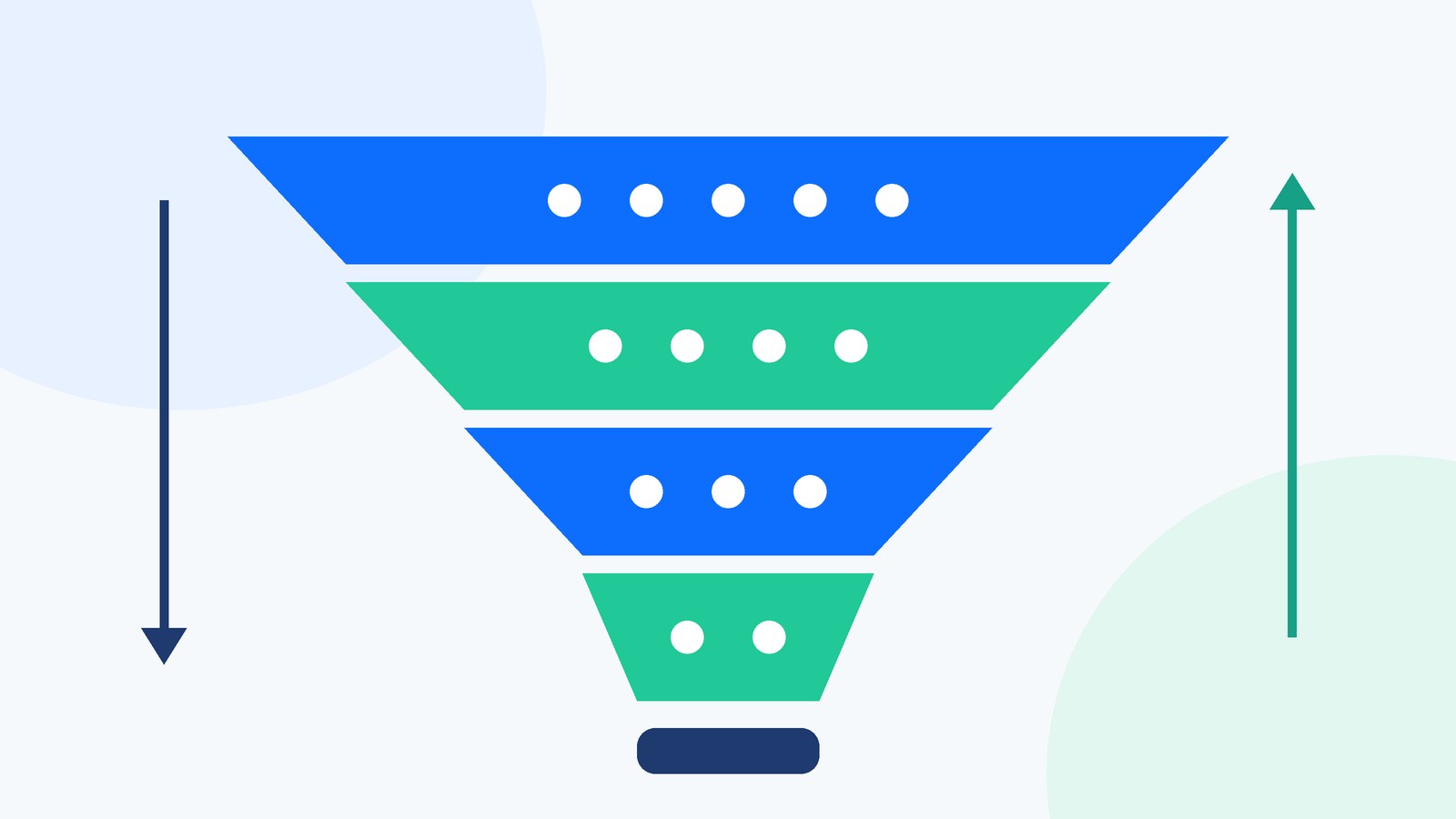
The core campaign set per product or product group
- SP Auto (discovery): always on, moderate bids, to surface converting search terms and ASINs you would not have guessed.
- SP Manual broad/phrase (research): seeded with relevant keywords to keep expanding discovery in a controlled way.
- SP Manual exact (performance): proven, harvested keywords with precise bids and the largest share of budget.
- SP Product targeting: competitor and complementary ASINs, and category targets.
- Brand defense (SP and SB): your branded terms in exact match, kept separate so their high conversion rate does not flatter non-brand results.
- SB and SD layers: SB for category and brand visibility on top terms, SD for remarketing and detail-page conquesting once traffic volume supports it.
Rules that keep the structure clean
- Separate branded and non-branded traffic and add brand terms as negatives in non-brand campaigns.
- Use single-product or tight product-group ad groups so bids and search terms map to one product’s economics.
- Harvest and isolate: when a search term converts in auto or broad, add it as exact in the performance campaign and as a negative exact in the source campaign so the two do not compete.
- Use a strict naming convention, for example Brand | SKU or Group | Ad type | Targeting | Match | Goal, so filtering and bulk edits stay fast as the account grows.
- Do not over-fragment: single-keyword campaigns can be useful for top terms, but thousands of tiny campaigns make budgets and reporting unmanageable. Aggregate the long tail.
How Should You Approach Keyword Strategy and Negative Keywords?
Keyword strategy on Amazon is a loop: discover, qualify, isolate, defend, and prune.
- Discover from auto campaigns, broad match, competitor listings, Amazon’s suggested keywords, and Brand Analytics search query data if you are brand-registered.
- Qualify search terms by clicks, conversions, and ACOS against the SKU’s target, and wait for enough data before judging low-volume terms.
- Isolate winners as exact match with their own bids.
- Defend branded terms and your best category terms with SB and top-of-search placements.
- Prune irrelevant and non-converting terms with negative exact and negative phrase. Our guide to using negative keywords to target better walks through how to build negative lists without cutting off discovery.
Think in keyword tiers: a small set of high-volume head terms that define category rank, a middle layer of descriptive terms that convert well, and a long tail that is cheap but slow to accumulate data. Head terms get top-of-search investment when the listing can win; the long tail is where efficient discovery lives.
How Do Amazon Bidding Strategies and Placement Adjustments Work?
For Sponsored Products, Amazon offers three campaign bidding strategies:
| Strategy | How it works | Best used for |
|---|---|---|
| Dynamic bids: down only | Amazon lowers your bid in real time when a click is less likely to convert | Default for most performance and discovery campaigns; protects efficiency |
| Dynamic bids: up and down | Amazon can raise bids when conversion looks more likely (Amazon caps the increase, with a higher ceiling for top of search) and lower them when it looks less likely | Proven exact-match terms and launches where winning the click matters more than its price |
| Fixed bids | Amazon uses your exact bid and placement adjustments without changes | Controlled tests and accounts that manage bids with their own rules |
Placement adjustments let you raise bids by a percentage for top of search (first page), rest of search, and product pages. Read the placement report for each campaign: if top-of-search converts far better at an acceptable cost, raise that modifier and keep base bids modest; if product pages drain spend, leave their modifier at zero and lower base bids.
Practical bidding principles that hold across categories:
- Bid to value, not to rank. A useful anchor is revenue per click multiplied by target ACOS: if a keyword earns $2.50 in sales per click and your target ACOS is 20%, a sustainable cost per click is around $0.50.
- Change bids in steps, not swings, and give each change enough time and clicks to read before changing again.
- Adjust by intent: exact and branded terms can carry higher bids; broad and auto stay lower because they are exploration.
- Use dayparting and seasonality deliberately around events like Prime Day, Prime Big Deal Days, and the holiday season, when competition and conversion rates both change.
If your immediate problem is efficiency rather than growth, start with our tactical playbook on how to reduce ACOS on Amazon, then come back to scaling.
How Do You Scale Amazon Ad Spend Without Losing Profit?
Scaling is a controlled process, not a budget increase. A disciplined sequence:
- Fix waste first: negatives, paused non-converters, and corrected placement modifiers free up budget before you add any.
- Feed the winners: raise budgets on campaigns that are under target ACOS and running out of budget before the day ends. Increase in measured increments and review after each step.
- Expand reach on proven products: add product targeting on competitor ASINs, SB video on top terms, and SD remarketing to recapture detail-page visitors.
- Expand catalog coverage: bring the next tier of SKUs into the structure once the top sellers are stable.
- Protect the downside: pre-agree pull-back rules, such as cutting spend when ACOS crosses break-even for a sustained period, when TACOS rises for consecutive months, or when inventory cover drops.
The most common scaling mistake is advertising out-of-stock-prone SKUs. Ads that drive a stockout lose the sales, damage rank, and waste the momentum you paid for. That is why advertising, inventory, and listings should be managed by people who talk to each other daily.
What Does a Weekly Amazon PPC Management Cadence Look Like?
Consistency beats brilliance in Amazon advertising. A dedicated manager runs a fixed rhythm:
| Cadence | Tasks |
|---|---|
| Daily | Check budget pacing and out-of-budget campaigns, spend anomalies, stock and Buy Box status on advertised ASINs, and suppressed listings |
| Twice weekly / weekly | Search term harvesting and negatives, bid adjustments by target ACOS, placement modifier review, new campaign launches |
| Biweekly | SB and SD creative review, product targeting expansion, competitor and pricing check |
| Monthly | TACOS and profit review by SKU, budget reallocation across products and ad types, structure cleanup, test plan for next month |
| Quarterly / seasonal | Event planning (Prime Day, Q4), keyword strategy refresh, listing and creative refresh, goal reset |
Remember attribution windows when you read results: Sponsored Products reports for sellers use a shorter attribution window than Sponsored Brands and Sponsored Display, so compare like with like and allow recent days’ data to settle before acting on it.
Which Metrics and Reports Should You Review?
- Efficiency: ACOS vs SKU target, ROAS, cost per click, and cost per order.
- Business impact: TACOS, total sales, organic sales share, and contribution margin after ad spend.
- Traffic quality: click-through rate and conversion rate by campaign, match type, and placement.
- Visibility: impression share on top-of-search for key terms and organic rank on head keywords.
- New-to-brand: for SB and SD, the share of orders from customers new to your brand.
- Health: percentage of spend on terms with zero orders, budget-capped campaigns, and wasted spend after negatives.
Core sources are the search term report, targeting report, placement report, advertised product report, and Business Reports for total sales and sessions. Brand-registered sellers should add Brand Analytics, and larger accounts can use Amazon Marketing Cloud for path-to-purchase analysis.
Who Should Manage Your Amazon Ads: In-House, Agency, Software, or a Dedicated Team?
| Model | Strengths | Weaknesses | Best fit |
|---|---|---|---|
| Founder or generalist in-house | Full context, no fees | Time-starved; optimization becomes irregular | Very early accounts with few SKUs |
| Specialist in-house hire | Deep focus and control | High fixed cost, single point of failure, hard to hire | Large brands with complex catalogs |
| PPC agency | Expertise and tools | Account managers split across many clients; often ads-only, disconnected from listings and inventory | Brands that only need ad execution |
| Bid automation software alone | Scales bid changes and rules | Needs a human to set strategy, structure, and guardrails; automates mistakes as easily as good decisions | A tool for any model, not a replacement for one |
| Dedicated embedded marketplace team | Daily ownership, works only on your brand, connects ads with listings, catalog, inventory, and reporting; predictable cost | Requires onboarding and clear goals | Growing brands that want PPC run as part of full marketplace operations |
The pattern behind most stalled accounts is fragmentation: one party runs ads, another manages listings, a third handles inventory, and nobody owns TACOS. Amazon advertising is most profitable when the same team owns the ads, the listing, and the stock.
How Does AcquireX Manage Amazon PPC With a Dedicated Marketplace Team?
AcquireX provides marketplace management services for ecommerce brands through a dedicated, embedded team based in Pune, India. Your Amazon advertising sits inside full marketplace operations rather than in a separate silo, so the same people who manage your campaigns also look after listings, catalog health, inventory signals, and account health.
What a dedicated team typically owns:
- Account audit and rebuild: SKU-level margin sheet, break-even and target ACOS, and a clean campaign architecture with naming conventions.
- Daily and weekly optimization: search term harvesting, negatives, bids, placements, budgets, and new campaign launches on a documented cadence.
- Full-format coverage: Sponsored Products, Sponsored Brands (including video), and Sponsored Display, with creative support from our design team.
- Listing and retail readiness: titles, bullets, images, A+ content, and stock monitoring so ad spend lands on pages that convert.
- Multi-marketplace reach: the same operating model extended to Walmart and other marketplaces when you are ready.
- Transparent reporting: weekly performance notes and a monthly TACOS and profit review by SKU, with the decisions made and why.
To see how this fits a wider Amazon program, read our overview of Amazon marketplace management services.
Want a second opinion on your Amazon ads? Book a call with AcquireX and we will walk through your account structure, profit guardrails, and where spend is leaking, then show you what a dedicated marketplace team would own from week one.
Frequently Asked Questions
What is a good ACOS on Amazon?
There is no universal good ACOS. A good ACOS is one below your SKU’s break-even ACOS, which depends on its margin, and appropriate to the product’s stage. Launch products may run above break-even for a defined period; mature products should run at or below target.
What is the difference between ACOS and TACOS?
ACOS divides ad spend by ad-attributed sales and measures campaign efficiency. TACOS divides ad spend by total sales, including organic, and shows whether advertising is growing the whole business. Scale when ACOS is on target and TACOS is stable or falling.
How much should I spend on Amazon PPC?
Work backward from margin and goals rather than picking a percentage. Set SKU-level target ACOS, fund discovery and performance campaigns for your priority products, and increase budget only where campaigns are on target and limited by budget.
Should I use automatic or manual campaigns?
Both. Automatic and broad campaigns discover converting search terms; manual exact campaigns scale the proven ones with precise bids. Harvest winners into exact and add them as negatives in the discovery campaigns so they do not compete.
Which bidding strategy is best on Amazon?
Dynamic bids, down only, is a safe default for most campaigns. Dynamic bids, up and down, suits proven exact-match terms and launches where winning top placements matters. Fixed bids suit controlled tests.
How often should Amazon PPC campaigns be optimized?
Monitor budgets and anomalies daily, adjust bids and harvest search terms weekly or twice weekly, and review TACOS, profit, and budget allocation monthly. Avoid changing bids again before a previous change has gathered enough data.
Do I need Brand Registry for Amazon advertising?
Sponsored Products works without Brand Registry, but sellers need Brand Registry for Sponsored Brands and Sponsored Display, plus Brand Analytics data and A+ content, so it is strongly recommended for brands.
Is it better to hire an Amazon PPC agency or a dedicated team?
Agencies are useful when you only need ad execution. A dedicated embedded team is a better fit when you want PPC, listings, catalog, and inventory managed together by people who work only on your brand, which is where most profit gains come from.
The Bottom Line
Profitable Amazon advertising is a management system, not a bidding trick: SKU-level profit guardrails, a clean discovery-to-exact structure, deliberate bidding and placements, a fixed optimization cadence, and TACOS-led scaling decisions, all connected to listings and inventory. If you want a team that owns all of it every day, explore AcquireX marketplace management or talk to our team today.