Quick answer: To build a dedicated offshore ecommerce team, start with the function causing your biggest bottleneck, define each role’s outcomes and KPIs, hire through practical work tests, and onboard with SOPs and supervised work. Manage it with a team lead, a daily overlap window, layered QA, weekly KPI reviews and real career paths that keep good people.
Hiring a few remote people is easy. Building an offshore ecommerce team that owns functions end to end, keeps quality high when you are asleep and still works well two years later is much harder. The difference is not the talent market; it is the operating system around the team: structure, onboarding, documentation, communication rhythm, quality control, metrics and retention.
This guide is that operating system. It walks through every stage, from deciding what to build and how to hire, to structuring pods, setting time-zone overlap, writing SOPs, running QA, choosing KPIs and keeping your best people. It reflects how we build and run dedicated ecommerce teams in Pune, India for brands across the US, UK, Europe and Australia. If you want a shorter primer on which roles to hire first, start with our guide to scaling ecommerce with an offshore operations team.
What is a dedicated offshore ecommerce team?
A dedicated offshore ecommerce team is a group of full-time professionals in another country who work only on your brand, inside your tools and processes, and own defined ecommerce functions such as customer service, catalog, marketplaces, marketing execution or supply chain coordination. Unlike freelancers or shared agency pools, they build deep knowledge of your products and customers over time.
There are three common ways to set one up:
| Model | How it works | Best for | Main tradeoff |
|---|---|---|---|
| Direct hire (own entity or employer of record) | You recruit and employ people abroad yourself, often through an employer-of-record service | Brands with offshore management experience and HR capacity | You own recruiting, training, supervision, retention and compliance |
| Managed dedicated team | A partner recruits, employs, trains and supervises people who work only for you | Brands that want ownership and control without building offshore HR | Monthly partner fee; choose the partner carefully |
| Freelancers or virtual assistants | Individual contractors managed directly by you | Small, task-based workloads | High management load; little backup, QA or continuity |
When should you build an offshore ecommerce team?
- Recurring operational work is consuming founder or senior time that should go to growth.
- Local hiring is slow, expensive or keeps failing on retention.
- You need coverage beyond your own business hours, such as overnight support or order processing.
- You have functions that can be documented as repeatable processes.
- You are ready to invest a few weeks in documentation and onboarding.
If several of these apply, the next decision is what to build first.
Which roles should an offshore ecommerce team include?
Do not build the whole team on day one. Start with the function that removes your biggest bottleneck and that is easy to measure, prove the model, then expand. These are the most common roles and what each owns.
| Role | Owns | Core KPIs |
|---|---|---|
| Customer service agent | Email, chat and social tickets; order issues; returns | First response time, resolution time, CSAT, QA score |
| Catalog specialist | Product listings, enrichment, feeds, pricing updates | Listing accuracy, time to publish, feed errors |
| Marketplace manager | Amazon, Walmart and other channels; account health; listings; ads support | Account health, Buy Box share, sales trend, TACoS |
| Performance marketing executive | Campaign builds, optimisation, reporting, creative testing logistics | ROAS or MER, CAC, test velocity, report accuracy |
| Supply chain and procurement coordinator | PO tracking, supplier follow-up, inventory reports, forecasting prep | Stockout rate, on-time POs, inventory accuracy |
| Designer | Product images, ad creatives, A+ content, email and site assets | Turnaround time, revision rounds, creative performance |
| Team lead or operations manager | Daily priorities, supervision, QA, reporting, escalations | Team KPIs, SLA compliance, retention |
For a closer look at running a store with a compact team, see how to run a Shopify store with a lean offshore team.
How do you hire for an offshore ecommerce team?
1. Write an outcome-based role brief
Describe what the person will own, not just tasks: the daily work, tools used (Shopify, Seller Central, Gorgias, Klaviyo and so on), KPIs and targets, working hours and overlap, reporting line and what “excellent” looks like after 90 days.
2. Source where ecommerce talent actually is
Look for people with hands-on platform experience: marketplace sellers’ operations staff, support agents from ecommerce brands, catalog executives from retailers and agency executives. Platform skills transfer far better than generic back-office experience.
3. Test real work, not résumés
Use a short practical assessment that mirrors the job: answer five real (anonymised) tickets, build three listings from a supplier sheet, audit a sample ad account, or reconcile an inventory file. A practical test predicts on-the-job performance far better than an interview alone.
4. Assess communication and judgment
Written English clarity, the ability to ask good questions and willingness to escalate are as important as technical skill for a team that works across time zones.
5. Check culture and stability
Ask about why they want to move, career goals and how they prefer to be managed. Hiring for stability and growth reduces early attrition.
Recruiting is where many offshore teams succeed or fail. AcquireX’s human resources and recruitment services handle sourcing, skills testing, hiring, onboarding, payroll and HR for ecommerce roles in Pune, so your team is staffed with tested people and supported by a local HR function that manages engagement and retention.
How should you onboard offshore ecommerce hires?
Good onboarding turns a skilled hire into a productive team member quickly. Use a structured 30-60-90 day plan.
Before day one
- Create individual accounts in every tool, with role-based permissions and two-factor authentication. Never share logins.
- Prepare SOPs, brand guidelines, product training, macros and a glossary of internal terms.
- Assign a buddy or team lead and schedule the first two weeks.
Days 1 to 30: learn and shadow
- Product and customer immersion: top products, common problems, brand voice.
- Shadow live work, then handle a small, controlled share under full review.
- Daily short check-ins to answer questions and update SOPs.
Days 31 to 60: supervised ownership
- Take most of the in-scope work with sampled review.
- Start tracking KPIs against targets; give weekly feedback.
Days 61 to 90: full ownership
- Own the function against agreed KPIs, with escalations to the team lead or your in-house owner.
- Contribute SOP improvements and identify automation opportunities.
How should you structure a dedicated offshore ecommerce team?
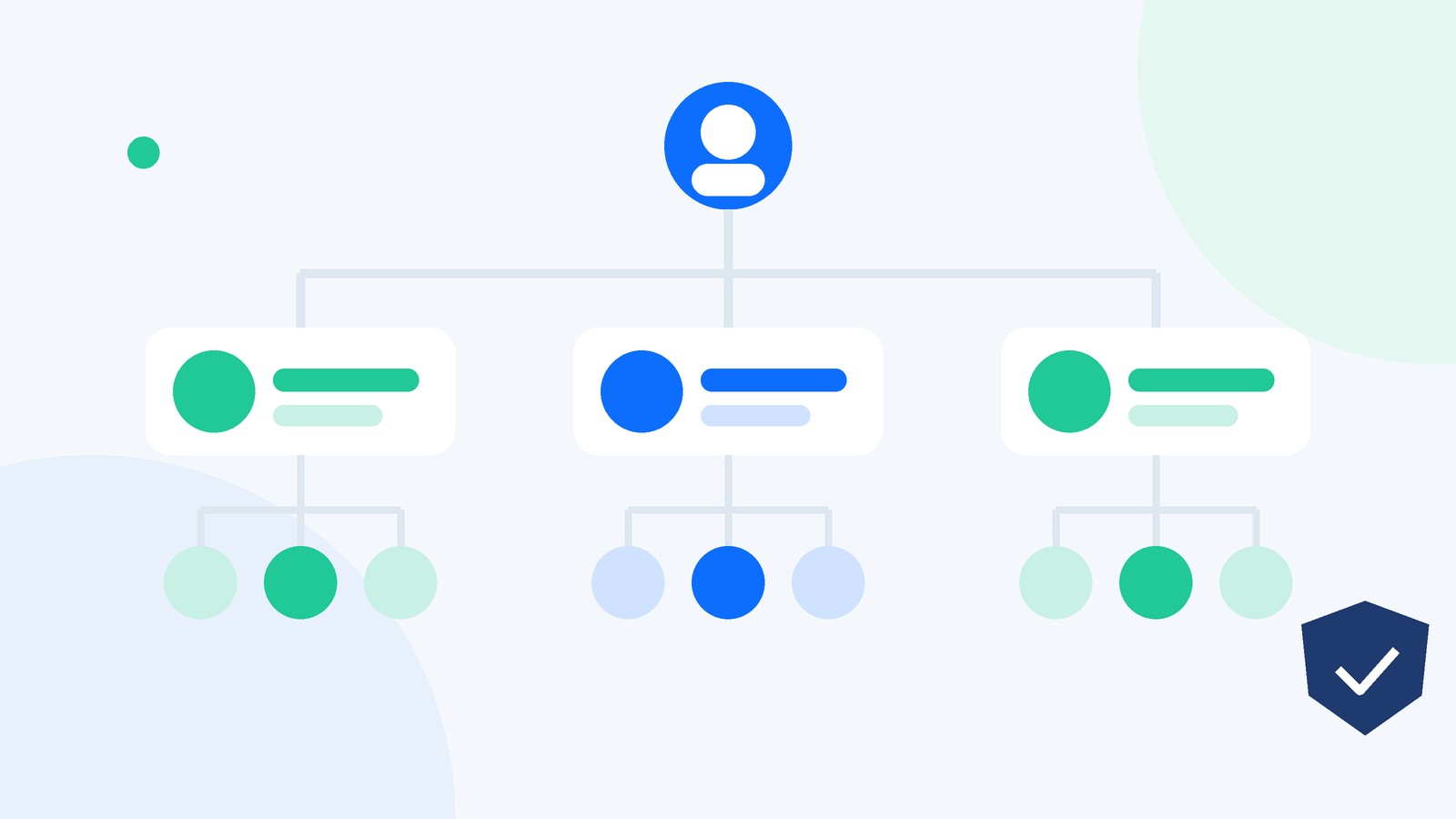
Structure determines whether the team scales or turns into a collection of individuals waiting for instructions. Three principles work well.
- Single point of accountability on each side. One in-house owner sets priorities; one offshore team lead runs execution and reports back.
- Functional pods. Group people by function (customer experience, catalog and marketplace, marketing and creative, supply chain and procurement), each with a senior member who reviews work and trains newcomers.
- Built-in redundancy. Cross-train at least two people on every critical task, so leave and attrition never stop the work.
| Team size | Suggested structure |
|---|---|
| 1 to 3 people | Report directly to an in-house owner; partner or senior member provides QA and backup |
| 4 to 10 people | Offshore team lead plus functional pods; weekly priorities from in-house owner |
| 10+ people | Operations manager, pod leads, dedicated QA, and an HR or people partner for engagement and hiring |
How much time-zone overlap does an offshore ecommerce team need?
India Standard Time is UTC+5:30 and does not observe daylight saving, so the gap to Western markets shifts slightly through the year. A short, protected daily overlap of a few hours, combined with strong async handoffs, works better than forcing the whole team onto your clock.
- Follow-the-sun: the offshore team works its normal day, which covers your overnight. Good for support queues, order processing, listings and reports ready by your morning.
- Partial overlap: the team shifts later so a few hours overlap with your morning for meetings, approvals and escalations.
- Full overlap: the team works your hours. Necessary for live phone support in your daytime, but harder on retention.
Use the overlap window for decisions and live problem solving, and everything else async: end-of-shift handoff notes, recorded walkthroughs, a shared task board and clear escalation rules. Our in-depth guide to managing offshore teams across time zones compares overlap models and the communication rhythm for each.
Why are SOPs essential for an offshore ecommerce team?
SOPs are what let a team work independently while you sleep. Without them, every edge case becomes a message waiting for your reply.
- Record first, then write. Capture each recurring task as a short screen recording, then convert it into a step-by-step written SOP.
- Include decision rules. Refund limits, discount authority, when to escalate and to whom.
- Store SOPs in your workspace, versioned and searchable, so knowledge belongs to the business.
- Assign owners and review dates. The team updates SOPs whenever a process changes or an error reveals a gap.
For templates and structure, read our guide to ecommerce SOPs for a remote team.
How do you run quality assurance for offshore ecommerce work?
Quality assurance is what earns an offshore team more responsibility. Build it in layers.
- Self-check: checklists at the end of each SOP that the person completes before submitting work.
- Peer or lead review: full review for new hires, then sampled review as accuracy holds.
- Scorecards: a simple rubric per function, such as accuracy, tone, policy compliance and completeness for support tickets, or data accuracy and image compliance for listings.
- Error log and root-cause fixes: every significant error is logged, its cause identified and the SOP or training updated.
- Calibration: regular sessions where your in-house owner and the team lead score the same samples to align standards.
Which KPIs should you use to manage an offshore ecommerce team?
Manage on outcomes, not hours online. Agree KPIs and targets per role before go-live, and review them weekly.
| Level | KPIs |
|---|---|
| Function | Support: response time, resolution time, CSAT. Catalog: accuracy, turnaround. Marketplace: account health, sales trend. Marketing: ROAS, CAC, test velocity. Supply chain: stockouts, PO timeliness. |
| Quality | QA score, error rate, rework rate, SLA compliance |
| Productivity | Output per person against volume (tickets, listings, POs), backlog age |
| Team health | Attrition, tenure, engagement, internal promotions, time to fill vacancies |
| Business impact | Founder hours released, cost per output, revenue or margin impact |
For customer service teams specifically, see our guide to the customer support KPIs that predict retention.
What communication rhythm works for offshore ecommerce teams?
- Daily: a short stand-up or written update in the overlap window; end-of-shift handoff notes.
- Weekly: KPI review, priorities for the week, SOP updates and blockers.
- Monthly: business review covering results, quality trends, improvement ideas and staffing.
- Quarterly: roadmap, scope expansion, training plan and career conversations.
- Always: one shared chat workspace, one task board and documented escalation paths.
How do you retain a dedicated offshore ecommerce team?
Retention protects everything you invest in hiring and training. When an experienced team member leaves, you lose product knowledge, customer context and months of ramp-up. The practices that keep good people are mostly about respect and growth.
- Treat them as your team. Include them in company updates, launches and celebrations; share the “why” behind decisions.
- Pay fairly and on time, benchmarked to the local market for the skill level, with regular reviews.
- Create career paths: from agent to senior to pod lead, or into specialist roles such as marketplace advertising or analytics.
- Invest in training: platform certifications, new tools and cross-functional skills.
- Recognise good work visibly and specifically.
- Respect working hours. Constant late-night calls drive burnout; use the overlap window well instead.
- Have local people support: an HR partner on the ground who handles engagement, grievances and wellbeing.
How do you protect data and accounts with an offshore team?
- Individual logins for every person, role-based permissions and two-factor authentication everywhere.
- Least-privilege access: only the tools and data each role needs.
- NDAs and confidentiality clauses with every team member and partner.
- Your business owns all accounts; partners are added as users and can be removed instantly.
- Clear policies for payment data, customer personal data and device security.
- An offboarding checklist that revokes access on the last day.
What mistakes should you avoid when building an offshore ecommerce team?
- Hiring for too many functions at once before one is stable.
- Handing over work without SOPs, then blaming the team for inconsistency.
- Measuring hours online instead of outcomes.
- Having no team lead, so every question comes to the founder.
- Forcing full overlap with your hours, which hurts retention.
- Treating offshore staff as contractors rather than team members.
- Choosing a partner on price alone, without checking recruiting, QA and retention practices. Our guide on how to choose an ecommerce outsourcing partner lists the questions to ask.
Should you build it yourself or use a managed partner?
| Factor | Build yourself | Managed dedicated team partner |
|---|---|---|
| Recruiting and testing | You run it remotely | Partner runs it locally, with your final approval |
| Employment, payroll, compliance | Your entity or employer of record | Partner |
| Workspace, equipment, connectivity | Remote setups you must vet | Partner office and infrastructure |
| Supervision and QA | Your managers, across time zones | Local team lead and QA |
| Attrition and backup | Your problem | Partner replaces and cross-trains |
| Control over daily work | Full | High: team works only for you, in your tools |
What is the bottom line on building an offshore ecommerce team?
A dedicated offshore ecommerce team succeeds when it is built as a system: one function at a time, outcome-based roles, practical hiring tests, structured onboarding, a local team lead, a protected overlap window, living SOPs, layered QA, outcome KPIs and genuine investment in people. Get those right and the team compounds in value every month it stays together.
Want a dedicated team in Pune built and managed for you? Explore AcquireX’s HR and recruitment services to see how we hire, onboard and retain ecommerce talent, browse all ecommerce functions we can own, or book a call to plan your first roles.
Frequently asked questions
How long does it take to build an offshore ecommerce team?
Hiring the first roles usually takes a few weeks, depending on seniority and the testing process. Each hire then typically needs about 60 to 90 days of structured onboarding to reach full ownership. Starting with one function and expanding once it is stable is faster overall than hiring everyone at once.
Which ecommerce role should I offshore first?
Start with the function that consumes the most founder or senior time and is easy to measure. For many brands that is customer service or catalog management, because the work is high-volume, documentable and has clear KPIs such as response time or listing accuracy.
How do I manage an offshore team in a different time zone?
Protect a short daily overlap window for decisions and escalations, and run everything else asynchronously with handoff notes, a shared task board, recorded walkthroughs and clear escalation rules. A local team lead who can make day-to-day decisions reduces dependency on your hours.
What KPIs should I track for an offshore ecommerce team?
Track function outcomes such as response time and CSAT for support, accuracy and turnaround for catalog, account health for marketplaces and ROAS for marketing, plus QA scores, error rates, backlog and team attrition. Avoid managing on hours logged.
How do I keep quality high with an offshore team?
Use SOPs with built-in checklists, full review for new hires followed by sampled review, function-specific scorecards, an error log with root-cause fixes, and regular calibration sessions between your in-house owner and the offshore team lead.
How do I reduce attrition in an offshore team?
Pay fairly and on time, offer visible career paths and training, include the team in company life, recognise good work and respect working hours. A local HR partner who handles engagement and wellbeing makes a significant difference over the long term.
Is it better to hire offshore staff directly or through a partner?
Hiring directly gives full control but means you own recruiting, compliance, supervision and retention across time zones. A managed dedicated team partner handles those locally while the team still works only for you, which suits brands without offshore HR experience.
Why build an ecommerce team in India?
India has a large pool of English-speaking professionals with hands-on experience in Shopify, Amazon, marketplaces and digital marketing, a cost advantage over Western hiring, and a time zone that enables overnight coverage plus a few hours of overlap with Western business days.