Every Shopify store owner knows the feeling: traffic is up, products are getting added to carts, and yet the orders don’t match. Shoppers fill a cart, reach checkout, and disappear. Across ecommerce, the majority of carts that get started are never completed, and that gap between “added to cart” and “order placed” is one of the largest pools of recoverable revenue your store has.
The good news is that an abandoned cart is not a lost customer. It is a high-intent shopper who stopped short for a reason. Unexpected shipping costs, a forced account sign-up, a slow or confusing checkout, payment options that don’t suit them, or simply getting distracted are the usual culprits. Some reasons you can fix at the source; the rest you can recover with the right follow-up. This guide walks through the channels, flows, apps, and metrics that make Shopify abandoned cart recovery work in 2026.
Why Abandoned Cart Recovery Matters
Recovery campaigns consistently rank among the highest-converting automations in ecommerce, for a simple reason: you are talking to people who already chose a product and showed purchase intent. Compared with acquiring a brand-new visitor through paid ads, bringing back a shopper who was one click away from buying is far cheaper.
- It protects your ad spend. You already paid to get that visitor to your store. Recovery turns that cost into revenue instead of waste.
- It compounds. Once a flow is built, it runs on every abandoned checkout, every day, without extra work.
- It reveals friction. Patterns in who abandons, where, and why tell you exactly what to fix in your checkout, pricing, and shipping policy.
- It builds your owned audience. Every recovered shopper who opts in to email or SMS becomes a customer you can reach again without paying for the click.
The Core Recovery Channels
No single channel recovers every cart. The strongest programs layer several, each doing a different job.
1. Abandoned Cart Email
Email is the backbone of recovery. Shopify captures the shopper’s email at checkout, which means you can follow up with anyone who reached that step. Good recovery emails (one of the core ecommerce email marketing flows every store should run) show the exact products left behind (with images), include a one-click link back to the pre-filled cart, and answer the likely objection: shipping, returns, or trust. Keep the design clean and the call to action obvious.
2. SMS Reminders
SMS is fast, personal, and read quickly, which makes it ideal for the first reminder. It only works for shoppers who have explicitly consented to marketing texts, so collect opt-in properly at checkout or through a popup, and respect local regulations and quiet hours (see our guide to SMS marketing compliance for D2C brands). Keep messages short: a friendly line, the product name, and a direct cart link.
3. On-Site Exit-Intent
The cheapest cart to recover is the one that never leaves. Exit-intent popups detect when a shopper is about to close the tab or navigate away and present a last-moment message: a reminder of free shipping thresholds, a small first-order incentive, or an offer to save the cart by email. Used sparingly, they also capture emails from shoppers who never reached checkout.
4. Retargeting Ads
Dynamic retargeting on Meta, Google, TikTok, and other platforms shows shoppers the exact products they viewed or carted as they browse elsewhere. It reaches people you can’t email, such as visitors who abandoned before entering contact details. Cap frequency, exclude recent purchasers, and refresh creative so the ads remind rather than annoy.
5. Checkout Optimization
Recovery messages treat the symptom; checkout optimization treats the cause. Show shipping costs early, offer guest checkout, enable accelerated wallets like Shop Pay, Apple Pay, and Google Pay, add buy-now-pay-later options where they suit your price point, and display trust signals such as return policy and secure payment badges near the pay button. Every bit of friction you remove means fewer carts to chase.
A Recommended Multi-Step Recovery Flow
The most effective flows escalate gently: start helpful, add reassurance, and save incentives for the end. Here is a proven structure you can adapt to your store.
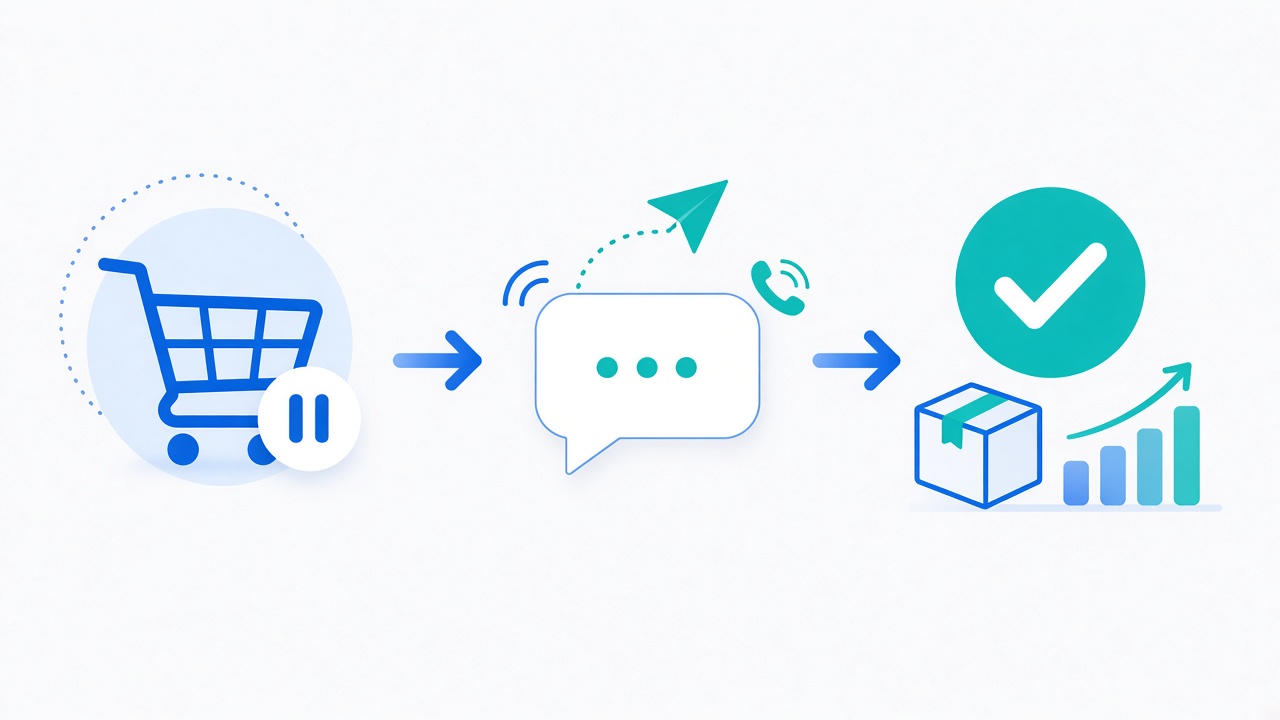
- 30-60 minutes after abandonment: Friendly reminder (email and/or SMS). No discount. Simply show the cart, link back to it, and offer help (“Questions about sizing? Just reply.”). Many shoppers were only interrupted, and this catches them while intent is still warm.
- About 24 hours later: Reassurance email. Address objections. Highlight reviews, your return policy, shipping times, and guarantees. Social proof works well here, as does a short note on why customers love the product.
- 48-72 hours later: Final nudge with optional incentive. If you use discounts, this is where they belong: free shipping, a modest percentage off, or a gift with purchase. Add gentle urgency, such as low stock or a cart that will expire, but only if it’s true.
- Ongoing: Retargeting ads. Run dynamic product ads in parallel for a window of several days to reach shoppers who don’t open messages.
- After recovery: Post-purchase flow. Once they buy, move them into a welcome or post-purchase sequence so the recovered customer becomes a repeat customer.
Two rules keep the flow healthy. First, exit the flow the moment a purchase happens so nobody gets a “you forgot something” email after ordering. Second, segment by cart value and customer type: high-value carts might deserve a personal touch or support outreach, while repeat customers may not need a discount at all.
Recommended App Types for Shopify Cart Recovery
Shopify includes basic abandoned checkout emails out of the box, and Shopify Email and Shopify Flow can take you further. Most growing stores add specialized tools. Rather than chasing a single “best app,” choose by category and fit with your stack.
Email and SMS Marketing Platforms
Full marketing automation platforms (Klaviyo, Omnisend, Attentive, Postscript, and similar) give you multi-step flows, conditional splits, product feeds, A/B testing, and revenue attribution. Look for deep Shopify integration, browse-abandonment triggers in addition to cart triggers, and unified email plus SMS so messages don’t collide.
Exit-Intent and Popup Tools
Popup and on-site messaging apps handle exit intent, email/SMS capture, spin-to-win style offers, and free-shipping progress bars. Prioritize tools with mobile-friendly triggers, targeting rules by page and traffic source, and a light performance footprint so they don’t slow your store down.
One-Page Checkout, Upsell, and Cart Apps
Cart drawer and checkout extension apps reduce steps, surface shipping thresholds, and add relevant upsells or cross-sells. On Shopify, prefer tools built on Checkout Extensibility, which is Shopify’s supported way to customize checkout. Upsells should be relevant and easy to skip; a cluttered checkout causes abandonment instead of curing it.
Retargeting and Analytics Integrations
Use Shopify’s native sales channel integrations for Meta, Google, and TikTok to sync product catalogs and conversion events. Server-side tracking options help keep audiences accurate as browser privacy restrictions tighten.
Whatever you choose, check pricing models on each app’s listing directly, since many charge by contact count or message volume, and that cost scales as your list grows.
Measurement and KPIs to Track
You can’t improve what you don’t measure. Track these metrics monthly, and review flow-level performance after every significant change.
- Cart abandonment rate: the share of carts or checkouts started that don’t convert. Track checkout abandonment separately, since it points to checkout friction specifically.
- Recovery rate: the share of abandoned checkouts that convert after a recovery touchpoint.
- Recovered revenue: total revenue attributed to recovery flows, ideally with a consistent attribution window.
- Revenue per recipient: the best single number for comparing flow versions and channels.
- Open, click, and conversion rates by step: show which message in the sequence does the heavy lifting and which needs rework.
- Discount cost and margin impact: the revenue recovered at each incentive level against what the discount actually cost you.
- Unsubscribe and opt-out rates: an early warning that you’re sending too often or too aggressively.
Run a holdout test when you can, sending no recovery messages to a small control group, to measure true incremental lift rather than revenue that would have come back anyway.
Common Mistakes to Avoid
- Leading with a discount. Offering money off in the first message trains shoppers to abandon carts on purpose. Save incentives for the final step.
- Sending too many messages. Three well-timed touches typically beat six pushy ones. Over-messaging drives unsubscribes and spam complaints.
- Broken or generic cart links. Always link to the restored cart, not the homepage. Test links on mobile.
- Ignoring mobile. Most Shopify traffic is mobile. Design emails, popups, and checkout for small screens first.
- Not suppressing purchasers. Reminding someone to buy what they already bought looks careless and erodes trust.
- Skipping SMS consent rules. Texting without proper opt-in creates legal risk and damages your sender reputation.
- Set-and-forget flows. Products, offers, and customer behavior change. Review copy, timing, and incentives every quarter.
- Fixing messages instead of checkout. If abandonment is high at the shipping step, the answer is clearer shipping pricing, not another email.
Conclusion
Abandoned carts are not a fact of life you have to accept; they are a revenue line you can actively manage. Fix the friction in your checkout, catch exiting visitors on-site, follow up with a timed email and SMS sequence, reinforce it with retargeting, and measure everything by incremental revenue. Done well, Shopify abandoned cart recovery becomes one of the most reliable, highest-ROI systems in your store.
If you’d rather have experts build and run it, AcquireX helps Shopify brands set up and optimize recovery flows, checkout experience, and performance marketing as part of our end-to-end ecommerce operations services. Talk to the AcquireX team about turning more abandoned carts into orders.
Frequently Asked Questions
How soon should I send the first abandoned cart email?
Within about 30 to 60 minutes of abandonment works well for most stores. Intent is still high, and the shopper is likely still near their device. Follow up around 24 hours later and again at 48 to 72 hours.
Should I offer a discount in abandoned cart emails?
Not in the first message. Start with a helpful reminder and reassurance, and reserve incentives like free shipping or a modest discount for the final step, and only for shoppers who haven’t responded. This protects margins and avoids training customers to wait for a coupon.
Does Shopify have built-in abandoned cart recovery?
Yes. Shopify can automatically send abandoned checkout emails, and Shopify Email and Shopify Flow let you customize them further. Dedicated email/SMS platforms add multi-step flows, segmentation, SMS, and deeper reporting for stores that want more control.
Is SMS or email better for cart recovery?
They work best together. SMS is ideal for a quick first reminder to opted-in shoppers, while email carries richer content like product images, reviews, and policies. Coordinate both in one platform so customers don’t get duplicate messages at the same time.