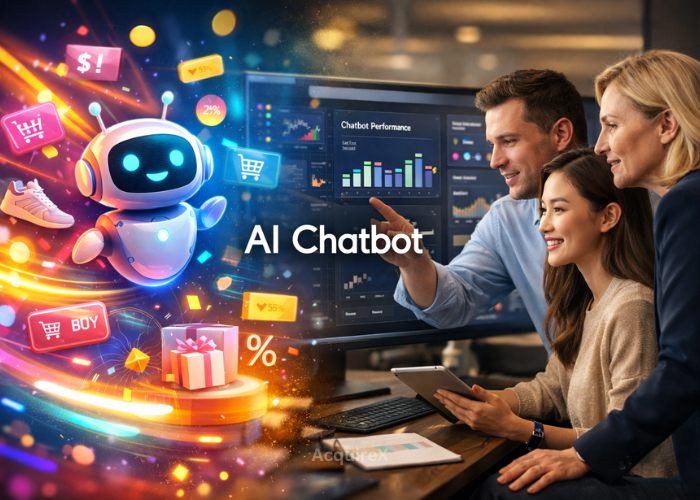
The rapid adoption of an AI Chatbot in modern digital commerce has transformed how businesses interact with customers. From answering FAQs to guiding shoppers through product recommendations, an AI Chatbot has become a powerful tool for e-commerce automation and customer engagement.
However, many professionals confuse AI bot technology with conversational AI. While both technologies aim to automate communication, they are not the same. Understanding the difference is essential for businesses looking to improve customer experience, reduce support costs, and scale operations efficiently.
In this guide, we’ll explore the core differences between AI bot systems and conversational AI, their role in e-commerce, and how businesses can choose the right solution for growth.
What Is an AI Chatbot?
An AI Chatbot is a software application powered by artificial intelligence that simulates human conversation through text or voice interfaces. These bots are commonly integrated into websites, mobile apps, and messaging platforms to automate responses and assist users.
Unlike rule-based chatbots that rely on predefined scripts, an AI bot uses machine learning and natural language processing (NLP) to understand user intent and provide intelligent responses.
Key Capabilities of an AI Chatbot
- Automated customer support
- Product recommendations in online stores
- Order tracking assistance
- Lead generation and qualification
- Multichannel messaging (website, WhatsApp, Messenger)
For e-commerce brands, implementing an AI Chatbot can significantly improve response times and customer satisfaction while reducing operational costs.
What Is Conversational AI?
Conversational AI is a broader technology framework that enables machines to understand, process, and respond to human language in a more advanced and contextual way.
While an AI bot is often a component of conversational AI, the conversational AI ecosystem includes several technologies such as:
- Natural Language Processing (NLP)
- Natural Language Understanding (NLU)
- Machine Learning (ML)
- Speech recognition
- Voice assistants
Conversational AI powers virtual assistants like voice shopping tools and intelligent support systems that can understand context, emotions, and user intent across multiple interactions.
In e-commerce, conversational AI enables more personalized and human-like customer experiences across chat, voice, and messaging platforms.
Read All About: 5 Conversational Marketing Models Driving Real Impact
AI Chatbot vs Conversational AI: Core Differences
Understanding how an AI Chatbot differs from conversational AI helps businesses choose the right automation strategy.
| Feature | AI Chatbot | Conversational AI |
|---|---|---|
| Scope | Narrow application | Broad AI framework |
| Technology | AI + NLP chatbot engine | NLP, ML, voice recognition, AI |
| Interaction Type | Mostly text-based | Text and voice interactions |
| Context Awareness | Limited | Advanced contextual understanding |
| Use Cases | Customer support, FAQs | Virtual assistants, voice commerce |
In simple terms, an AI Chatbot focuses on specific automated conversations, while conversational AI powers a complete intelligent communication ecosystem.
Why AI Chatbot Technology Matters for E-commerce
The rise of digital commerce has created a demand for instant customer support and personalized shopping experiences. An AI bot helps businesses meet these expectations without increasing support costs.
1. 24/7 Customer Support
Customers expect instant responses regardless of time zones. An AI Chatbot provides round-the-clock assistance for order tracking, product queries, and returns.
2. Personalized Shopping Experience
Using customer data and browsing behavior, an AI bot can recommend products, upsell items, and guide users through the buying journey.
3. Reduced Cart Abandonment
By engaging customers at critical decision points, an AI Chatbot can answer questions that might otherwise prevent a purchase.
4. Automated Sales Assistance
Many online stores now use an AI Chatbot to qualify leads, suggest bundles, and support conversion rate optimization.
How Conversational AI Expands Beyond Chatbots
While an AI Chatbot focuses mainly on automated chat responses, conversational AI enables deeper engagement.
For example:
- Voice shopping assistants
- Smart product search using voice queries
- AI-powered customer service platforms
- Multilingual communication across global markets
Conversational AI systems analyze past interactions and continuously improve responses using machine learning models.
This makes them ideal for large-scale e-commerce platforms that require advanced personalization and predictive customer support.
Real-World Use Cases in Online Retail
AI Chatbot for Customer Support
It can resolve common customer queries instantly, including:
- Shipping updates
- Refund policies
- Product availability
This significantly reduces the workload on human support teams.
AI Chatbot for Product Discovery
Modern online stores use an AI bot to help customers find products faster by asking guided questions and suggesting relevant items.
Conversational AI for Voice Commerce
Conversational AI enables voice assistants that allow users to search products, place orders, and manage accounts using voice commands.
These technologies are gradually reshaping the future of digital shopping experiences.
Implementation Challenges Businesses Should Consider
Although adopting an AI bot provides significant advantages, businesses must address several challenges:
Data Training
An AI Chatbot requires quality training data to understand customer queries accurately.
Integration Complexity
Integrating an AI bot with CRM systems, inventory databases, and customer support platforms may require technical expertise.
User Experience Design
Poorly designed chatbot conversations can frustrate customers rather than help them.
Organizations must focus on conversation design, testing, and continuous improvement to ensure the chatbot delivers value.
Owner & Founding Team
Many modern AI Chatbot platforms powering e-commerce automation have been developed by technology companies and AI startups specializing in machine learning and conversational interfaces.
One notable example is the chatbot platform introduced by OpenAI, established in 2015 by founders including Sam Altman, Elon Musk, Greg Brockman, Ilya Sutskever, and Wojciech Zaremba. The organization focuses on developing advanced artificial intelligence systems capable of natural language understanding and interaction.
Similarly, technology companies such as Google, IBM, and Microsoft have contributed significantly to AI bot innovation through research and cloud-based AI services.
These organizations continue to drive advancements that enable more sophisticated conversational experiences in online retail.
Future of AI Chatbot in E-commerce
The role of the AI Chatbot in e-commerce will continue to evolve as AI technology advances. Future developments may include:
- Emotion-aware chatbot interactions
- Hyper-personalized product recommendations
- AI-powered conversational shopping assistants
- Seamless integration with augmented reality shopping
As conversational technologies mature, businesses that adopt an AI bot early will gain a competitive advantage in customer engagement and automation.
For e-commerce brands aiming to scale globally, chatbot-driven automation will become an essential component of digital customer experience strategies.
Final Thoughts
Both AI Chatbot technology and conversational AI are transforming digital commerce by enabling smarter, faster, and more personalized customer interactions.
While an AI bot is ideal for automating specific conversations such as customer support and sales assistance, conversational AI provides a broader intelligent communication framework capable of powering advanced virtual assistants and voice commerce.
For e-commerce businesses, the key lies in choosing the right technology based on operational needs, customer expectations, and scalability goals.
Organizations that strategically implement an AI bot today will be better positioned to deliver seamless customer experiences and drive higher conversions in the rapidly evolving digital marketplace.
FAQs
1. What is an AI Chatbot?
It is an artificial intelligence-powered software application that interacts with users through text or voice to automate conversations and customer support.
2. How is AI Chatbot different from conversational AI?
It is a specific tool used for automated conversations, while conversational AI is a broader technology framework that includes chatbots, voice assistants, and advanced language processing systems.
3. Why are AI Chatbots important for e-commerce?
It improves customer service, automates sales assistance, and provides personalized shopping experiences, helping online businesses increase conversions.
4. Can AI Chatbots increase online sales?
Yes. It can guide customers through the buying process, recommend products, and answer questions instantly, which helps reduce cart abandonment.
5. Is implementing an AI Chatbot expensive?
The cost of implementing an AI Chatbot depends on the platform and customization level. Many SaaS-based chatbot tools offer scalable pricing suitable for startups and enterprise businesses.