Key Takeaways: What Is Marketplace Management Outsourcing?
Marketplace management outsourcing means handing the day-to-day operation of your Amazon, Walmart, eBay, TikTok Shop and other marketplace channels to an external team that owns listings, Buy Box, advertising, account health, catalog and inventory against agreed KPIs, while your brand keeps account ownership, pricing authority and strategy. For most brands between early traction and a large in-house team, a dedicated offshore team gives specialist depth at a fraction of the cost of local hiring.
- Outsource repeatable execution (listings, PPC operations, account health monitoring, catalog, inventory sync, reporting).
- Keep strategy, assortment, pricing guardrails, account ownership and legal sign-off in-house.
- Choose between freelancer, agency and dedicated team based on how continuous and cross-functional the work is.
- Judge any partner on who notices problems first, not on the size of its logo wall.
Selling on one marketplace is a job. Selling on Amazon, Walmart, eBay, Target Plus and TikTok Shop at the same time, while keeping your own Shopify store healthy, is an operation. Listings drift, a competitor hijacks your Buy Box, a policy notification lands in Seller Central on a Friday night, and an advertising campaign quietly overspends through the weekend. None of these problems is hard on its own. Together, every single day, they consume the time of the people who should be building the brand.
This guide is written for founders, ecommerce directors and marketplace leads who are deciding whether, what and how to outsource. It covers what marketplace management actually includes, the real trade-offs between an in-house hire, an agency and a dedicated offshore team, exactly which tasks to hand over and which to keep, and a practical checklist for choosing a partner. If you already know you want a team to run your channels, you can jump straight to AcquireX’s marketplace management services for ecommerce brands.
What does marketplace management actually include?
Marketplace management is the continuous work of keeping every third-party sales channel listed correctly, competitively priced, advertised profitably, in stock and compliant with platform rules. It is not one skill. It is at least six disciplines that have to work together on a weekly rhythm.
1. Listings and content
Titles, bullet points, descriptions, backend search terms, images, video and enhanced brand content such as Amazon A+ Content and Walmart Rich Media. Good listing management means keyword research per channel, writing within each marketplace’s style guide, and refreshing content as search behaviour and competitors change. On Amazon, enhanced content is reserved for brand-registered sellers, which is one more reason Brand Registry should sit in your company’s name.
2. Buy Box and pricing
On Amazon, most sales go through the Featured Offer (still widely called the Buy Box). Winning it depends on price competitiveness, fulfilment method, shipping speed, stock availability and seller performance metrics. Managing it means monitoring unauthorized resellers, setting repricing rules with floor prices that protect margin, and fixing the operational issues that make Amazon suppress the offer. We cover the tactics in detail in our Amazon Buy Box strategy guide.
3. Marketplace advertising
Sponsored Products, Sponsored Brands and Sponsored Display on Amazon, Walmart Connect Sponsored Search, eBay Promoted Listings and TikTok Shop ads. The operational work is campaign structure, keyword harvesting, negative keywords, bid and budget management, dayparting and placement adjustments. The strategic work is deciding how much of total sales you are willing to buy, which is why serious teams manage to TACoS as well as ACoS.
4. Account health and compliance
Every marketplace scores sellers. Amazon publishes targets such as an Order Defect Rate under 1%, a Late Shipment Rate under 4% and a Pre-fulfilment Cancel Rate under 2.5%, and tracks policy compliance, intellectual property complaints and product safety. Walmart and eBay run their own performance standards. Account health management means watching these daily, responding to notifications quickly, filing appeals with a credible plan of action, and preventing the listing deactivations that silently remove revenue.
5. Catalog management
Parent-child variation structures, category and browse-node mapping, attribute completeness, GTIN and brand registry alignment, flat-file uploads and fixing listing errors and suppressed ASINs. Catalog problems are the most common hidden cause of poor marketplace performance because a listing that is mis-categorized or missing required attributes simply does not appear in filtered search.
6. Inventory and fulfilment coordination
Replenishment planning for FBA and Walmart Fulfillment Services, managing inbound shipments and storage limits, avoiding stockouts that kill ranking, and preventing overselling when the same stock serves several channels. This is where marketplace management meets supply chain.
Supporting all six are reporting (one view of sales, ad spend, margin and health across channels) and marketplace customer service (buyer messages, A-to-Z claims, returns and reviews).
Why does multi-marketplace selling get harder as you scale?
Complexity in marketplace operations grows faster than revenue because every new channel multiplies the number of listings, rules and data connections the team has to keep consistent. A catalog of 200 SKUs on one channel is 200 listings. The same catalog on four marketplaces is 800 listings, four style guides, four advertising consoles, four sets of performance metrics and one shared pool of inventory.
The most common failure points we see when brands expand are:
- Catalog drift: prices, titles and specifications diverge across channels because each was edited separately.
- Inventory conflicts: the same units are promised to more than one channel, causing cancellations that damage account health.
- Advertising without context: campaigns keep spending on products that are about to stock out or have just lost the Buy Box.
- Slow reactions: nobody owns the daily check, so a suppressed listing or hijacker is noticed weeks later in a revenue report.
- Key-person risk: all the knowledge sits with one marketplace manager, and when they leave it leaves with them.
Disciplined SKU management across multiple sales channels solves part of this. The rest is a staffing and operating-model question, which is where outsourcing comes in.
In-house vs agency vs dedicated offshore team: which model fits?
There are four realistic ways to staff marketplace operations: freelancers, an in-house team, a traditional agency, or a dedicated offshore team that works as an extension of your company. Each buys something different, so comparing headline prices alone is misleading.
| Factor | Freelancer | In-house team | Marketplace agency | Dedicated offshore team |
|---|---|---|---|---|
| Best for | Bounded projects (a listing rewrite, a one-off audit) | Large brands where marketplaces are the core channel | Strategy, launches and advertising expertise | Continuous, cross-functional daily operations |
| Depth across disciplines | Usually one skill | Depends on how many specialists you can afford | Broad, but shared across many clients | Multiple specialists assigned to your account |
| Focus on your brand | Split across clients | Full | Shared; senior attention often goes to the biggest clients | Full; the team works only on your business |
| Speed to competence | Fast for narrow tasks | Slow: recruiting plus several months of ramp-up | Fast | Fast, because trained specialists and SOPs already exist |
| Continuity if someone leaves | Single point of failure | Knowledge leaves with the person | Account manager turnover is common | Named backups and documented SOPs absorb departures |
| Cost structure | Hourly | Salaries, benefits, tools, recruiting, management time | Monthly retainer or percentage of sales or ad spend | Predictable monthly fee per team, tools and supervision included |
| Control | Medium | Highest | Lower; agency processes and priorities | High; your processes, your tools, your reporting |
When is an in-house team the right answer?
Build in-house when marketplaces are your largest channel, when the revenue can fund a specialist in every seat (listings, advertising, catalog, account health, inventory) and when you have a leader who has managed marketplace operations before. The real cost of an in-house hire is not only salary. It includes recruiting time, benefits, a software stack, training, management overhead and the revenue lost during a ramp-up period that often runs for months.
When is an agency the right answer?
Agencies are strongest at strategy, advertising expertise and channel launches. They are structurally weaker at the unglamorous daily work, such as fixing flat-file errors, chasing reimbursements and checking suppressed listings, because that work has the lowest margin and tends to be delegated to the most junior staff. Agencies that bill a percentage of ad spend also have an incentive structure worth examining closely. For a fuller breakdown, read our comparison of a dedicated ecommerce team vs the agency model.
When is a dedicated offshore team the right answer?
A dedicated offshore team is the best fit when the work is continuous, spans several disciplines and needs someone accountable every day, but the business is not yet at the scale where a full local team makes financial sense. You get named specialists who work only on your account, inside your tools and to your SOPs, with a supervision layer above them. The trade-off is that it requires clear documentation, written communication and a few hours of overlapping working time each day.
This is the model AcquireX runs. From Pune, India, we build an embedded team of marketplace specialists for each brand, covering Amazon, Walmart, eBay and other channels, and we connect that team to catalog, customer service, supply chain and performance marketing so the channel is not managed in isolation. See how our dedicated marketplace management team works.
Is a hybrid model better than choosing one?
For many growing brands the strongest structure is hybrid: one internal channel owner who holds the P&L, sets strategy and manages the relationship, plus an outsourced team that executes. The internal owner provides brand context and decision rights; the outsourced team provides capacity, specialist depth and coverage. This avoids both the cost of building four or five local roles and the loss of control that comes from handing everything to an agency.
What should you outsource, and what should stay in-house?
The simplest rule is this: outsource work that has clear inputs, outputs and quality rules, and keep the decisions that define your brand, your margin and your legal risk. The table below is a practical starting split.
| Outsource to a dedicated team | Keep in-house (decide and approve) |
|---|---|
| Listing creation, optimization and refreshes | Brand positioning, voice and claims |
| Flat-file uploads, variation fixes, suppressed listing repair | Assortment and which products go on which channel |
| Daily PPC operations: bids, keywords, negatives, budgets | Advertising budget envelope and target TACoS |
| Buy Box and reseller monitoring, repricing within rules | Price floors, MAP policy and promotional calendar |
| Account health monitoring, case logs, first-draft appeals | Final sign-off on appeals and any legal or safety response |
| Replenishment planning, shipment creation, stock alerts | Purchase orders and supplier commitments |
| Buyer messages, returns handling, review monitoring | Refund and goodwill policies beyond agreed thresholds |
| Reimbursement claims and fee audits | Account ownership, user permissions and financial controls |
| Weekly cross-channel reporting | Quarterly channel strategy and investment decisions |
One rule is non-negotiable: your brand should always own the seller accounts, the advertising accounts and Brand Registry. A partner should be added as a user with appropriate permissions, never become the account holder, so you can revoke access the same day if the relationship ends.
How does a dedicated team scale Amazon specifically?
Amazon rewards consistency more than cleverness. A dedicated team scales an Amazon business by running the same disciplined checks every day and every week, so small problems are fixed before they compound. A typical operating rhythm looks like this:
Daily
- Check Account Health, performance notifications and policy warnings.
- Scan for suppressed, inactive or stranded listings and Buy Box losses on top ASINs.
- Review advertising spend pacing and pause waste on out-of-stock or low-stock items.
- Answer buyer messages within the 24-hour expectation.
Weekly
- Search-term harvesting: move converting terms into exact-match campaigns and add negatives.
- Inventory review against sales velocity and inbound lead times; create replenishment shipments.
- Competitor and pricing review, including unauthorized sellers.
- Cross-channel performance report: sales, ad spend, ACoS, TACoS, contribution margin, health.
Monthly and quarterly
- Listing refresh for top revenue drivers based on search data and review themes.
- Reimbursement and fee audit.
- Catalog audit for attribute completeness and variation integrity.
- Strategy review with the brand owner: new channels, new launches, budget changes.
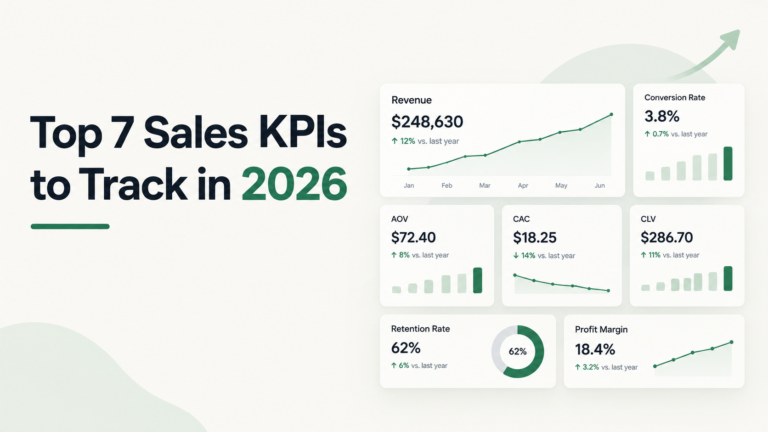
Two metrics deserve particular attention. ACoS tells you the efficiency of ad spend; TACoS tells you whether advertising is building organic sales or simply buying them. We explain the difference and why it matters in ACoS vs TACoS: the profitability metric most sellers get wrong.
How do you expand to Walmart, eBay and TikTok Shop without breaking Amazon?
The safest way to go multi-marketplace is to treat expansion as a catalog and inventory project first and a marketing project second. Before a single new listing goes live, three foundations should be in place:
- A single source of product truth. One master record per SKU with all identifiers, attributes and approved content, mapped to each channel’s requirements rather than rewritten per channel.
- Inventory allocation rules. Decide which stock pools serve which channels, set buffers for shared inventory, and connect channels through a multichannel inventory tool so a sale on one reduces available stock on all.
- Per-channel health monitoring. Each marketplace measures sellers differently; Walmart, for example, places heavy weight on on-time delivery and its own listing quality scoring. Assign someone to watch each channel’s dashboard.
Then launch in waves: your top sellers first, measure for several weeks, fix catalog and fulfilment issues, and expand the assortment. For most US brands already on Amazon, Walmart Marketplace is the logical second channel because the catalog and fulfilment mechanics are the closest match.
How do you choose a marketplace management partner?
The right marketplace management partner is the one that notices problems before you do and can show you the process that makes that happen. Use the checklist below in every evaluation call.
Questions to ask before you sign
- Who exactly will work on my account, and is that person dedicated to my brand or shared across clients?
- What happens when that person is on leave or resigns? Ask for the named backup and the handover process.
- Can you show me your SOPs and daily checklist for account health, listings and advertising?
- Which marketplaces do you operate on today, and can you walk through a real, anonymized example of fixing a problem on each?
- How do you report? Ask to see a sample weekly report. It should cover profit metrics, not only revenue.
- How is access managed and revoked? You keep account ownership; they work as permissioned users.
- How are you paid? Be cautious of incentive structures that reward spending more of your money.
- What is the contract notice period and what documentation do we keep if we part ways?
Red flags
- Guaranteed ranking or sales outcomes. Nobody controls the marketplace algorithm.
- A request to become the account owner or to move your listings to their seller account.
- Reporting that only shows revenue and ROAS, never margin or TACoS.
- Vague answers about who does the work, or a senior pitch team you never hear from again.
- Black-hat tactics such as review manipulation, which put your account at risk of suspension.
If an account has already been hit, recovery is a specialist job; see our guide to marketplace account suspension recovery for how appeals and plans of action work.
What does a smooth onboarding look like?
A good outsourcing engagement starts with an audit, not with changes. A realistic first 90 days with a dedicated team looks like this:
- Weeks 1-2: access and audit. User permissions set up, a full audit of account health, catalog errors, advertising structure, inventory position and pricing, and a written list of priority fixes.
- Weeks 3-6: stabilize. Fix suppressed listings and catalog errors, clean up wasted ad spend, set up monitoring and reporting, and document SOPs specific to your brand.
- Weeks 7-12: optimize and grow. Listing refreshes on top products, restructured campaigns, replenishment cadence, and a plan for the next channel or product launch.
By the end of the first quarter you should have a weekly reporting rhythm, a documented operating manual for your account, and a clear backlog agreed with your internal owner.
How much does marketplace management outsourcing cost?
Pricing models vary widely, so compare what is included rather than the headline number. Common structures are hourly rates for freelancers, per-listing fees for content production, flat monthly retainers, a percentage of marketplace sales or ad spend, and a fixed monthly fee per dedicated team member. When you compare against an in-house hire, use the fully loaded cost: salary, benefits, recruiting, software, training, management time and the cost of the ramp-up period.
Dedicated offshore teams are typically the most cost-efficient option for continuous multi-disciplinary work because you pay for focused specialist time without paying local salaries for every role. To see how this plays out across functions, read which ecommerce roles US brands offshore first.
Ready to hand your marketplaces to a dedicated team?
AcquireX builds embedded marketplace teams that own listings, Buy Box, advertising, account health, catalog and inventory across Amazon, Walmart and other channels, working inside your accounts and reporting to your team every week. Because we also run catalog, customer service, supply chain and performance marketing, your marketplace channels are connected to the rest of your operation instead of managed in a silo.
Explore our marketplace management services, or book a call with the AcquireX team to get a free audit of your marketplace operations.
Frequently Asked Questions
What is marketplace management outsourcing?
Marketplace management outsourcing is hiring an external team to run the daily operations of your marketplace channels, including listings, pricing and Buy Box, advertising, account health, catalog and inventory, while your brand keeps ownership of the accounts and makes the strategic decisions.
Is it safe to give an outsourced team access to my Amazon Seller Central account?
Yes, if it is done correctly. Add the team as secondary users with only the permissions they need, keep the primary account and Brand Registry under your company’s ownership, use two-step verification, and make sure you can revoke access immediately.
What is the difference between a marketplace agency and a dedicated team?
An agency shares its specialists across many clients and runs its own processes, while a dedicated team works only on your brand, inside your tools and to your SOPs. Agencies tend to excel at strategy and launches; dedicated teams excel at continuous daily execution.
When should a brand outsource marketplace management?
Outsource when marketplace work is consuming founder or senior time, when backlogs and errors are growing, when you are adding a second or third marketplace, or when one person holds all the channel knowledge and their departure would put revenue at risk.
Can one team manage Amazon, Walmart, eBay and TikTok Shop together?
Yes. A single team working from one product data source and one inventory plan is usually better than separate providers per channel, because it prevents catalog drift, overselling and conflicting prices across marketplaces.
What KPIs should I expect an outsourced marketplace team to report?
Expect weekly reporting on sales by channel, advertising spend, ACoS and TACoS, contribution margin, Buy Box percentage on key products, inventory days of cover, account health metrics and progress on open fixes.
How long does it take to see results from outsourcing?
Operational fixes such as repairing suppressed listings and removing wasted ad spend usually show up within the first few weeks. Growth from listing optimization, campaign restructuring and channel expansion builds over the following months.
Do I lose control of my brand if I outsource marketplace management?
No, provided the scope is set correctly. Your team keeps positioning, pricing guardrails, budgets, assortment and approvals, while the outsourced team executes within those rules and reports transparently.